Sennheiser keeps building around Spectera, its bidirectional wideband wireless ecosystem. After the SKM handheld that just completed the system’s core, the brand shows a new base station, the Base Station ZMAN, cut for all-IP broadcast. It is expected from October 2026.
Reminder: Spectera is no ordinary wireless
Spectera is built on WMAS (Wideband Multichannel Audio System): instead of one transmitter per frequency, a single wideband RF channel carries mics, in-ear monitors and control data at once. A 1U base handles up to 64 channels (32 in / 32 out), a single bodypack acts as both mic transmitter and IEM receiver, and the system senses the spectrum continuously, with full remote control and monitoring. It is a break from classic wireless: less hardware, more channels, centralised management.
What the ZMAN version adds
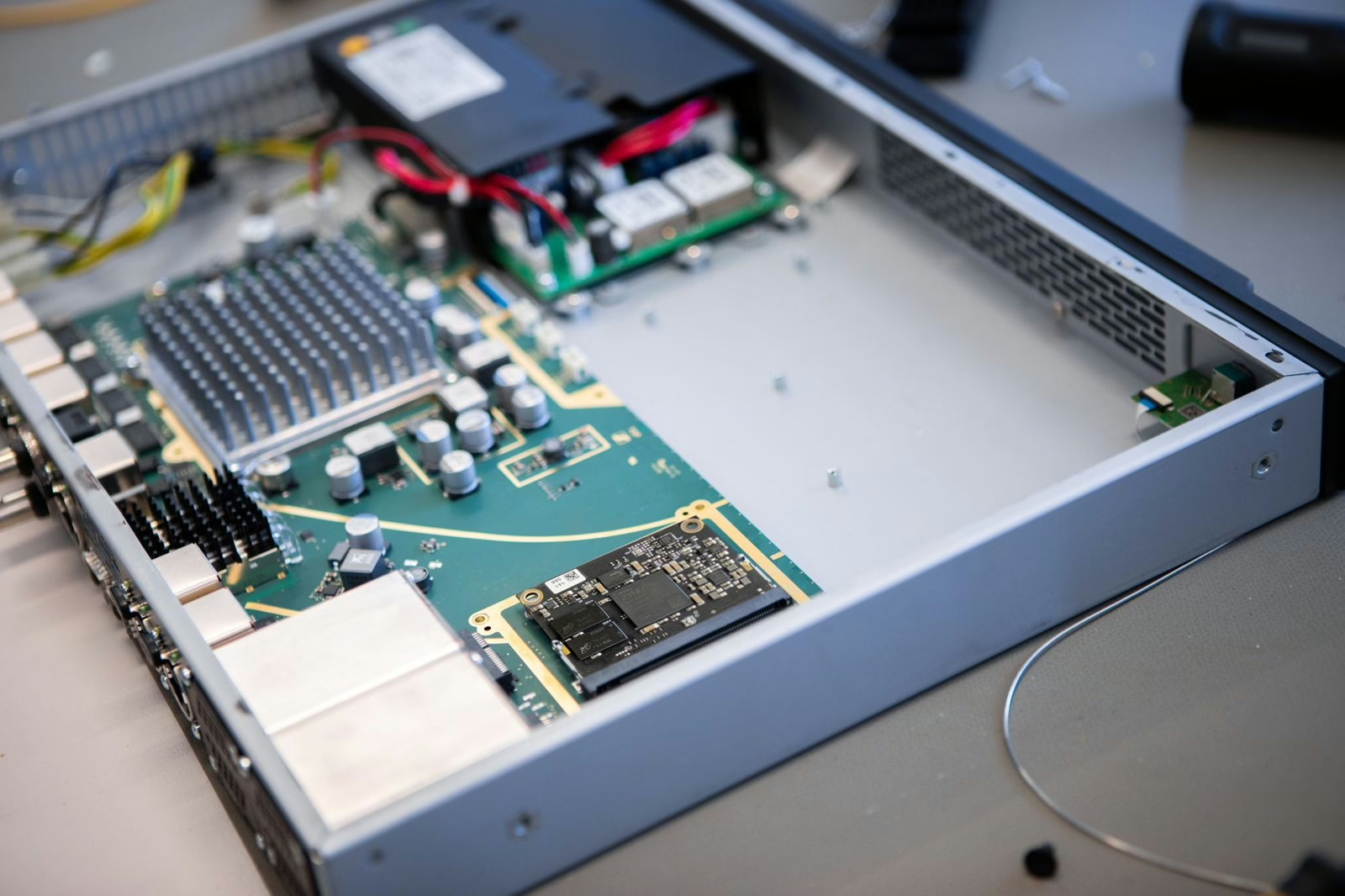
The news is network integration. The Base Station ZMAN carries a dedicated Merging ZMAN audio network module for AES67 ecosystems, with native SMPTE ST 2110-30 audio integration. In practice, the base no longer just exposes its outputs: it natively speaks the language of modern broadcast control rooms, where all signal travels over IP. Wireless mics and ears become ST 2110 streams like any other, routable and monitorable from the existing infrastructure, with the flexibility, interoperability and control broadcast engineers expect.
Command: control handed back to the artist
Sennheiser also shows the Spectera Command function, which gives the artist or speaker direct control of routing pre-configured in the system. It comes in two forms due in October 2026: a Command Button inserted between the SEK bodypack and the mic, and a Command Ring for the SKM handheld. Users can mute their audio or open a talkback channel, with the switch configurable as latched or momentary to suit different production workflows.
| Item | Detail |
|---|---|
| Base Station ZMAN | Merging ZMAN network module, AES67, native ST 2110-30 |
| Spectera ecosystem | WMAS, up to 64 channels (32 in / 32 out) in 1U |
| Principle | Mics, ears and control in the same wideband RF channel |
| Command | Command Button (SEK) and Command Ring (SKM), Oct 2026 |
| Availability | Base Station ZMAN from October 2026 |
Why it is a strong signal
By bringing wideband wireless and ST 2110 together, Sennheiser closes the last analog link in many production chains: wireless now enters the control room with no intermediate conversion. To understand the networking stakes, revisit our feature on audio over IP: Dante, AES67 and SMPTE ST 2110, and our piece on the Spectera SKM handheld that completes the ecosystem.
Frequently asked questions
What does the ZMAN module actually change?
It brings native SMPTE ST 2110-30 audio integration via AES67. The Spectera base station then slots straight into an all-IP broadcast infrastructure, with no extra gateway.
Is Spectera just another wireless system?
No. Thanks to WMAS, a single wideband RF channel carries mics, in-ear monitors and control. A 1U base handles up to 64 channels, where classic wireless lines up one transmitter per frequency.
What is the Command function for?
It hands the artist control of pre-configured routing: mute your mic or open a talkback, via a Command Button on the SEK bodypack or a Command Ring on the SKM, in latched or momentary mode.
When is the Base Station ZMAN available?
Availability is announced from October 2026, alongside the Command accessories.
My take
Native ST 2110 on a Spectera base is the kind of quiet building block that matters more than it looks: it dissolves the border between the RF stage and the IP control room. For a broadcaster that has already moved its plant to ST 2110, plugging wireless mics in as one more network stream genuinely simplifies operations. Field interoperability remains to be seen, always the tricky part with ST 2110. But the direction is right, and it confirms that Spectera is designed as a system, not an isolated product.