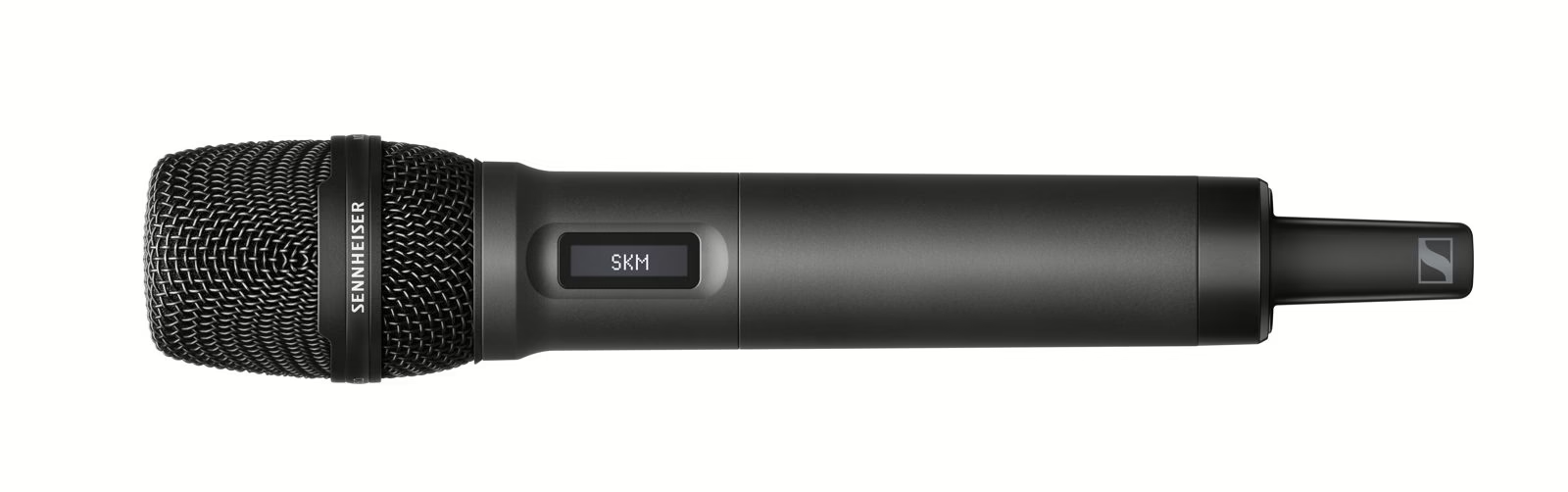
Stage wireless is going through a quiet revolution, and Sennheiser is leading the charge with Spectera, its wideband, bidirectional digital ecosystem. One piece every sound engineer was waiting for was missing from that system: a handheld mic. Here it is. The Spectera SKM starts shipping in mid-September 2026, and it changes how you think about the RF link on a stage.
Bidirectional: transmit and monitor on the same link
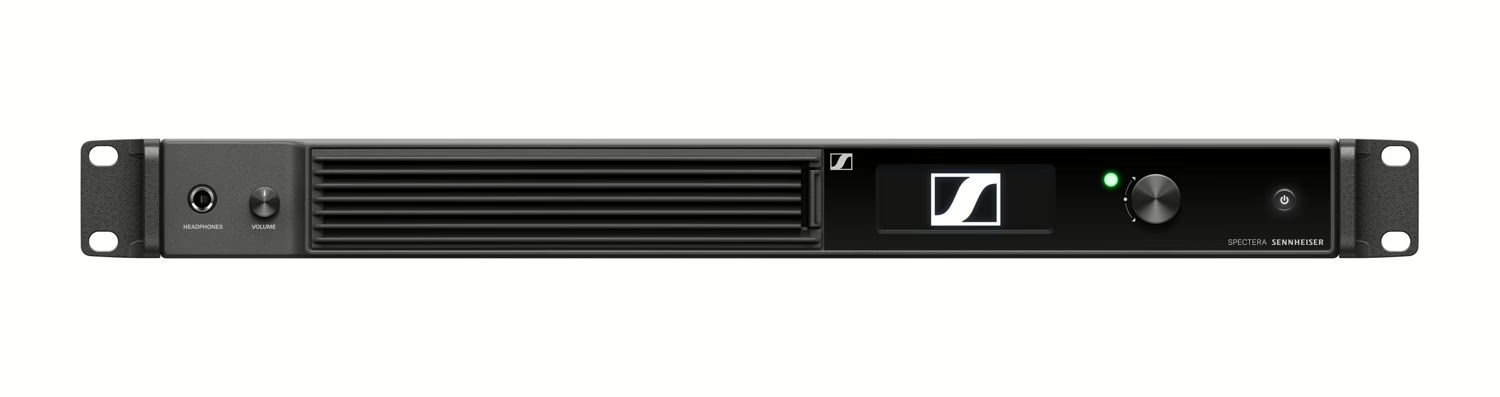
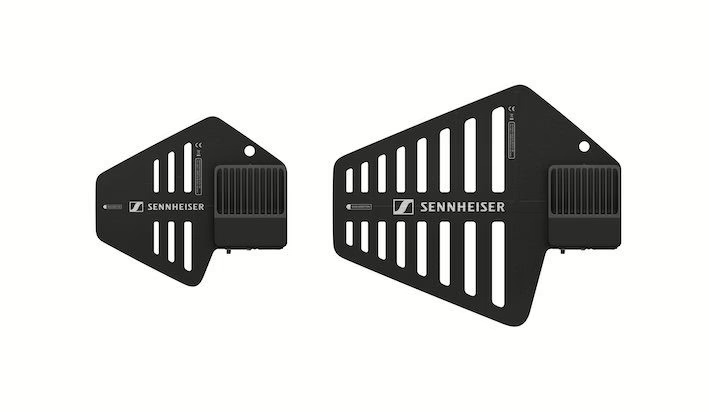
To grasp why the SKM matters, you have to understand what sets Spectera apart from a classic RF system. Normally a wireless mic transmits, an in-ear system receives, and each one ties up its own radio link, its antennas, its slice of spectrum. Spectera merges both directions of travel: a single bidirectional antenna (called DAD) handles both the mic transmission and the in-ear monitor feed back to the performer. The base station manages up to 64 channels — 32 inputs and 32 outputs — in a single chassis. In a context where available RF spectrum shrinks year after year, fitting mics and monitors onto shared infrastructure isn’t a gimmick: it’s a direct answer to congestion.
The SKM, a handheld that also receives
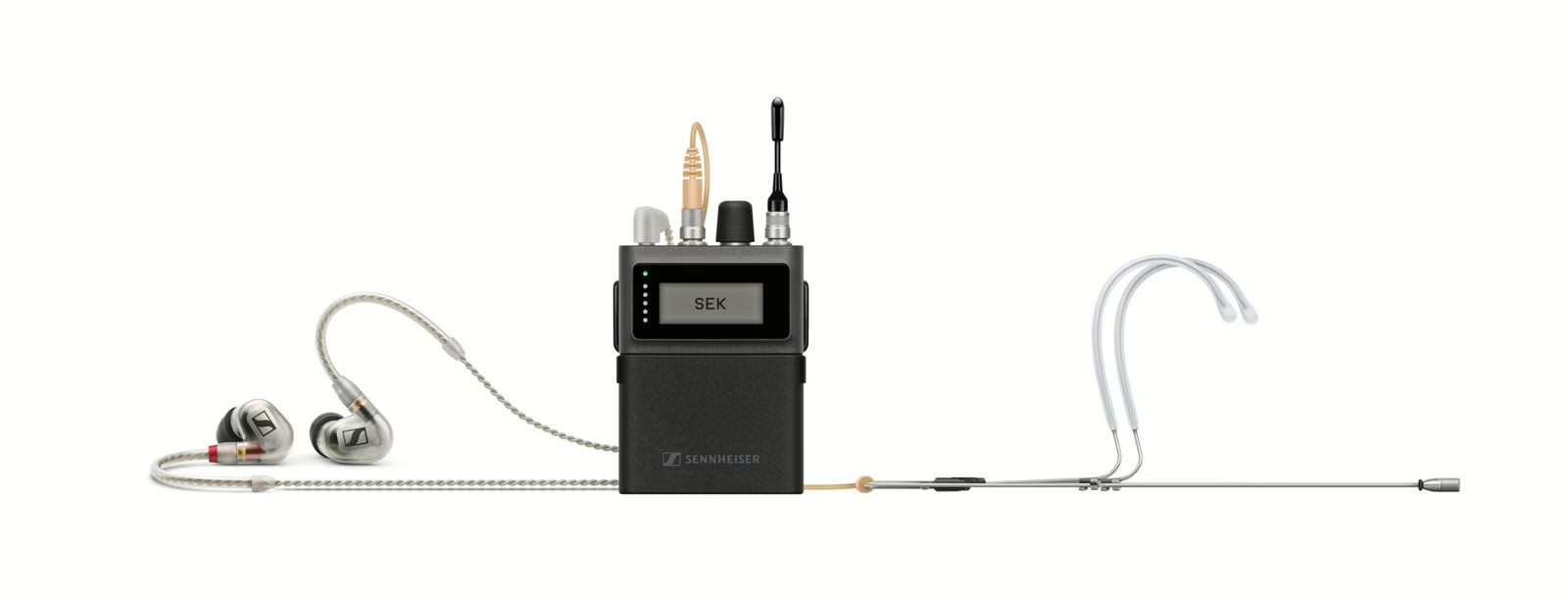
Until now, Spectera mostly existed as a bodypack, the SEK, which already combines mic transmitter and monitor feed in one unit. The SKM applies the same logic to the handheld. It carries the brand’s standard capsule interface and therefore accepts both Sennheiser heads and Neumann capsules — a detail that matters to a sound supervisor with settled tonal habits. The anodised aluminium body houses an OLED display, and above all the bidirectional data stream allows remote control of the mic’s parameters: gain, low-cut and settings can be driven from front of house without climbing on stage between songs.
That remote-control point is more important than it sounds. On a large production, adjusting a singer’s gain mid-soundcheck, or engaging a low-cut because the wind is picking up at an outdoor festival, without having to intercept the artist, is time and peace of mind gained. The SKM thus positions itself as the awaited companion to the SEK bodypack, for setups where the hand-held mic remains the norm — the lead vocal, hosting, close-miking.
A stage engineer’s view
I’ve spent enough years in live and technical direction to know that RF is the post that makes you sweat: it’s where dropouts, intermodulation, monitor feedback and frequency-coordination scares all play out. A system that halves the number of links to align and centralises mic and in-ears on one antenna goes after the real pain, not a brochure convenience. The open questions are price and migration: Spectera is an infrastructure investment, not a plug-and-play kit you roll out for a bar. It’s a touring and big-stage tool, and at that scale the promise holds together.
Availability
The Spectera SKM is being demonstrated at the PLASA Show in London, 6–8 September 2026, with shipments starting in mid-September. To prepare a clean RF deployment, our guide to RF frequency coordination remains the reference read, and on the monitor side, see how to set up an in-ear monitor system as well as our pick of the best in-ear monitors. Technical details are on Sennheiser’s site.