“We can’t understand the dialog.” It is one of the most stubborn complaints levelled at TV and streaming, and until now the industry had no standardised way to measure it. At IBC 2026 a new group steps in: NUGEN Audio, RTW, Steinberg and Telos Alliance, backed by Fraunhofer IDMT, formed the LMMG (LEAP Meter Manufacturers Group) and published a shared implementation agreement. The goal: make speech intelligibility as standardised a metric as loudness has become.
Loudness doesn’t tell the whole story
Since EBU R128, the industry knows how to measure and normalise perceived level. But a programme that is perfectly compliant on loudness can still be hard to follow: music too forward, ambiences too heavy, a voice poorly separated from the bed. Level and intelligibility are two different things, and no widely adopted standard measured the second. Each broadcaster ended up improvising its own reference points, with no common language between production, post and QC.
LEAP and the DIU unit
The technical core rests on LEAP (Listening Effort prediction from Acoustic Parameters), an AI-based technology from Fraunhofer IDMT. It predicts the listening effort needed to understand speech from acoustic parameters of the mix. The LMMG turns that into a shared unit, the DIU (Dialog Intelligibility Unit), on a 0-100 scale: the higher the value, the easier the dialog is to follow. The idea is not to replace the engineer’s ear but to give it a reproducible, shared indicator, just as LUFS did for level.
An agreement to speak the same language
The real novelty of the LMMG is the implementation agreement that ensures two different tools show the same thing. It fixes the terminology (“Dialog Intelligibility”), the unit (DIU) and the 0-100 scale, but also the upstream signal handling: downmix, temporal smoothing, display colour ranges. Without that standardisation, each vendor would have shipped its own measure, recreating the pre-R128 confusion. Here, a DIU score read in one tool should match that of another member.
DialogCheck v1.2 and what’s next
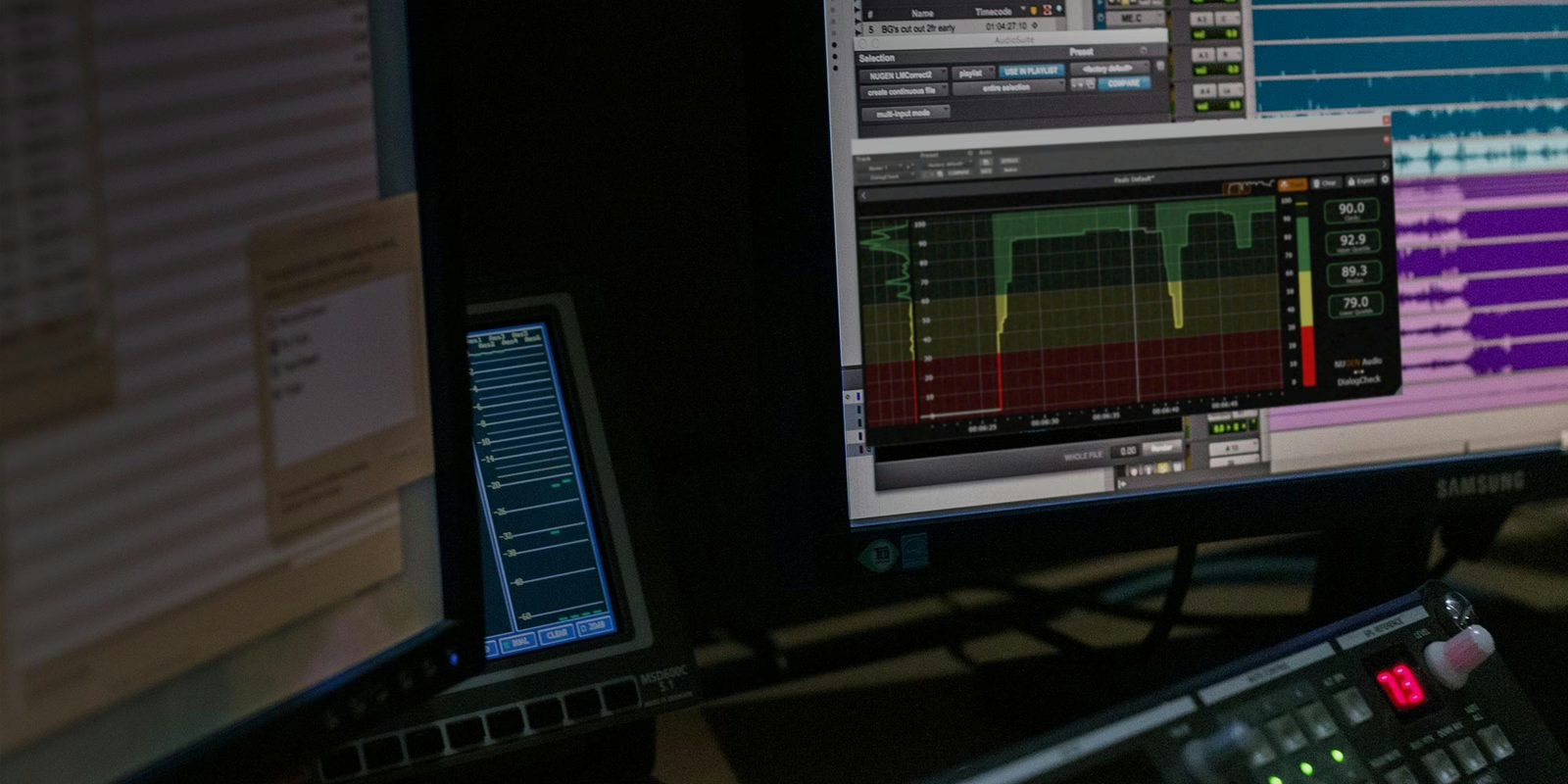
First product to embody the agreement, NUGEN Audio showed DialogCheck v1.2 at IBC, expanding immersive-channel support and sharpening its analysis, aligned with the new shared reference. The other members — RTW on hardware metering, Steinberg on production, Telos Alliance on transmission and processing — are expected with their own implementations. The group’s message is explicit: dialog intelligibility is becoming “the new loudness”, a compliance criterion in its own right from broadcast to streaming to post.
What it changes for pros
For a sound editor, a mixer or a QC lead, having a standardised indicator changes the conversation: you no longer argue “by feel” about a dialog judged too quiet, you put a number on it. It fits the same tooling logic as the audio-over-IP chain and codec contribution: shared references that smooth work between teams and sites. Adoption speed remains to be seen, but the alliance of these four players plus Fraunhofer gives the DIU weight few standalone proposals would have had.
My take
Measuring intelligibility rather than level alone has been broadcast’s blind spot for years — and seeing it handled by a multi-brand group rather than a lone vendor is what makes it credible. The DIU will never replace a good mix or a trained ear, but a common number gets everyone on the same page and ends the circular QC arguments. The open question is adoption: a metric only matters if broadcasters write it into their specs. If loudness is the template, this is off to a strong start.