Some equalisers entered legend through the records they shaped. The A-Range EQ from Trident’s consoles is one of them: a rare, revered desk whose musicality came from an all-discrete circuit and the use of inductors in the mid bands. Trident Audio Developments now offers a faithful recreation in 500 Series format, the A-Range 500 EQ.
A four-band EQ, faithful to the original
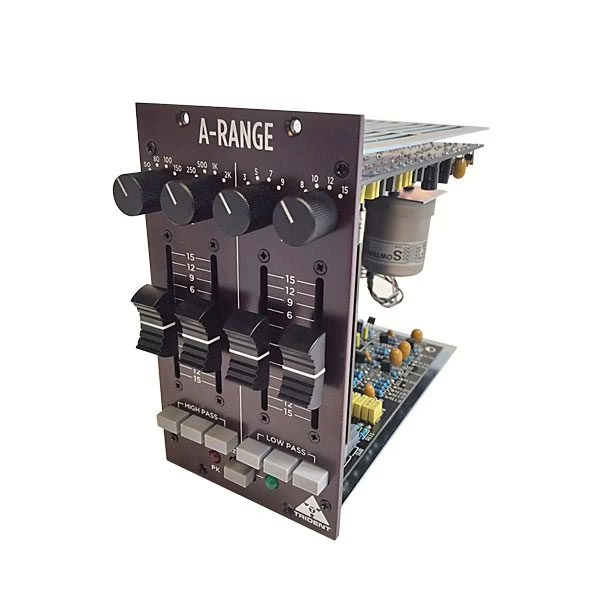
The module carries over the console’s four-band architecture: lows and highs are shelving, the two mids— low and high — are peaking. Each band offers four selectable frequencies, for sixteen carefully chosen frequencies from 50 Hz to 15 kHz. Both boost and cut reach 15 dB. Above all, Trident keeps the heart of the sound: an all-discrete transistor circuit and inductors in the mids, where most modern EQs settle for active components alone.
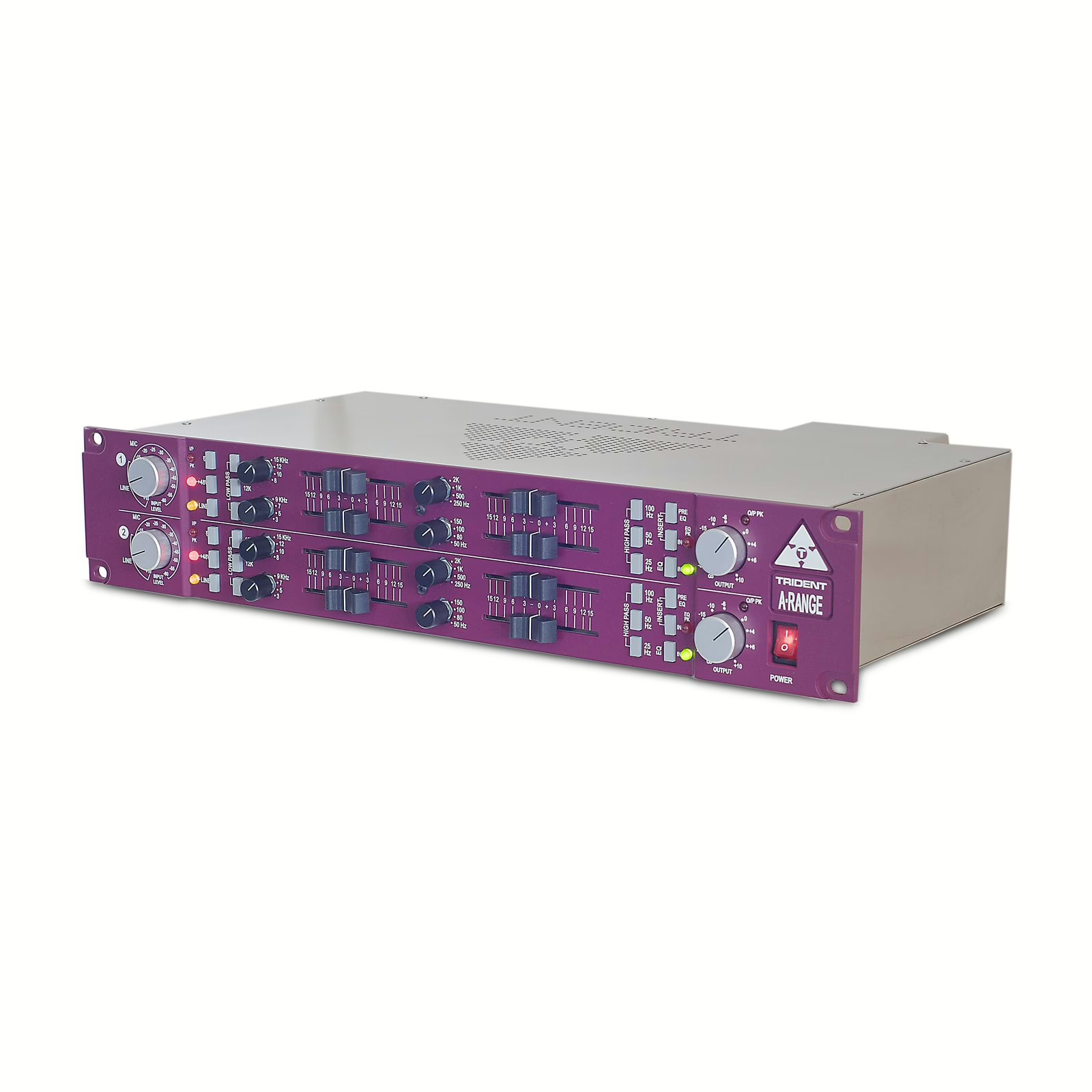
Faders, not knobs
The A-Range’s visual and ergonomic signature is gain set with faders rather than rotary pots. That choice, inherited from the original console, is not just aesthetic: a fader gives an immediate visual read of the EQ curve and more precise recall of settings. The panel also carries switchable high-pass and low-pass filters, to trim a signal before EQ proper. It is the logic of a console channel strip, condensed into a module.
| Feature | A-Range 500 EQ |
|---|---|
| Bands | 4: lows and highs shelving, low-mid and high-mid peaking |
| Frequencies | 4 per band, 16 total, from 50 Hz to 15 kHz |
| Gain | Boost/cut up to 15 dB, set with faders |
| Circuit | All-discrete transistor, inductors in the mids |
| Format / price | 500 Series, $999.99 |
Positioning and availability
The A-Range 500 EQ lists at $999.99 (around €1,000), on backorder, with first shipments announced for December. At that price it sits at the top of the 500-series EQ market, up against reissues of vintage circuits: you do not buy it to correct, but to colour— to add the particular grain of a sought-after console. To go further, read our pick of 500 Series compressors that matter in 2026 and our piece on the Focusrite ISA C8X transformer preamp.
Frequently asked questions
What sets the A-Range apart from modern EQs?
Two things: an all-discrete transistor circuit and the use of inductors in the mid bands. That design, inherited from the original console, is what gives the sought-after musical grain.
Why faders for gain?
It is the A-Range console’s signature. A fader gives an immediate visual read of the EQ curve and more precise recall than a rotary pot, especially for reproducing a setting from one session to the next.
How many frequencies and what gain range?
Four frequencies per band, sixteen in total, spread from 50 Hz to 15 kHz, with boost or cut up to 15 dB. The mids are peaking, lows and highs shelving.
Is it available right away?
It is offered on backorder at $999.99, with first shipments announced for December. Like any 500 module, it needs a chassis (lunchbox) and its power supply.
My take
Bringing the A-Range EQ back as a 500 module puts a piece of sonic history within reach of a well-equipped home studio. The faders and inductors are not cosmetic— they are what make the character, and it plays out by ear, on a vocal or a drum kit, more than on a curve. The price stings for a single EQ, but you are paying for a colour, not surgical correction. If you want a neutral, versatile EQ, look elsewhere; if you want the Trident grain, this is the most affordable way in.