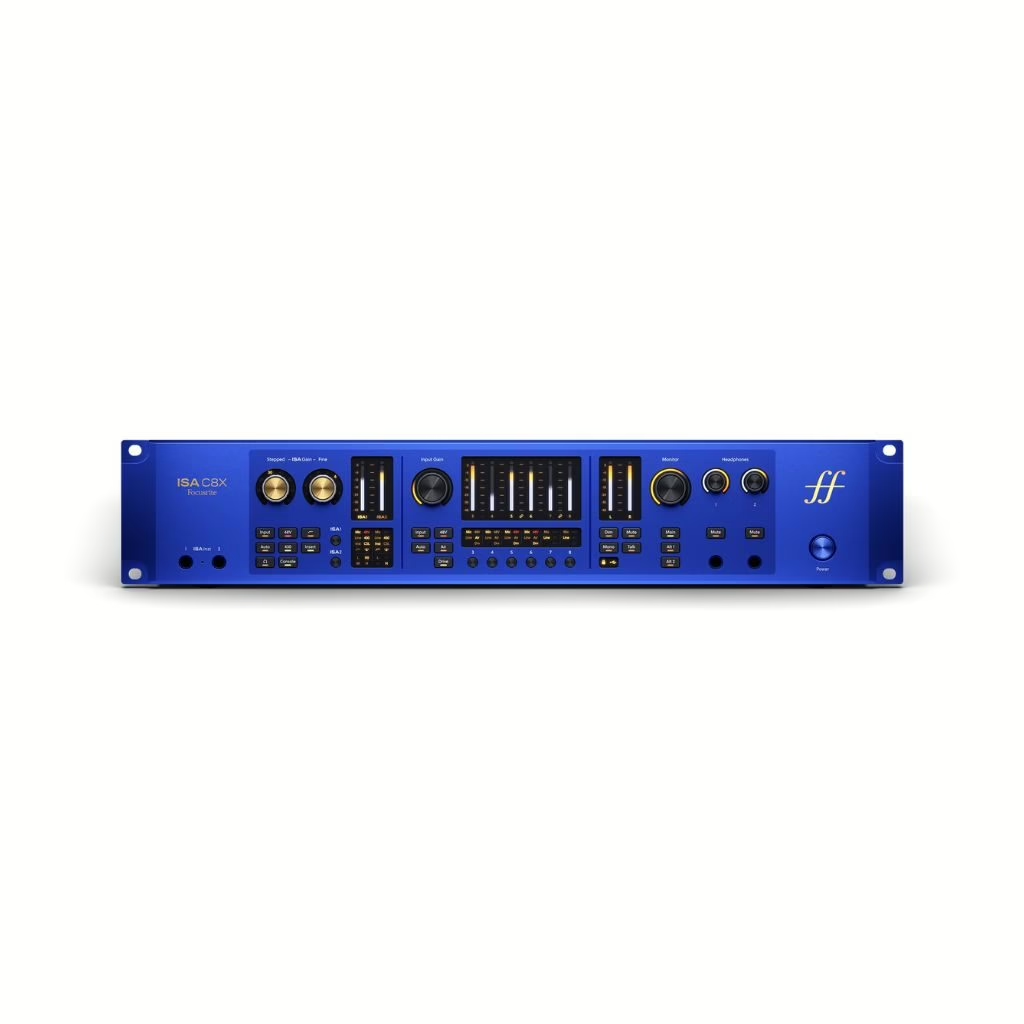
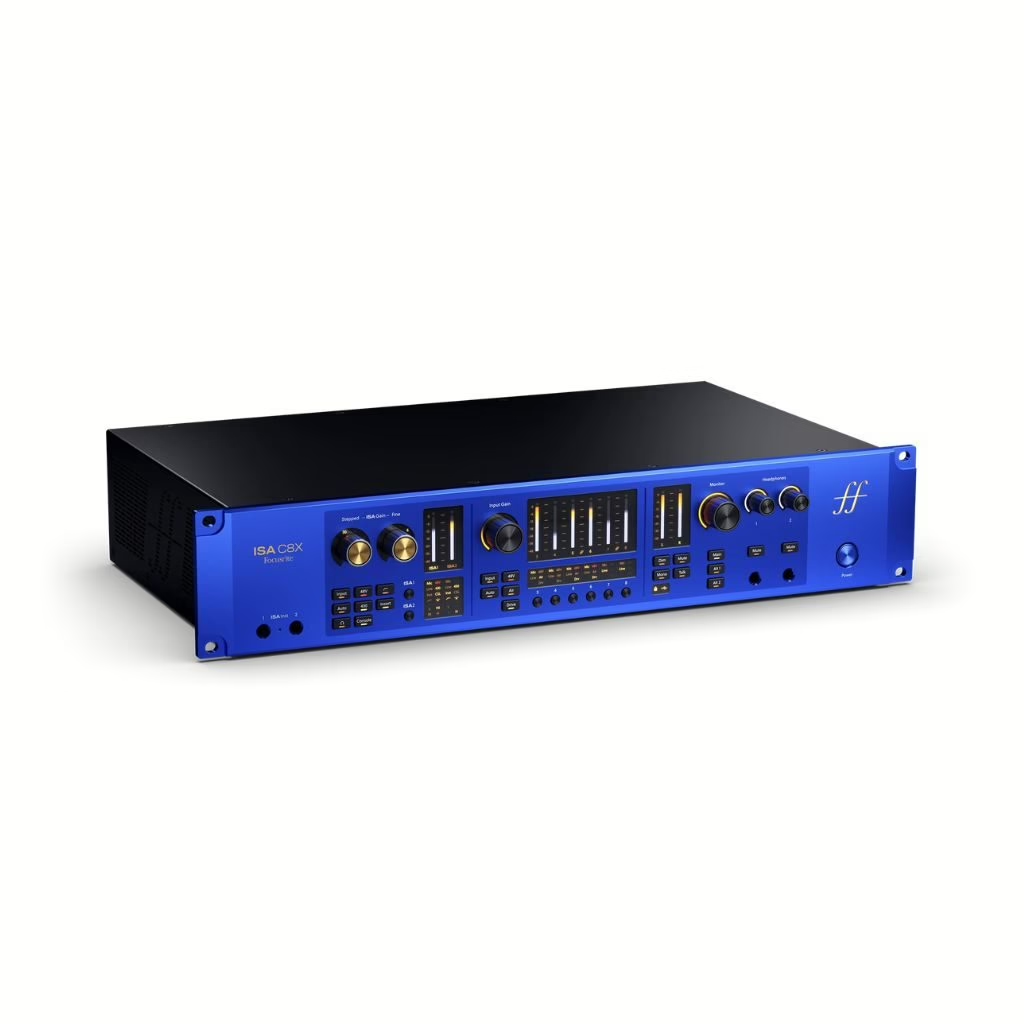
It took forty years, but Focusrite’s ISA preamp has finally left the rack for an audio interface. The ISA C8X is the first Focusrite interface to wear that legendary name, and it doesn’t do it halfway: two genuine ISA transformer preamps sit alongside six in-house mic pres, wrapped around 24-bit/192kHz conversion and I/O built for a modern studio hub.
A preamp born on an Air Studios console
The ISA circuit isn’t marketing dressing. It descends straight from the preamp Rupert Neve designed in 1985 for George Martin’s Air Montserrat console, complete with its Lundahl LL1538 input transformer. That component is what gives the ISA its signature: a gentle lift in the low mids, rock-solid transient handling, and switchable impedance that genuinely reshapes how a ribbon or dynamic mic sits. On the C8X, the first two channels replicate exactly that topology, with up to 79dB of gain, a balanced insert point and a high-pass filter.
Two ISA pres, six Focusrite pres, two instrument inputs
Where the C8X gets clever is in its preamp hierarchy. Rather than cloning one circuit eight times, Focusrite laid out the front panel around three complementary families, each with its own character and purpose.
| Preamp type | Count | Max gain | Signature |
|---|---|---|---|
| ISA transformer (Lundahl LL1538) | 2 | 79dB | Switchable impedance, balanced insert, high-pass filter — the original ISA sound |
| Low-noise Focusrite pre | 6 | 69dB | Analogue Air mode, variable Drive DSP, digital control |
| Front-panel instrument input | 2 | — | Transformer-based, selectable impedance, Console and 430 Air access |
Everything is controllable from the front panel or the software, with an Auto Gain function across all eight inputs. Two tone modes round it out: Console mode adds a touch of soft-clipping to thicken the low end, while 430 Air uses an inductor-based high-shelf for that top-end shimmer. These are real analogue stages, not a software “brightness” knob.
Conversion and I/O of a genuine studio hub
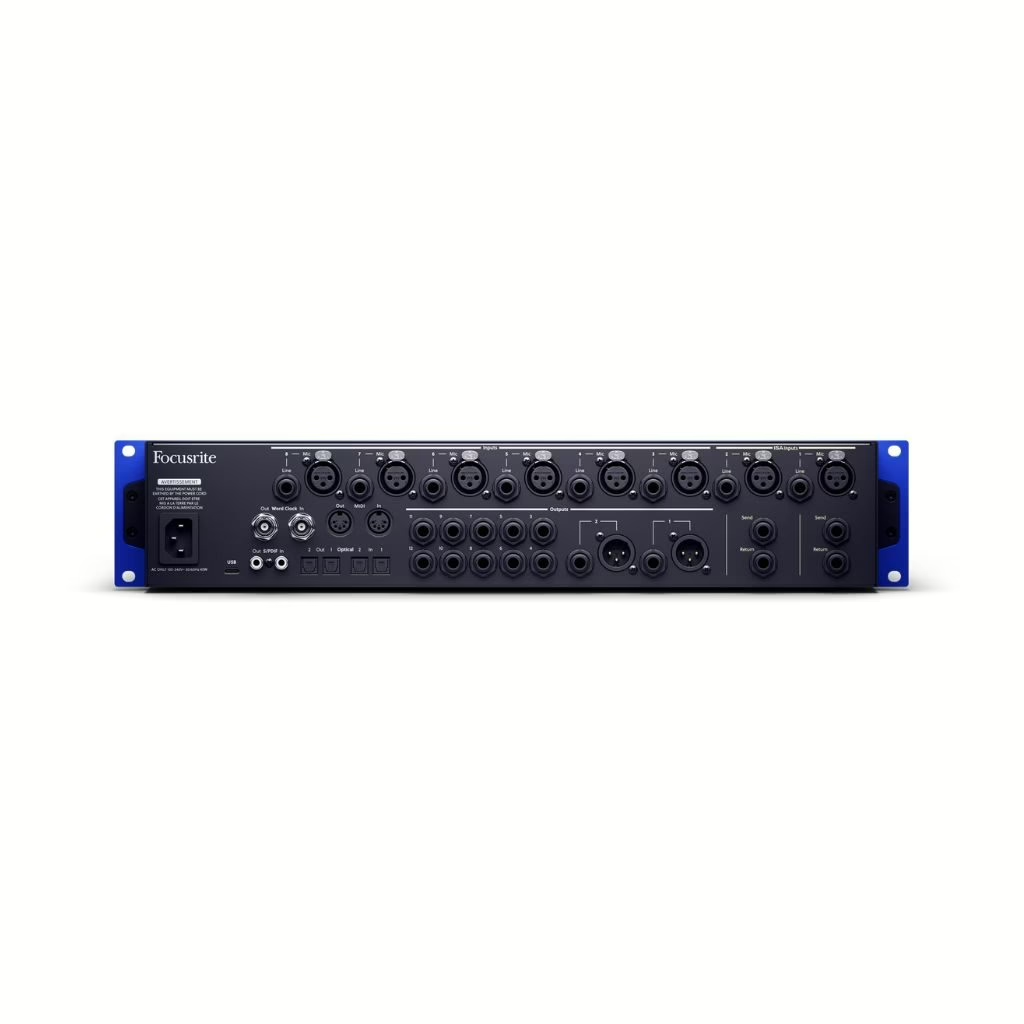
Conversion stays firmly serious: 24-bit/192kHz with up to 125dB of dynamic range and very low quoted distortion. The I/O confirms the ambition to be a studio nerve centre rather than a simple input box. You get 26 inputs and 28 outputs, including twelve balanced line outputs that can drive a 7.1.4 immersive rig or three separate monitor groups, sixteen channels of ADAT, S/PDIF, MIDI, Word Clock, and two independent-level Class-AB headphone outputs. It all lives in a 2U chassis with an anodised-blue finish you won’t miss on a rack.
The ISA C8X is available to order at $2,299.99 / £1,899.99 / €1,848.73. It’s no impulse buy, but for eight mic pres — two of them transformer-based — plus high-end conversion and immersive routing in a single box, this is the kind of purchase that replaces a whole rack.
The right hybrid, in the right place
I’ve spent years running studios where the input preamp alone decided the colour of a take. That’s exactly where hardware keeps its legitimacy once everything else has moved into the computer: on the very first stage, the one that shapes a mic. Dropping a real ISA transformer into a USB-C interface is precisely the kind of hybrid that makes sense — analogue where you can hear it, digital for the rest. The only question that matters is how those two ISA channels sound to tape; if they behave like the original rack, the C8X will earn its place in a lot of control rooms. For where it sits in the analogue-to-digital shift, our analogue vs digital mixer comparison is a good starting point, as is the return of large-format analogue total recall in the SSL Odyssey. And for smaller Focusrite budgets, the Scarlett 2i2 Anniversary Edition plays a very different game while keeping the house DNA.
Full product details on Focusrite’s website.