zplane is not a household name, but anyone who has ever time-stretched a loop cleanly knows its élastique engine, sitting under the hood of a large share of today’s DAWs. The Berlin house is releasing Timbre, a real-time formant-processing plugin aimed at a gap in the mix world: changing the color of a sound without changing its pitch, and without the frequency-boosting logic of an EQ.
Not an EQ, not a pitch shifter: formant shifting
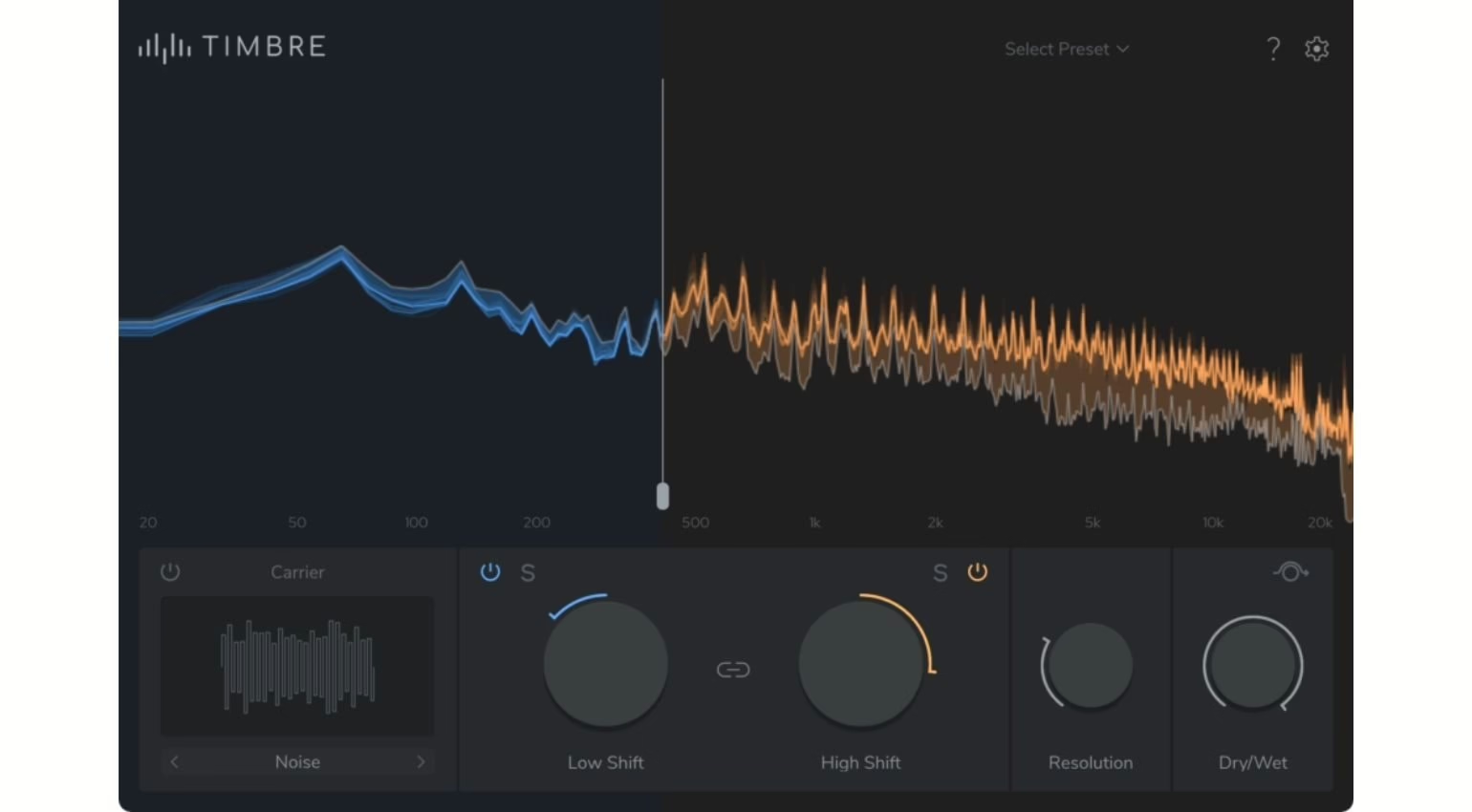
An EQ boosts or cuts frequencies; a pitch shifter changes the note. Timbre does something else: it moves the formants, the resonances that define a timbre’s identity and character, independently of the note being played. In practice it shifts a signal’s formants by plus or minus 36 semitones, three octaves either way, without touching perceived pitch. On a vocal, that runs from cavernous giant to tiny character while the melody stays intact.
The point goes beyond the special effect. On a take, a small upward shift adds presence and youth without raising the pitch; a downward shift thickens a choir or a pad. It is a genuine mix parameter, not just a sound-design toy.
Two independent bands and a carrier section
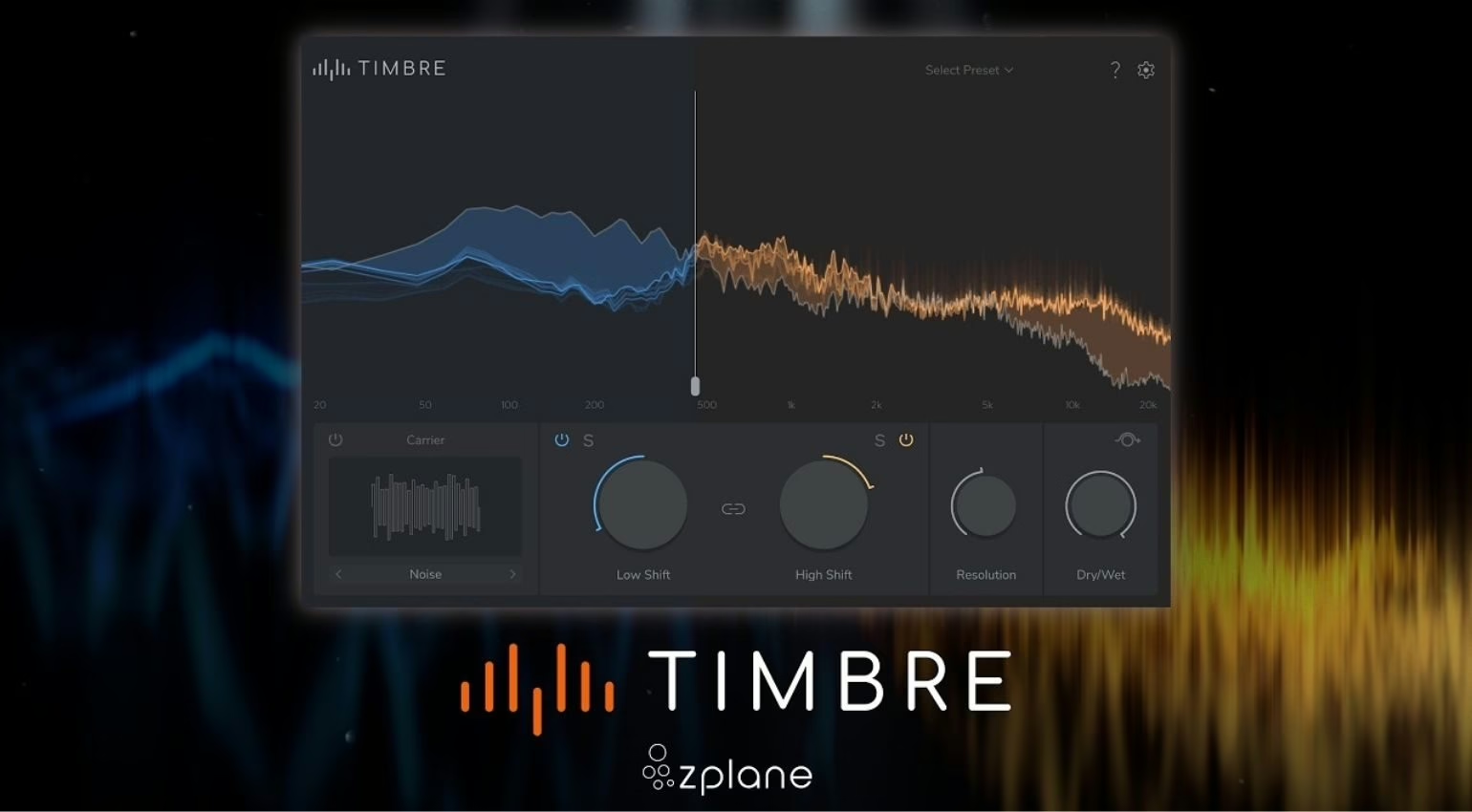
Timbre runs in dual-band mode: you treat the low and high parts of the spectrum separately, so you avoid dragging the whole signal in one direction and can, for example, keep the lows stable while the upper mids move. That is where the tool becomes surgical rather than blunt.
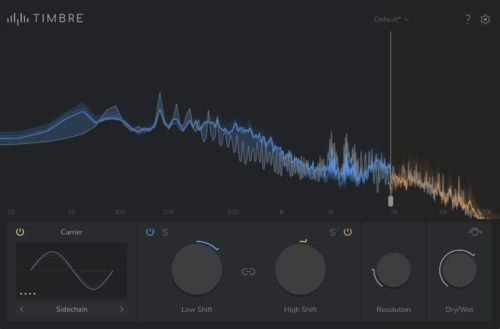
The real originality is the Carrier section. Timbre can replace the original carrier signal while keeping the modulation envelope of the input audio. A built-in white-noise carrier instantly turns a vocal into a whisper, or adds breath and air to other sources. Better still, you can route an external carrier via your DAW sidechain, opening up vocoder-style processing and far more experimental timbre crossings. Anyone already fluent in sidechaining will feel at home, applied here to color rather than level.
The spec sheet
- Formant range: plus or minus 36 semitones (three octaves) with no pitch change.
- Architecture: two independent bands, a Resolution control for processing detail, Dry/Wet.
- Carrier: built-in white noise or external sidechain for vocoding.
- Latency: around 23 ms at 44.1 kHz.
- Formats: VST3, AU and AAX, Windows and macOS.
Price and availability
Timbre is available now at a regular price of around €79, with a 33% launch discount bringing it to roughly €53 until 30 September 2026. The ~23 ms latency places it on the production and sound-design side rather than tight real-time tracking; worth noting if you plan to sing through it live. For color at the mix, though, it is effectively transparent in use. It fits the same result-first logic as the Waves Atlas reverb built for the mix.
My take
Formant shifting has long hidden in a menu corner of a few pitch shifters, but rarely with this much control and never with a carrier section this open. Splitting it into two bands is what moves the tool from gimmick to mix utility. At this launch price, it is hard to argue against a color processor that duplicates nothing else in your chain. The external carrier, meanwhile, will delight producers who like to bend vocals. An easy buy to justify.