The software channel strip is hardly a new idea, and the market is crowded. The PS-VC1’s bet lies elsewhere: rather than a generic Swiss army knife, Black Rooster Audio offers a specialized chain, designed from first module to last for a single job — sitting a voice in a mix. It’s the first product in a line called the Professional Series, and the stance is deliberate.
A console channel built for the voice
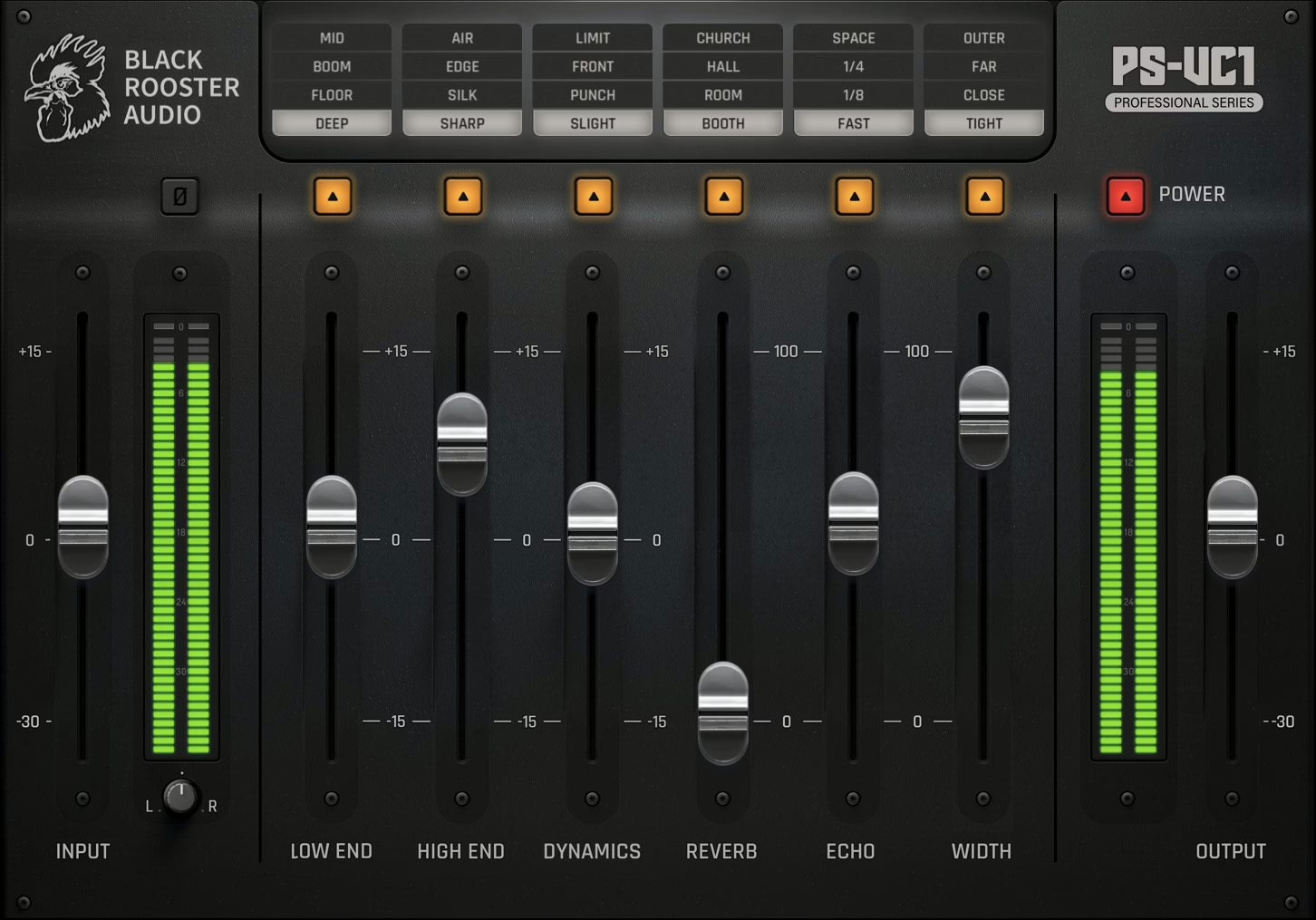
The PS-VC1’s guiding idea is order. The six modules can’t be freely rearranged: they run in a fixed, mix-ready sequence that reproduces the engineer’s classic move. Clean the low end first, control the dynamics, shape the top, then place the voice in a space. That may look restrictive; it’s actually freeing for anyone who wants to work fast without re-litigating the signal chain every time.
Six modules in a fixed order
Every stage stays fully adjustable, with its own preset selector, fader and bypass, so any link can be judged on its own. Here’s how the chain breaks down:
| Module | Role |
|---|---|
| Low End | Cleaning the bottom of the spectrum, below the voice’s useful range |
| High End | Air and presence at the top of the spectrum |
| Compress | Selectable peak or vintage detection, automatic makeup gain |
| Reverb | Algorithm from small-room ambience to cathedral decay |
| Echo | Tempo-synced or free-running echo |
| Width | Three stereo width algorithms: All-Pass, Haas and Hilbert |
The compressor is worth a pause: choosing between peak and “vintage” detection changes how the stage reacts to transients, and automatic makeup gain saves you from chasing level every time you touch the threshold. The reverb covers a wide range without leaving the module, and the three width modes let you widen a mono voice without hollowing out its center — provided you keep an eye on mono compatibility, more on which below.
I/O, metering, interface sizes and price
At the head and tail of the chain, the PS-VC1 offers input and output gain adjustable from -30 to +15 dB, phase invert and pan. Metering is via high-resolution LEDs, with a dedicated gain-reduction readout — a detail that matters when you want to set compression by ear while keeping a visual reference. The interface comes in seven sizes, from XXS to XXL, with HighDPI support: welcome on large displays and busy sessions alike.
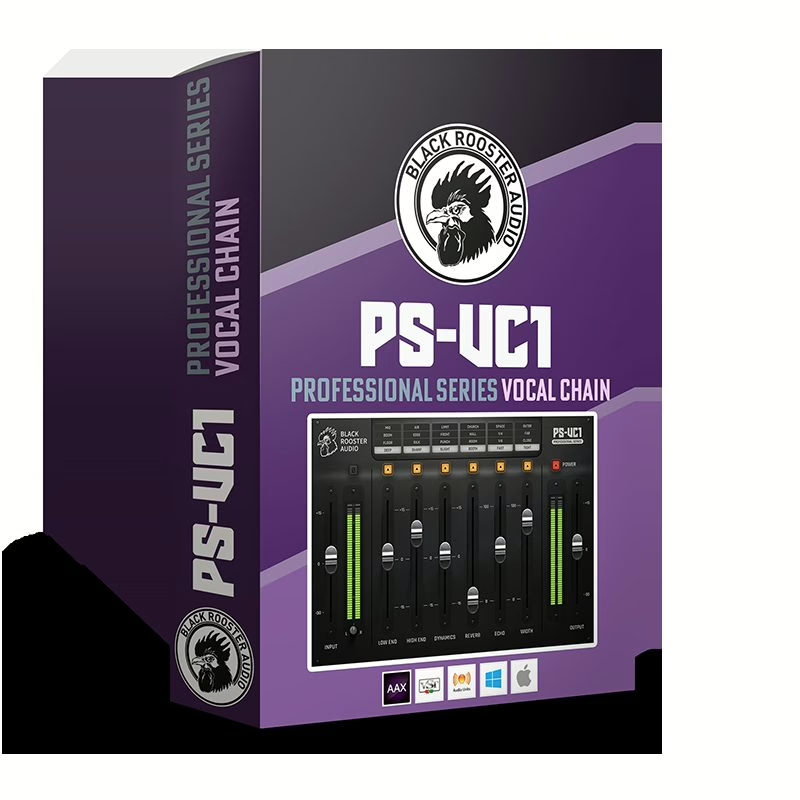
The PS-VC1 is available for $79 as AAX, VST, VST3 and Audio Units, for macOS and Windows, as a universal binary with native Apple Silicon support. A 14-day trial license can be generated from the developer’s license manager.
Our take
I’m usually wary of “all-in-one” chains that claim to mix a voice for you: too often they lock the user into a single sound. The PS-VC1 partly sidesteps the trap by keeping each module individually adjustable and bypassable — you stay in control. The fixed order, far from a flaw, is the right teaching choice: it’s a reminder that a voice is treated in a logical direction, not by stacking plugins at random.
The one real caution, as always with stereo-width modules, is mono compatibility: the Haas and Hilbert algorithms can scoop the center or raise phase issues on a mono system. Nothing fatal, but a mono fold-down is a must before you commit. Otherwise, at $79, a coherent, quick-to-deploy vocal chain earns its place in a modern session — what matters, as with any tool, being the sonic result, not the marketing promise.
To dig deeper into mix and mastering processing: our guides to audio compression and Mid/Side processing, plus our piece on the Panoramic width processor. Official product page at Black Rooster Audio.