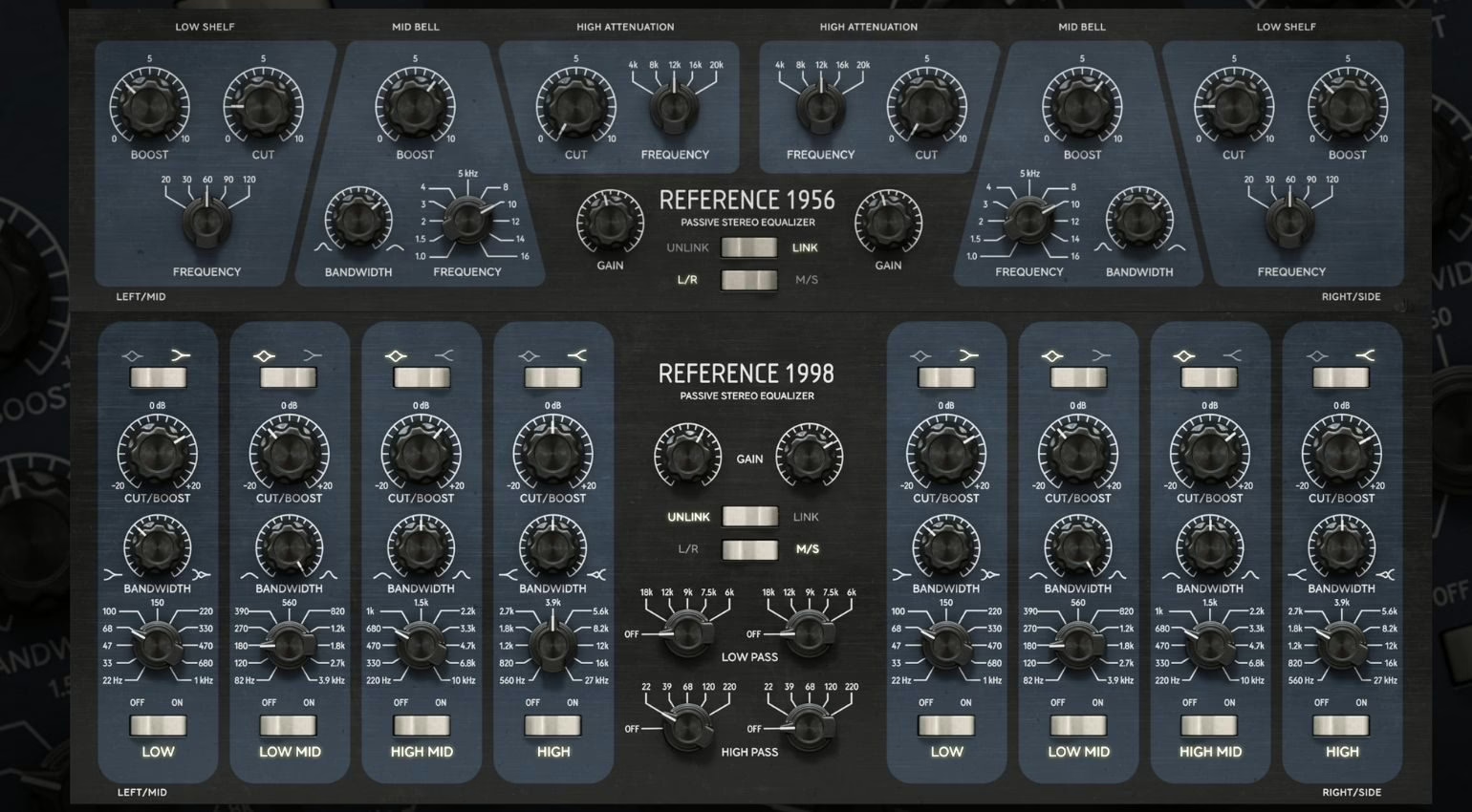
Softube adds two entries to its equalizer catalogue with the Reference EQs: the Reference 1998 Equalizer and the Reference 1956 Equalizer, two passive tube designs built for colour and big musical moves rather than surgical correction. Released on 12 August 2026 for macOS and Windows, they extend the brand’s recent Equalizers plugin and confirm Softube’s push toward modelling clearly recognisable studio classics.
Two passive tube EQs, two philosophies
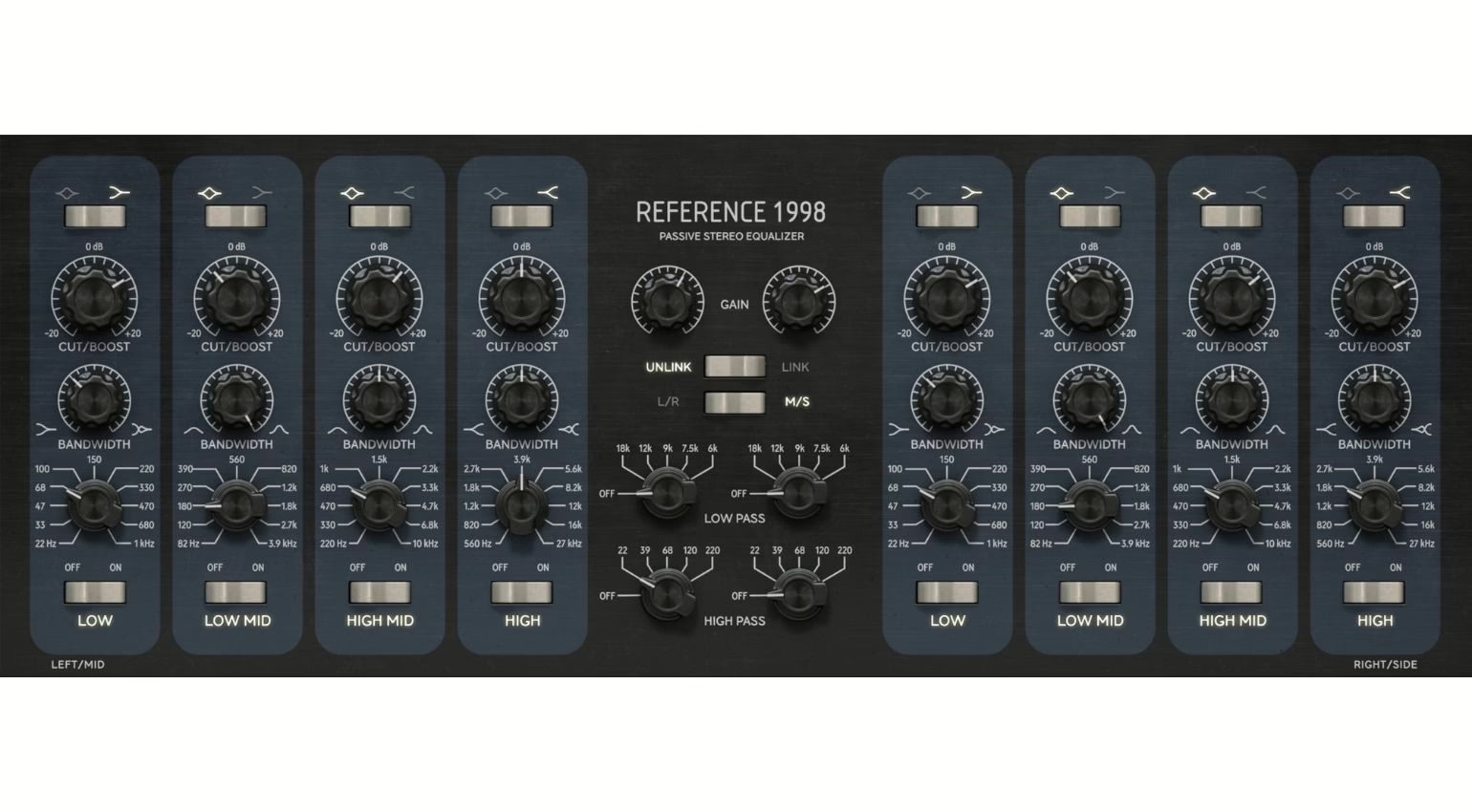
As so often, Softube stays coy about the original hardware — trademark caution. But the architecture gives the game away. The Reference 1998 lines up four parallel passive bands paired with a generous, high-headroom tube stage: that’s the vocabulary of a large-format program EQ in the Massive Passive mould, where boosts and cuts stay musical at any setting because the filtering is passive and the make-up gain comes from the tube. The Reference 1956 points back to the 1950s passive tube EQ lineage, in the spirit of the Pultec units: few bands, broad curves, and that transformer signature that thickens the low end.
What each one brings to a mix
The Reference 1998 is the “I want this to breathe” tool. Its bell and shelf bands, with variable curve shapes, are there first and foremost to open up a bus, lay down a silky top end or give a full mix some weight without ever getting harsh. The gentle saturation of the tube stage does the rest: it glues the elements together.
The Reference 1956 pushes the broad-strokes logic even further, but it adds conveniences the period hardware never had. Softube grafts on mid/side functionality, separate gain controls per channel and a Headroom control that lets you exaggerate the thick low-end character of the transformers. In other words: the colour of a vintage passive, plus modern ease of use for treating a stereo bus or a master without rolling out the digital heavy artillery.
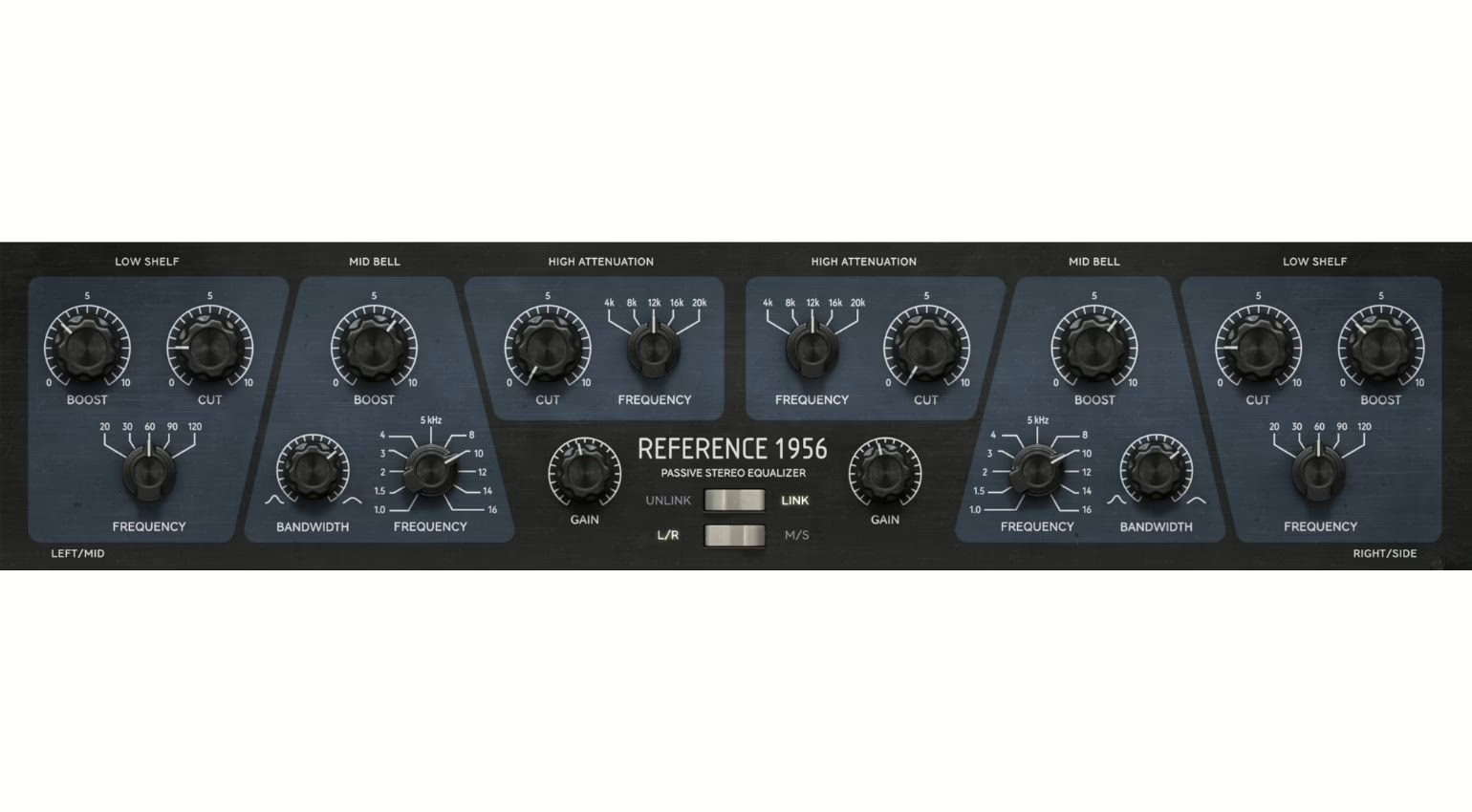
| Reference 1998 | Reference 1956 | |
|---|---|---|
| Inspiration | Large-format program EQ (Massive Passive type) | 1950s passive tube EQ (Pultec spirit) |
| Bands | Four parallel passive bands | Few bands, broad curves |
| Modern edge | Tube stage, variable curve shapes | Mid/side, separate gains, Headroom control |
| Typical use | Buses, sub-groups, master | Master, broad-strokes stereo treatment |
Both pair with Softube’s own Equalizers plugin, which visualises the units’ signature curves, adds up to twenty bands of modern EQ, detailed frequency analysis and dynamic EQ features. Softube’s logic is clear: colour on one side, precision on the other, in a single chain.
Price and availability
Each plugin carries an intro price of $79 / €79, with the Reference Equalizers bundle pairing the two at around $149. The Reference EQs are available for Windows and macOS in VST, VST3, AU and AAX formats, from the Softube store and Plugin Boutique. They’re also part of the Flow subscriptions (Flow Mastering, Flow Mixing and Flow Complete Suite) for anyone who prefers renting to buying outright.
Our take
A passive program EQ isn’t there to repair — it’s there to decide. You don’t go hunting a 3 dB notch at 4.7 kHz: you set an intention, you thicken, you open up, you add colour. That’s exactly the ground where software modelling has caught up with hardware — not because the code “sounds like,” but because on this kind of broad treatment the audible result is what counts, not the badge on the faceplate. I’ve always argued that going fully in-the-box is viable once you know what you’re after; these Reference EQs are a good reminder that the real value of a passive tube EQ lies in how it flatters the program, and that a good model delivers it without the weight of a rack.
That said, Softube lands in a crowded lane. If you’re chasing passive-tube colour, remember that perceived warmth often comes as much from harmonic saturation as from the curve itself. Full specs are on the Softube site.