Mixing on headphones is still the home studio’s blind spot. You gain detail and silence, you lose the room: that stereo image spreading out in front of you, the low end your body feels as much as your ears. LEWITT — best known for its microphones — takes the problem head-on with Space Replicator, a virtual monitoring plug-in that has just reached version 2.0. The idea isn’t to slap a reverb on your master bus, but to rebuild the acoustics of genuine reference rooms right inside your headphones.
Rebuilding a room, not adding an effect
That distinction is everything, and it’s what separates Space Replicator from a plain room simulator. LEWITT captured real acoustic spaces at high resolution, preserving how sound waves arrive over time. The plug-in then plays those rooms back through a personalized binaural profile, built from a short algorithmic training pass tailored to you. The payoff: no artificial coloration or stray reverb tail, but the depth, width and clarity of a real control room translated to headphones.
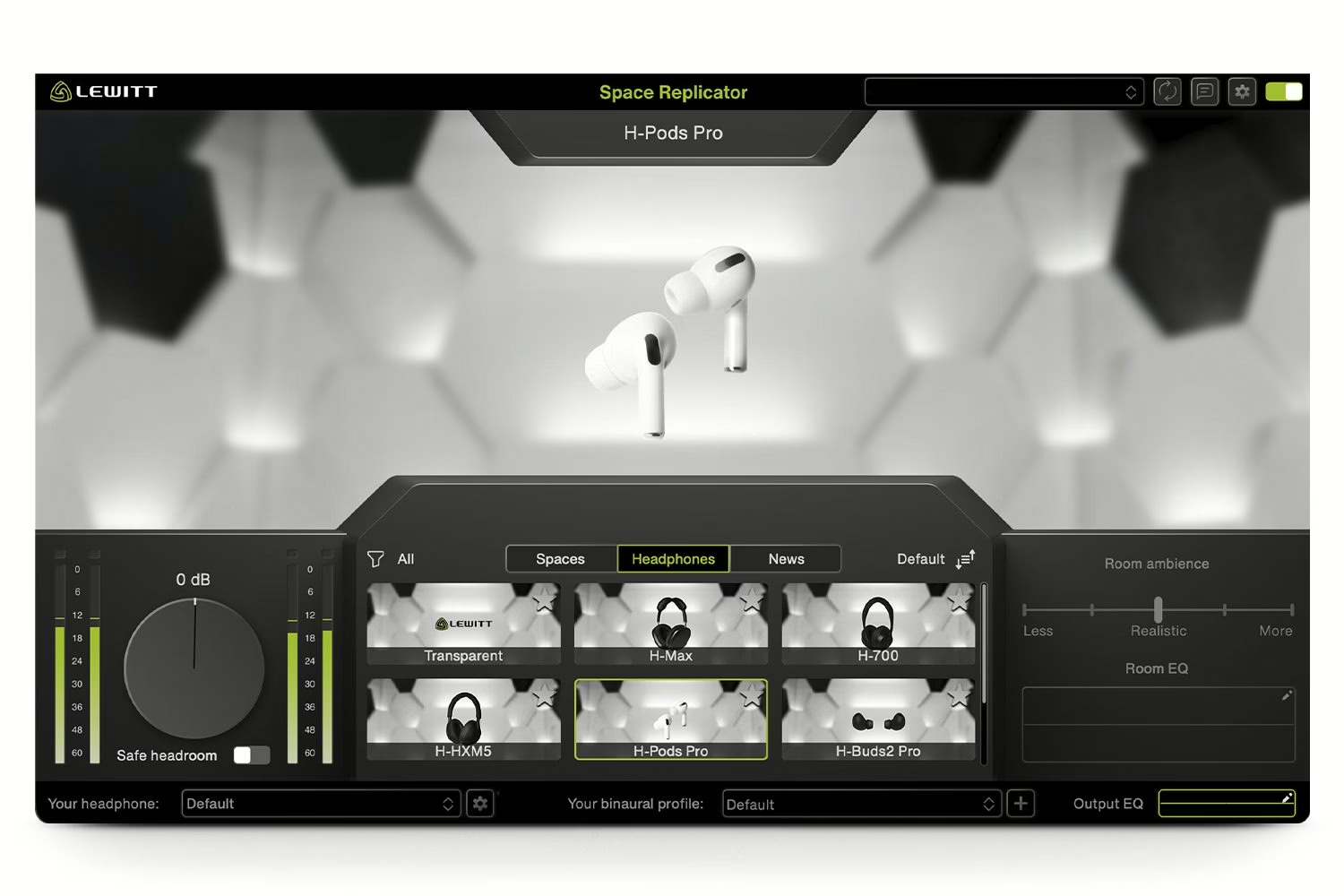
For the illusion to hold, your headphones’ own signature has to be compensated. LEWITT claims more than 800 compensation profiles: pick your model, the plug-in corrects its frequency response, then lays the virtual room on top. A “Transparent” mode offers an ideal response, defined through a controlled listening study, for anyone who prefers a neutral reference over a named venue.
From flagship studios to kitchen speakers
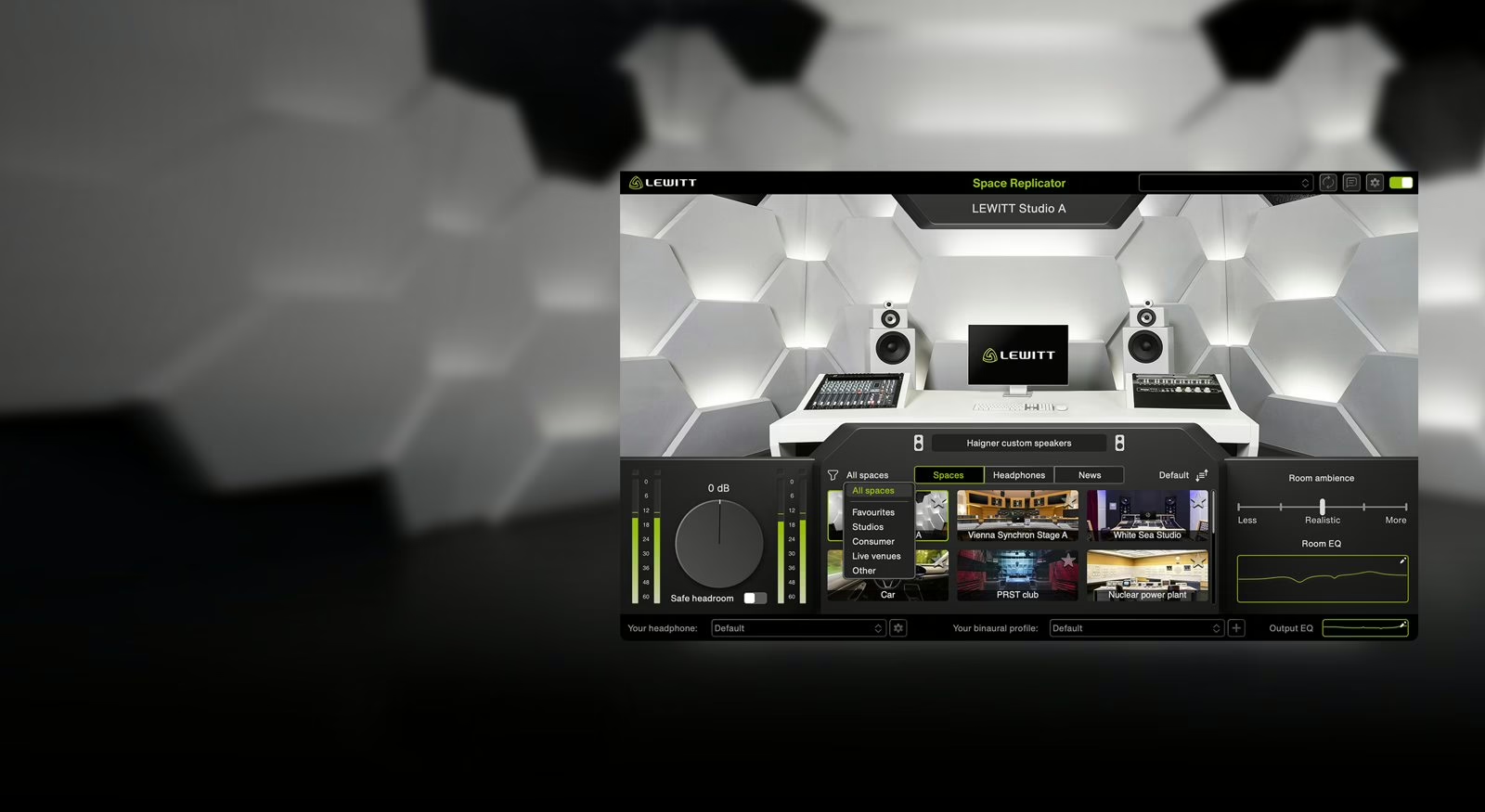
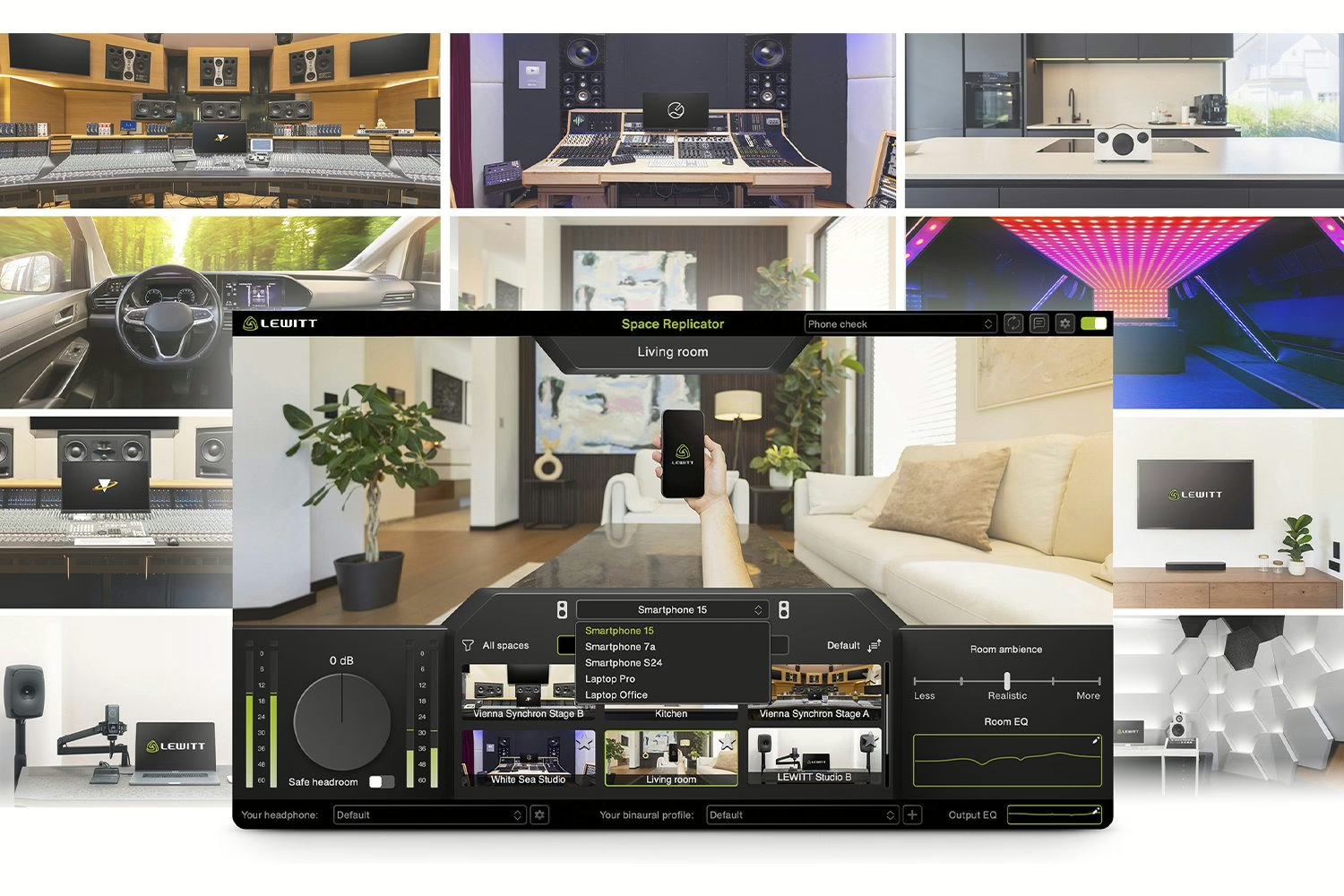
The catalog of spaces is the tool’s real strength, and it goes well beyond mix rooms. There are two complementary families. On one side, reference studios: LEWITT’s own control rooms A and B, White Sea Studio, rooms A and B of Vienna’s Synchron Stage, an “ideal mixing room” and a more surgical “analytic space.” On the other, translation spaces built to test how a mix holds up: a car with several seating positions, clubs (Berlin’s Watergate, Vienna’s PRST), a living room with multiple playback systems, a kitchen, a TV room. It’s the logic of an engineer stepping out to check a mix in the car — except none of it means leaving the headphones.
What version 2.0 brings
2.0 doesn’t reinvent the engine, it hands control to the user. Every space now has its own global EQ, to tune a room’s timbre to your headphones or your habits. Add a refined ambience control, an output EQ, a left/right balance and user preset management. Those controls are reserved for the Standard edition; the more affordable Essential edition keeps to the basics with two studios, three translation spaces and a handful of headphone compensations.
On the integration side, Space Replicator ships as VST3, AU, AAX and a standalone app, on Windows and macOS, Intel and Apple Silicon alike. No iLok in sight: authorization runs through a simple periodic online check. The Standard edition sits around the hundred-dollar mark, firmly in smart-buy rather than heavy-investment territory.
My take: useful, as long as you don’t lock yourself in
I’m still wedded to a good pair of speakers in a treated room — that’s where the real mix decisions get made. But I won’t dismiss a tool like this, far from it. On the road, traveling, or when the building’s asleep, well-designed virtual monitoring keeps you from the gross errors of tonal balance and imaging. Where Space Replicator wins me over is translation: being able to check, without moving, how a mix will hold up in a car or on a consumer system is a genuine time-saver. The trap would be treating it as your only truth and forgetting the speakers; binauralization, however refined, is still a simulation. Used for what it is — a smart complement and a translation crutch — the tool absolutely earns its place.
This approach extends a trend we follow closely: correcting the listening chain, whether in hardware like the Audient ORIA Mini or in software here. It’s also the headphone counterpart to everything moving in the stage in-ear monitor world, where the reference increasingly lives in your ear. And for anyone still mixing in front of monitors, the real question remains the room/speaker pairing — exactly what the DSP-equipped KRK V-Series Five puts on the table.