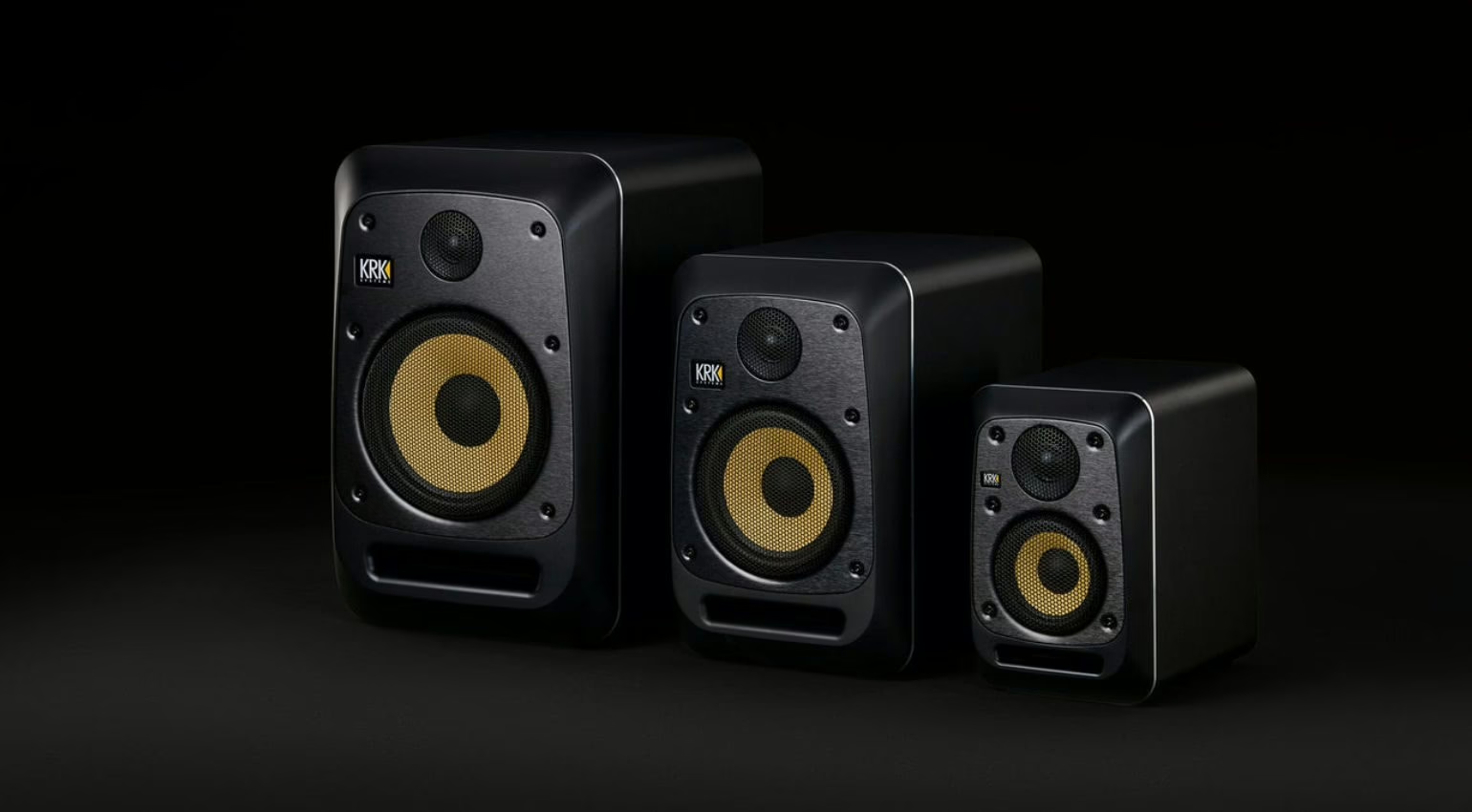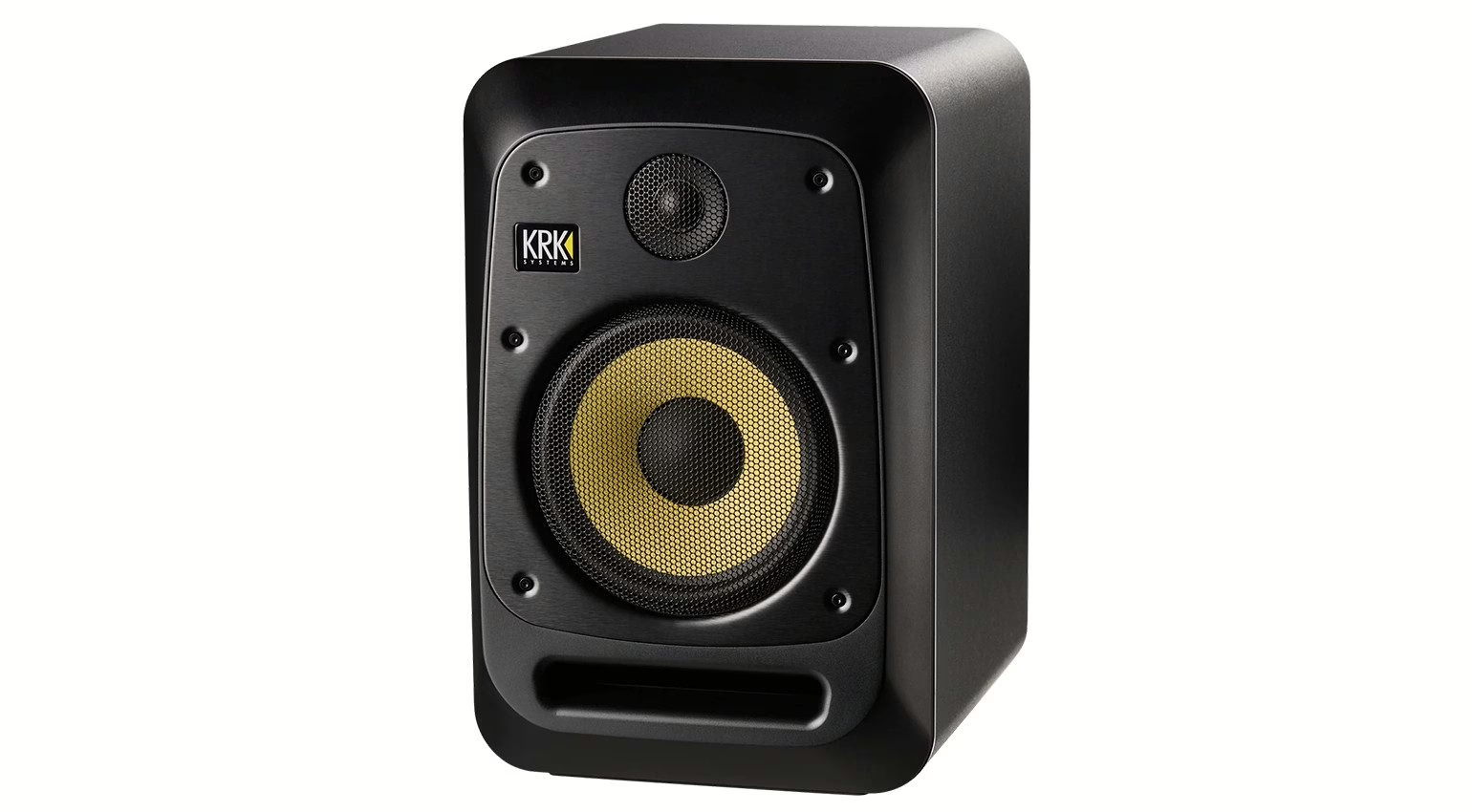
KRK is one of those brands almost everyone has run into, often in their first home-studio years, thanks to the ROKIT line and its unmistakable yellow woofers. With the V-Series Five, the company aims at the more serious end of its reference monitors and brings in a dose of digital that genuinely moves the needle.
Three sizes, one philosophy
The range comes in three models: the V4S5 (4-inch woofer), the V6S5 (6.5-inch) and the V8S5 (8-inch). All keep the house look — yellow Kevlar woofer, two-way front-ported cabinet — but adopt a damped silk-dome tweeter designed to cut listening fatigue over long sessions. Frequency response now reaches 40 kHz, with lower stated distortion and tighter stereo imaging.
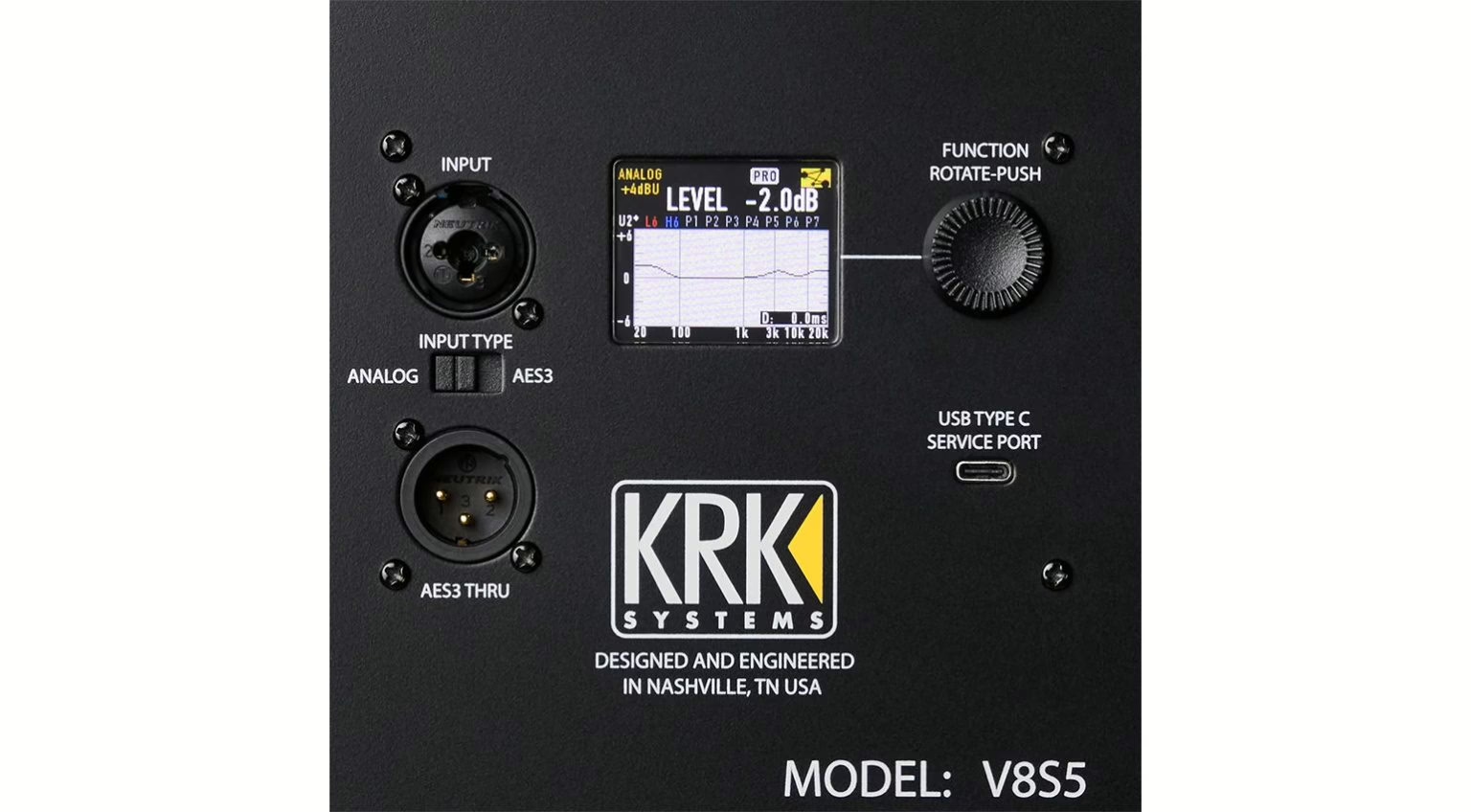
The real leap: DSP, digital input and an app
The biggest change isn’t in the driver, it’s in the electronics. The V-Series Five packs revised Class D amplification, a DSP engine with higher-grade conversion and, above all, a 7-band parametric EQ to match the monitor to your room. KRK adds its MESH wireless technology, letting you control levels, mutes and EQ from a mobile app — a real convenience when the monitors are mounted high or hard to reach. The treat for modern rigs: an AES3 digital input that bypasses an extra conversion stage.
On power, the V4S5 is rated at 450W RMS (280W for the lows, 175W for the highs) and a 113 dB SPL max over a 48 Hz–40 kHz response. The V6S5 reaches down to 40 Hz and pushes to 118 dB SPL — plenty for a comfortable nearfield or a small control room.
Positioning and price
KRK slots the V-Series Five just above the V-Series Four, with pricing of $679-equivalent tiers — €679 (V4S5), €879 (V6S5) and €1,079 (V8S5) each, with pairs at roughly double. The monitors are open for pre-order, with shipping expected in the coming months.
| Model | Woofer | Response | Max SPL | Price (each) |
|---|---|---|---|---|
| V4S5 | 4″ | 48 Hz – 40 kHz | 113 dB | €679 |
| V6S5 | 6.5″ | 40 Hz – 40 kHz | 118 dB | €879 |
| V8S5 | 8″ | — | — | €1,079 |
My take
On-board DSP correction is good news, as long as you keep expectations straight. A parametric EQ inside the monitor helps tame a strong room mode or a badly placed desk, but it will never replace real acoustic treatment: no filter fixes an excessive reverb time. I mostly see the V-Series Five as a tool for constrained rooms — living rooms, home studios, mobile booths — where you can’t treat everything and where app control saves real time. The AES3 input, meanwhile, is the kind of detail that signals a line built for current workflows.
In the same monitoring vein, revisit our hands-on with the beyerdynamic DT 275 PRO headphones, and to sharpen your listening decisions, our deep dive on audio compression explained. Fans of 500-series outboard will also enjoy the Drawmer OC1 and FC1.