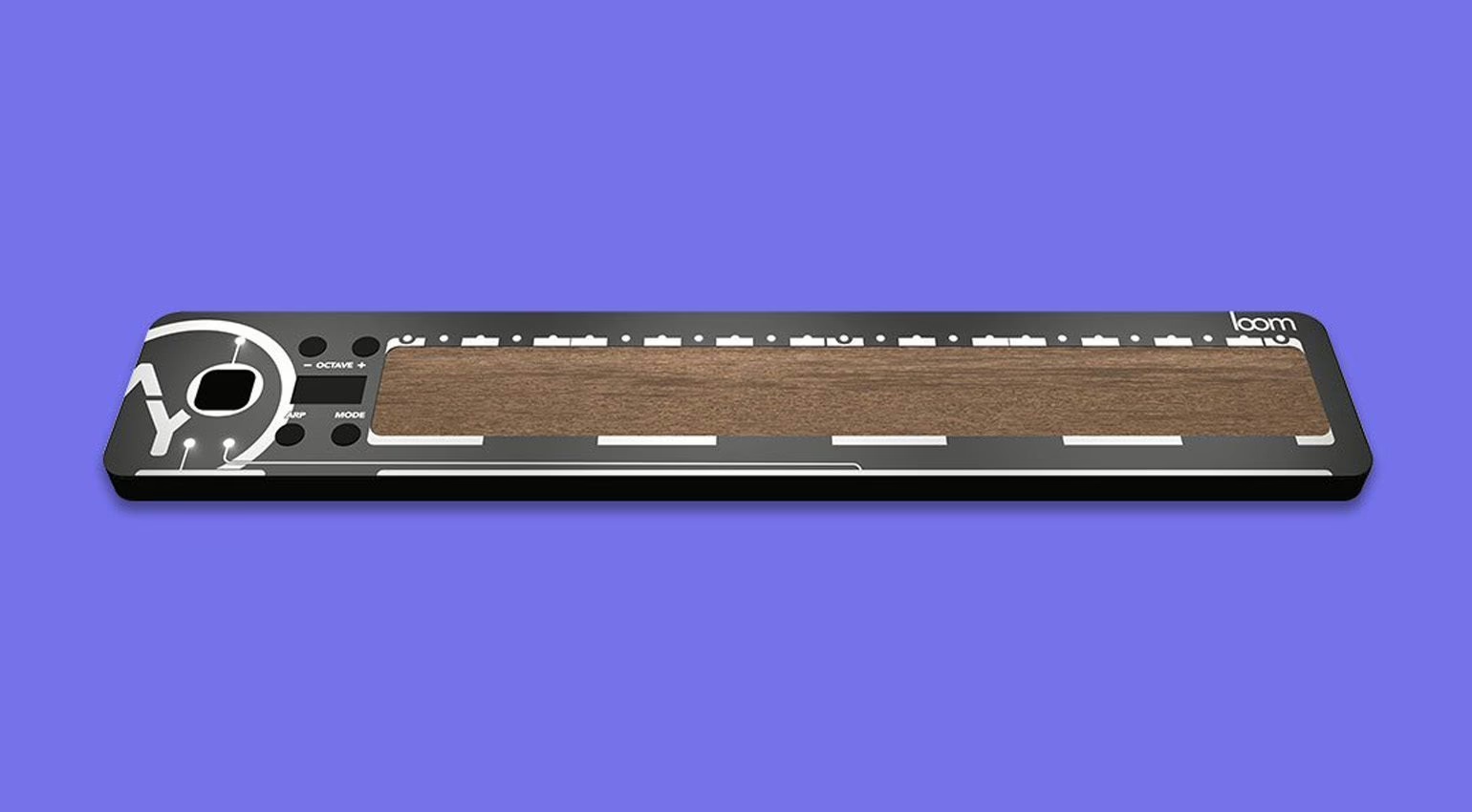
We last left the Loom in turmoil: Aodyo Instruments, the French maker behind the Anyma Phi synth, had gone under, leaving its expression controller stranded. INODESIGN’s acquisition of the assets in late 2025 restarted the project. Its head, Mickael Coronado, has now announced that the Loom’s final hardware revision is complete and that production begins in autumn 2026, with a first run of 500 units. For an object this eagerly awaited by the MPE crowd, that is a milestone that matters.
A controller that reads the hand, not just the note
The Loom is a portable, multidimensional MPE controller. Its touch surface follows each finger independently on three axes: horizontal position for pitch, vertical position for timbre, pressure for dynamics. Nothing new in the principle — that is the bedrock of MPE — but Aodyo adds an idea of its own: a patented system that measures the strike force with which a finger hits the surface. In other words, the Loom tells a caress from a sharp hit, which opens the door to genuinely percussive playing, where many MPE surfaces stay soft on the attack.
To the left of the main surface, a pressure-sensitive action zone drives dynamics or an effect. Two thumb controls join it: a fader for modulation tasks and a bar designed for sustain or cymbal chokes. You can feel a controller built by people who play, not only by engineers: every left-hand gesture has a musical destination.
Five modes, one instrument
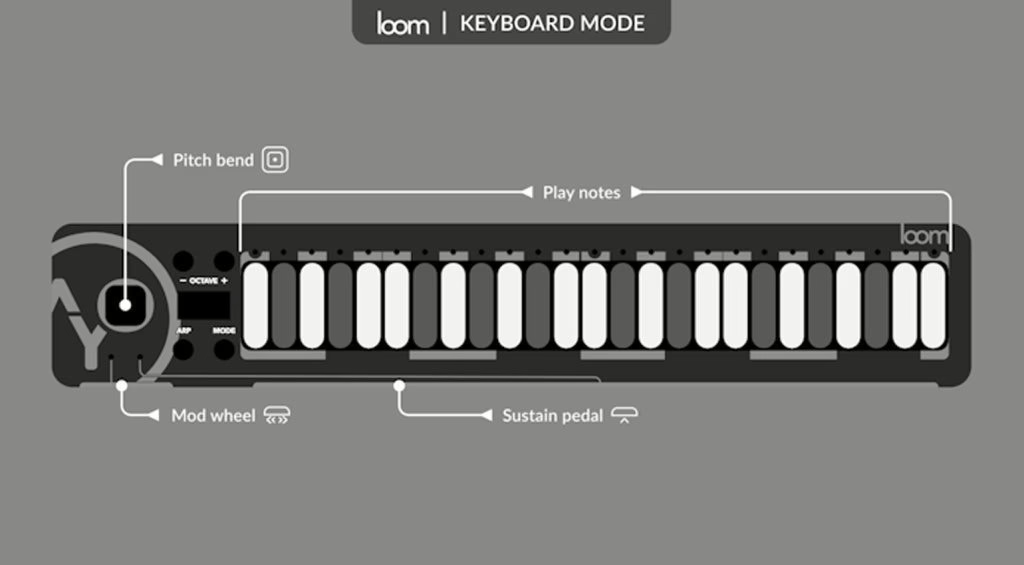
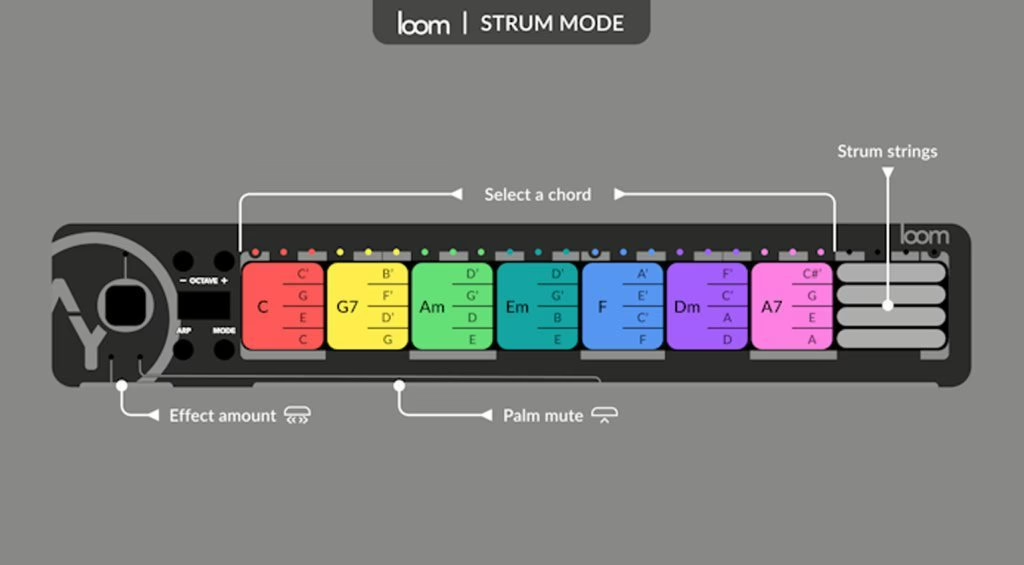
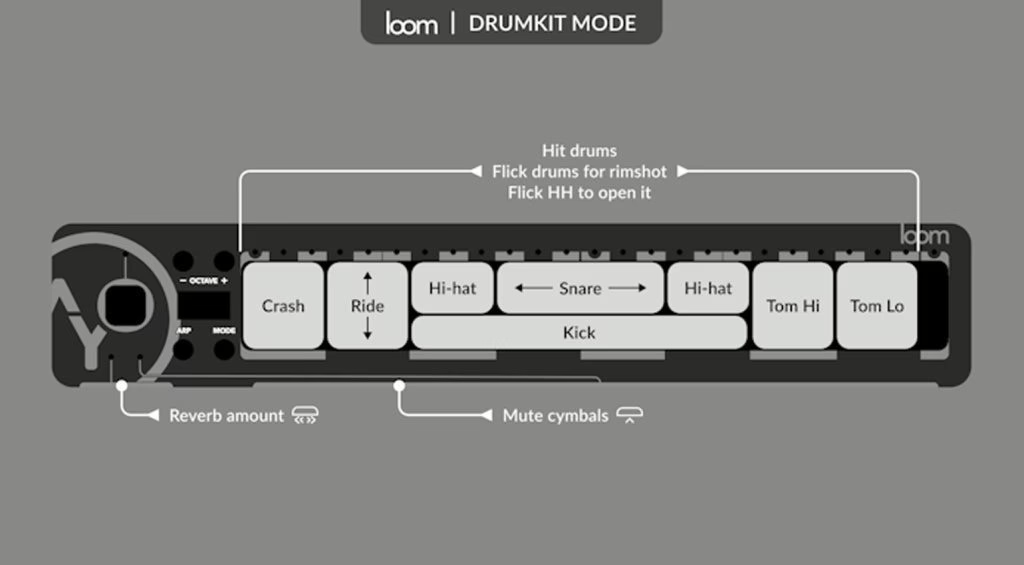
The Loom’s real originality is that it does not lock into a single playing metaphor. At launch it will offer five modes that completely change how you approach the surface:
- Keyboard: the surface becomes a classic multidimensional MPE keyboard, with fingered vibrato and glissando.
- Ribbon: a continuous ribbon for gliding between notes with no frets, ideal for expressive leads and breathing pads.
- Strum: lay down and strum chords vertically, like a guitar.
- Drum kit: finger drumming where strike force finally means something.
- A control-focused mode, to drive parameters rather than play notes.
That flexibility pushes the Loom closer to an instrument in its own right than a mere control keyboard. And because everything runs over MPE, it drives a compatible hardware synth just as happily as a virtual instrument in your DAW.
Connectivity and versions
Connection-wise, the Loom keeps it usefully simple: a USB-C port that handles both power and MIDI, a TRS MIDI output, and a TRS MIDI input added during development for syncing to an external clock. That lets it slot into a fully software setup or a hardware rig that needs to lock to tempo — a subject we cover in detail in our guide to making synths, modular and computer talk to each other.
Two formats are planned: the two-octave Loom and the three-octave Looom. Campaign pledges ran from €239 to €369 depending on version and reservation wave; the target retail price sits around €400 for the two-octave and €500 for the three-octave. The crowdfunding drive gathered 459 backers for a little over €160,000 — a modest but loyal base that partly explains why the project was rescued.
My take
I watch this kind of object with a mix of enthusiasm and caution. Enthusiasm, because fingered expression is one of the few areas where a hardware controller delivers something audible and playable that no mouse will ever replace: a fully in-the-box workflow is perfectly viable, but it needs good sensors to breathe. Caution, because the Loom emerges from a bankruptcy and has not yet shipped in volume: until 500 units are in musicians’ hands, you are judging a promise, not a product. The principle — a surface that reads the strike, five modes, clean connectivity — is exactly what you want from a modern expressive controller. The consistency of manufacturing is the open question. If you would rather have a classic control keyboard, the Polyend Keys plays in a different category, and if the MPE and polyphony vocabulary escapes you, our piece on synth polyphony sets things straight. Details and updates on the Loom site.