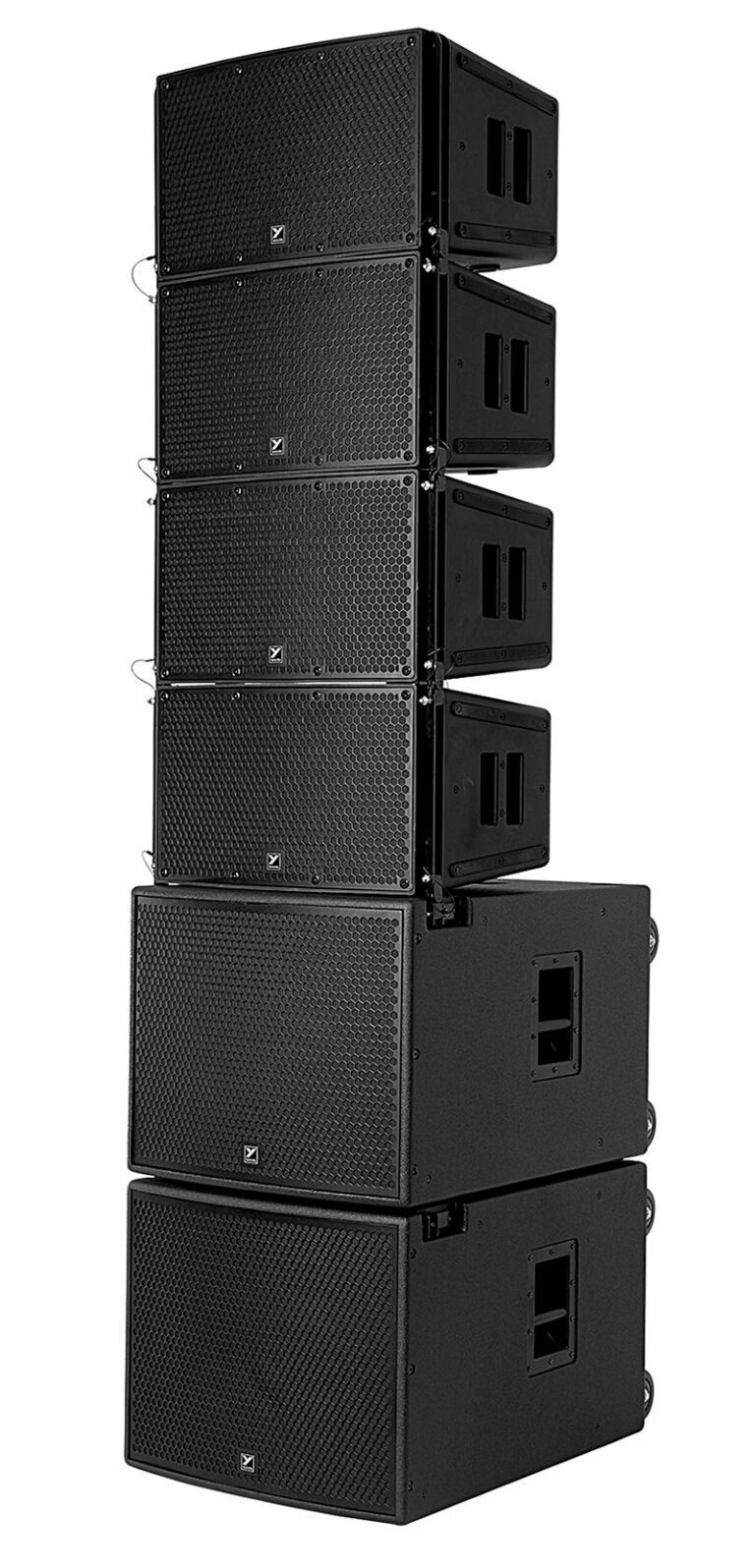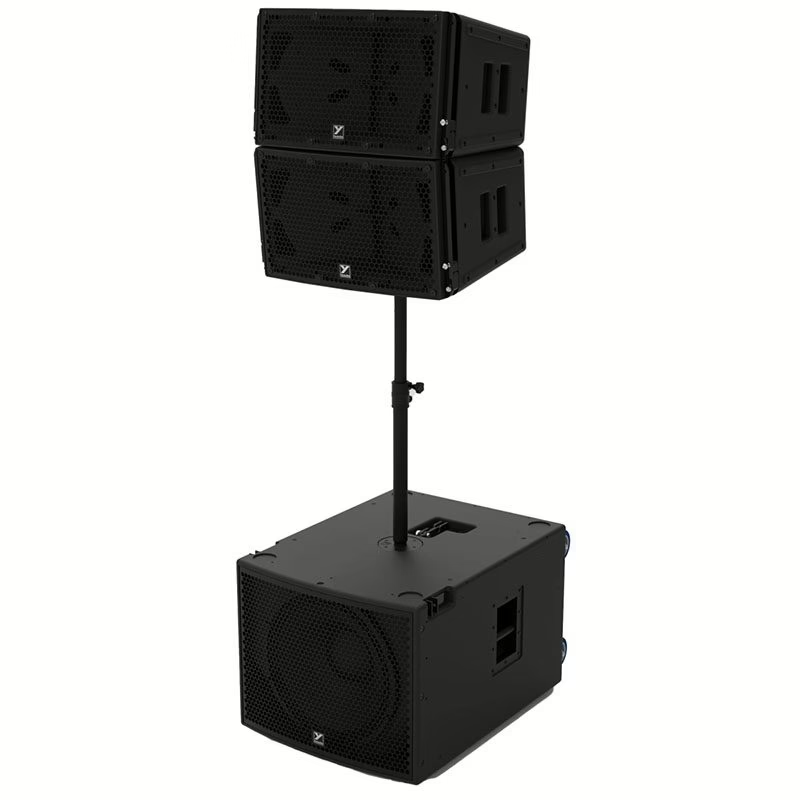
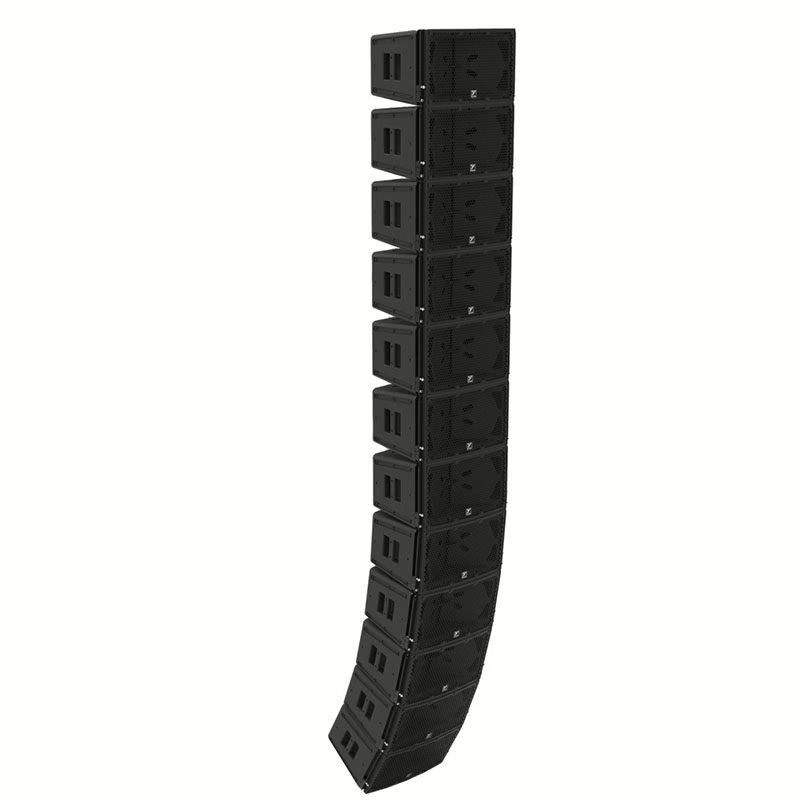
The compact powered line array has become the go-to format for small and mid-size rooms: light, quick to deploy, it is steadily replacing old column speakers and pole-mounted pairs. Yorkville is pressing its case here with a new generation of its Paraline series, four powered enclosures designed to be flown or ground-stacked.
Two tops, two subs
The range is built around two full-range modules, the PSA26 (dual 6-inch) and the PSA28 (dual 8-inch), rounded out by two subwoofers, the PSA15S and PSA18S with a 15- and an 18-inch driver respectively. On power, Yorkville quotes 850 W peak for the PSA26 and 1400 W peak for the PSA28, with the subs reaching up to 3000 W.
Every transducer uses neodymium magnets, which noticeably lightens boxes that are already built for the road. You get tone-shaping controls, onboard limiting and integrated rigging hardware that keeps accessory clutter to a minimum.
The Tom Danley signature at a reachable price
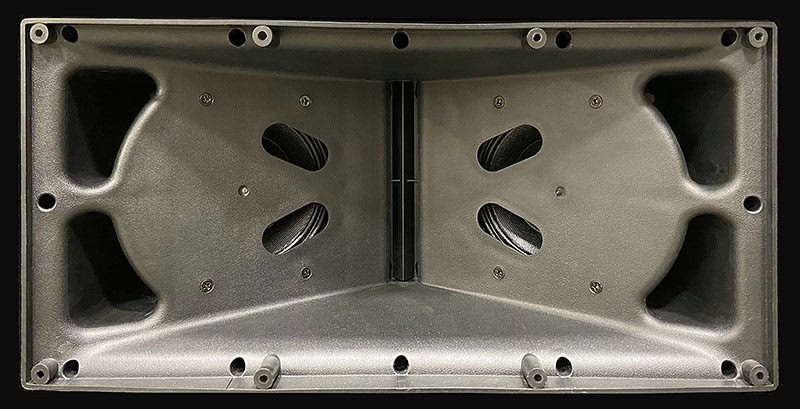
The technical pitch comes down to two names: the Paraline Lens and the Synergy Horn, two patented technologies from designer Tom Danley. The first aligns the outputs so the box behaves like a true line source; the second combines the drivers into a single horn. The stated goal is to minimise comb filtering — the filtering artefacts that come from imperfect coupling between neighbouring drivers — while maximising efficiency and directivity.
That is exactly what separates a good line array from a mere stack of speakers: control over vertical coverage and phase coherence between elements. Finding that kind of engineering in a compact format at a contained price is not trivial. To understand why a line source behaves differently from a point source, see our full guide on how a line-source PA really works.
Built for outdoors and versatility
All four models are IP54-rated, so they can be used outdoors within reason — a real plus for open-air gigs and semi-permanent installs. They are built at Yorkville’s plant in Pickering, Ontario. On price, the PSA26 is listed around 1,999 dollars and the PSA28 around 2,199 dollars (indicative US street prices), with the enclosures shipping worldwide for immediate delivery.
The appeal of a range structured this way is scalability: start with one or two boxes a side on poles for a club, then stack more modules and add subs as the room grows, without changing system or tuning logic. That is what separates a true line-array module from a plain powered speaker: the coherence is designed for a stack, not for a single isolated box.
Yorkville is no stranger to the live stage: the brand already made noise with an unusual powered sub, which we covered when the EL24S and its 24-inch driver hit the live market.
Our take
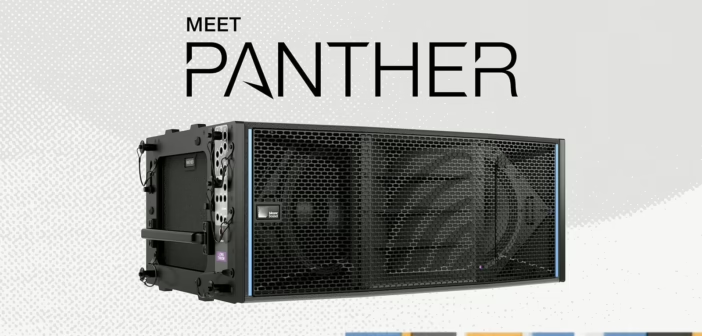
I remain attached to the great names in sound reinforcement, and I own my preference for Meyer Sound. But what matters in the field is whether a system solves a real problem, not the logo on the grille. Coupling and comb filtering are precisely what drags down cheap small systems: hearing Yorkville lean on Danley geometry to control the directivity of a powered compact at this price is the kind of engineering choice you can hear. That said, IP54 is not a licence to run it in the rain, and a compact will never replace a proper flown rig on a big show. For what it targets — clubs, mid-size rooms, mobile gigs — the bet is credible. As always, the result will depend on system tuning as much as on the box itself.