In a radio or TV operation, a recording runs non-stop that no one ever listens to — except the day you have to prove what went to air. That’s compliance recording, or logging: the continuous capture of the broadcast signal, timestamped and kept for a set period. Discreet, inaudible to the listener, it’s nonetheless one of the most important links in the broadcast chain. Here’s what it’s for and how it works.
Why record what you’re already broadcasting
The first reason is regulatory. A broadcaster must be able to prove, on an authority’s request, what actually went out: respect for watershed hours, balance of speaking time, programme content, legal announcements. The regulator (Arcom in France, Ofcom in the UK, the FCC in the US) can demand a dated excerpt, and it’s the log that delivers it.
The uses go well beyond the legal obligation, though. An advertiser wants proof their spot ran, at the scheduled time — that’s “as-run” verification. A listener complains about something said on air: you find the exact passage. A dispute over a live show, a technical fault to analyse, a heritage archive to build: the log answers every time. In short, it’s the objective memory of the output.
How it works, technically
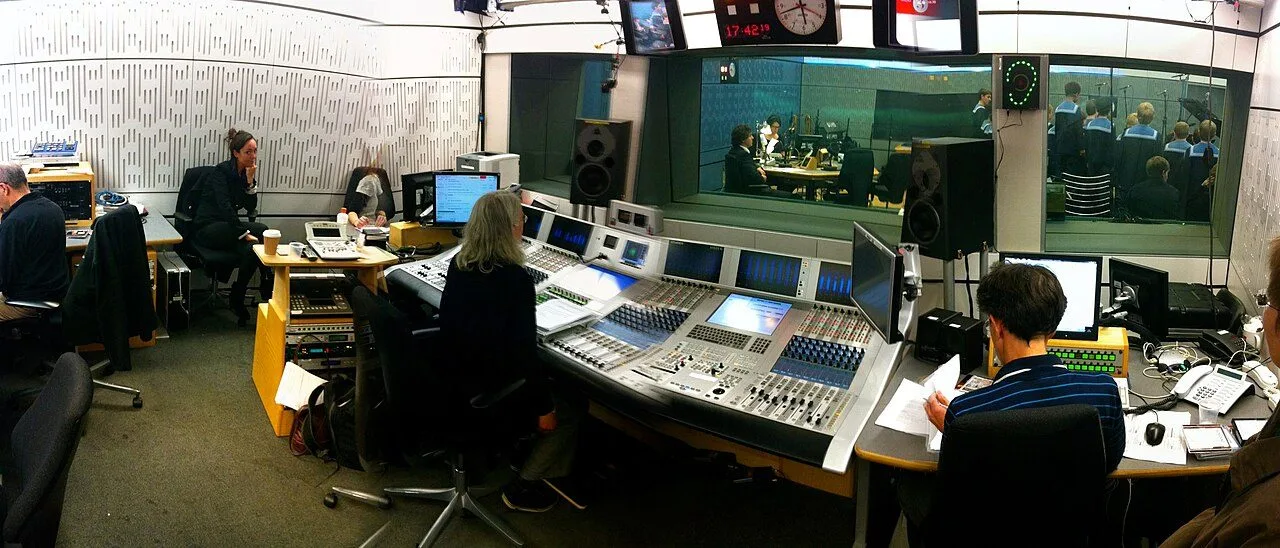
The principle is simple, the execution rigorous. A recorder — the logger — captures the signal as close as possible to the on-air output, ideally after the whole broadcast chain, to reflect exactly what the listener heard. It runs continuously, 24 hours a day, and timestamps every moment from a reliable clock (NTP or GPS). That timestamping is what gives the whole thing value: without a precise time reference, a recording proves nothing.
- Format and quality: for compliance, you record at a reduced bitrate (speech quality is ample), which lets you keep weeks or months of output without swamping storage. Intelligibility beats fidelity here.
- Retention period: it’s set by the regulator and varies by country, from a few weeks to several months. The logger purges automatically beyond that, on a rolling basis.
- Search and export: the point of a log is to find things fast. You navigate by date and time, drop markers, and export a dated excerpt to hand over on request.
- Multichannel and IP: modern loggers are often software and capture several stations at once over the network, alongside the “as-run” logs from the playout system.
Compliance logging vs the skimmer: don’t confuse them
Two recordings often live in the same box, but they don’t serve the same purpose. The compliance log records everything, continuously, at modest quality, for legal reasons. The skimmer (or aircheck) records only the presenter’s segments — their “talks” over the music — at good quality, for coaching, demos or self-critique. One is there to prove, the other to improve. Confuse them and you either waste storage or miss the archive you needed.
Good habits
A log is only worth anything if it’s reliable on the day. Three precautions matter. First, record the right point: the real on-air signal, not an intermediate source that doesn’t reflect what’s broadcast after the studio-to-transmitter link. Second, monitor the logger itself: a recorder that has failed silently is worse than no recorder, which is why it pays to pair it with silence detection and supervision. Third, document retention periods and access: who can pull a passage, and under what procedure. Many loggers also record loudness measurements, adding proof of technical compliance to proof of content.
My take
Logging is the insurance you pay for and never want to use — and that’s worth its weight in gold on the day of an incident. It’s easy to neglect because it can’t be heard and earns nothing while all is well. The mistake would be to treat it as a tape machine forgotten in a corner: its value rests entirely on timestamping, supervision and speed of retrieval. Get those three right and the rest follows. With IP loggers now capturing whole fleets of stations, it has never been easier to deploy — all the more reason not to go without.