Wireless mics for the stage are going through a quiet but very real shift. In the space of a few weeks, three announcements reshuffled the deck: on-board 32-bit float recording from Sony, bidirectional wideband transmission from Sennheiser, and a whole generation of digital systems that make RF reliable even on tight budgets. Which raises the right question: what should you buy today, based on what you put on it — and what you can afford to put on it?
Here are seven systems that matter in 2026, grouped into honest tiers — from plug-and-play instrument wireless to the broadcast flagship. The scope is deliberately stage and live sound: systems for vocals, speech and instruments on a platform. We’re leaving out camera and content-creator wireless (the RØDE Wireless or DJI Mic crowd), which answers a different need, and in-ear monitoring, which we’ve covered separately. Prices are indicative, taken from the North American market unless quoted in euros; expect them to move with the frequency band and capsule you choose.
The disruption: wideband transmission
For decades, every RF mic has occupied its own narrow frequency window, coordinated one by one. A new approach flips the table: a single wideband carrier that hosts many channels, in both directions. It’s still a big-system investment, but this is where the future of the stage is being drawn.
Sennheiser Spectera
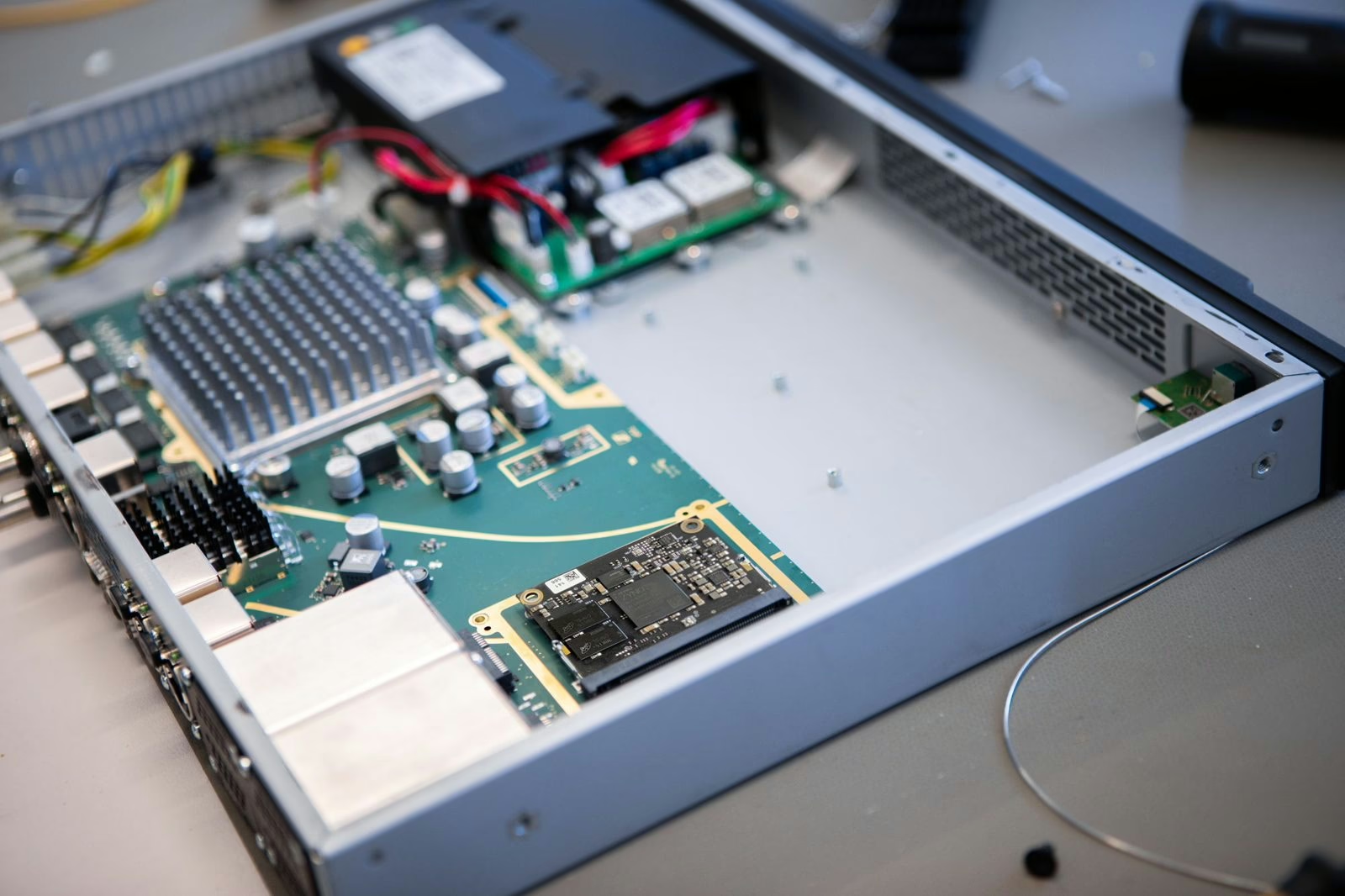
Spectera is the first wideband, bidirectional wireless ecosystem: mics and in-ear monitors travel on the same carrier, handled by a single-rack-unit base station. The in-house technology, WMAS, packs up to 64 channels (32 in and 32 out) and shrugs off RF fading far better than classic narrowband gear. Uncompressed audio, IEM latency down around 0.7 ms, operation in UHF (470–663 MHz) and the 1G4 band (1.435–1.525 GHz): on paper, it’s a complete rethink of the RF architecture.
This one is for large productions: the base station runs around €9,995 (about $9,999), the bodypack transmitter/receiver close to €2,000, and each antenna roughly €1,600. It isn’t a replacement for your spare pair of handhelds — it’s a paradigm shift for anyone managing lots of channels in crowded spectrum.
At a glance: Sennheiser · base station ≈ €9,995 / $9,999 · bidirectional wideband WMAS, up to 64 channels in 1U, UHF + 1G4, uncompressed audio
Product page: Sennheiser Spectera
The high end: stage and broadcast
This is the territory of systems built for touring, TV and major stages: uncompromising RF reliability, encryption, high channel counts, mechanical toughness. The entry ticket is steep, but that’s the price of peace of mind when a dropout simply isn’t an option.
Shure Axient Digital
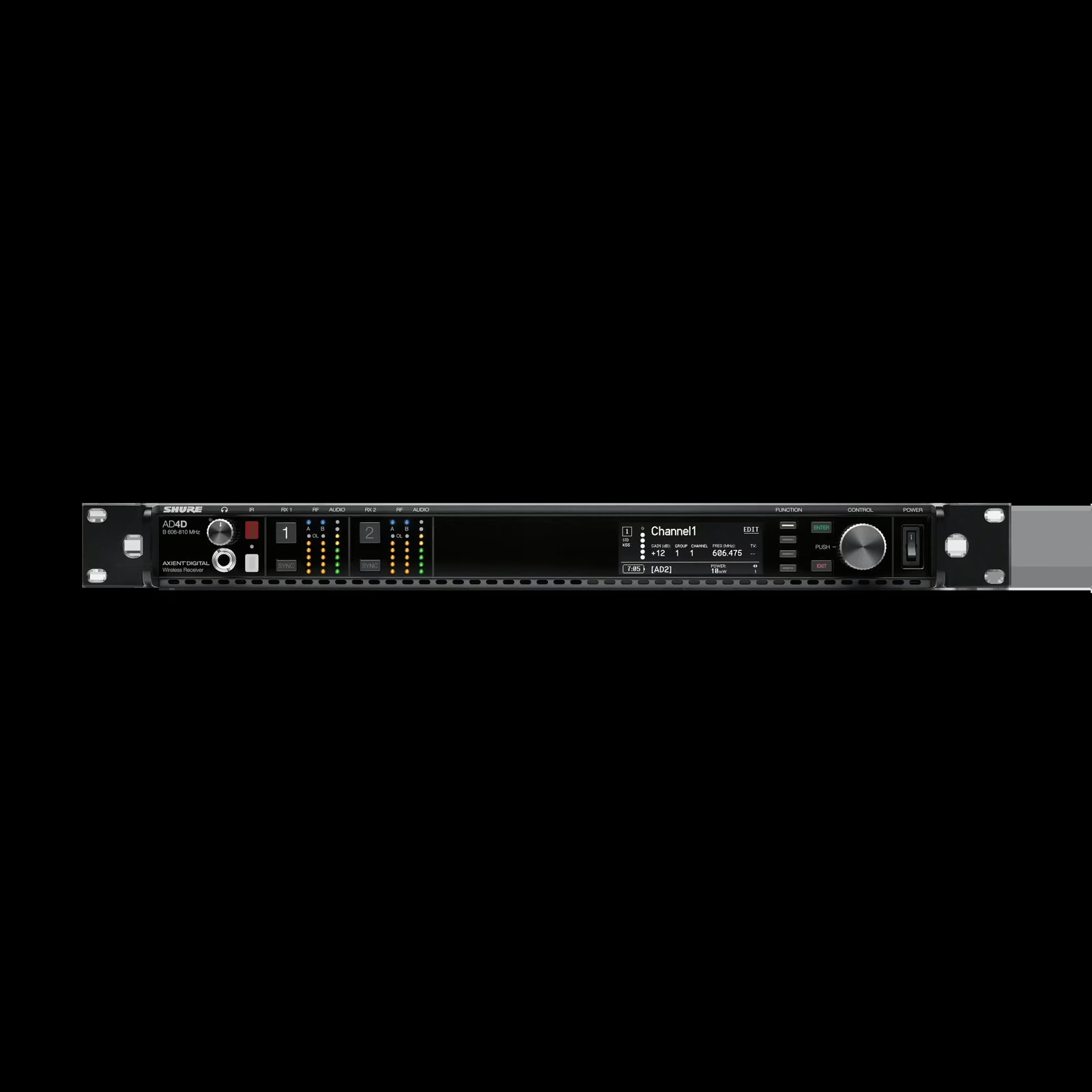
The reference you’ll find on the biggest stages and in broadcast. Axient Digital leans on a very wide tuning range (up to 184 MHz on some components), a digital modulation scheme engineered for signal stability, AES-256 encryption and capacity that climbs past 120 channels. The dual AD4D receiver sits around $3,900, with handheld or bodypack transmitters between roughly $950 and $1,100. Add network management and ShowLink for remote transmitter control and you have a production tool, not just a wireless mic.
At a glance: Shure · AD4D receiver ≈ $3,900, transmitters ≈ $950–1,100 · UHF, tuning range up to 184 MHz, AES-256, 120+ channels, ShowLink
Product page: Shure Axient Digital
Sony DWX (4th generation)
This is the announcement that kicked off the whole roundup. The 4th generation of the DWX series adds one big idea: the DWT-B40 bodypack transmitter records internally in 32-bit float, with timecode and a microSD card, as a safety net if the RF link drops — and, thanks to the format, with no distortion at any level. Latency is quoted around 1.1 ms, with a direct condenser-mic input carrying +48V phantom power and powering from lithium-ion or USB. On the other end, the DWR-R40Q receiver fits four true-diversity channels and Dante into a single rack unit while keeping analog XLR outputs.
Important caveat: as we write this, Sony has announced the system but hasn’t confirmed pricing, with availability expected in early 2027. So it’s a milestone more than an immediate purchase — but the message is clear: 32-bit float, already spreading through field recorders, is coming to stage RF. We broke it down in our dedicated Sony DWX Gen 4 article.
At a glance: Sony · pricing TBA, availability expected early 2027 · DWT-B40 bodypack with internal 32-bit float + timecode + microSD, DWR-R40Q 4-channel true-diversity receiver with Dante in 1U
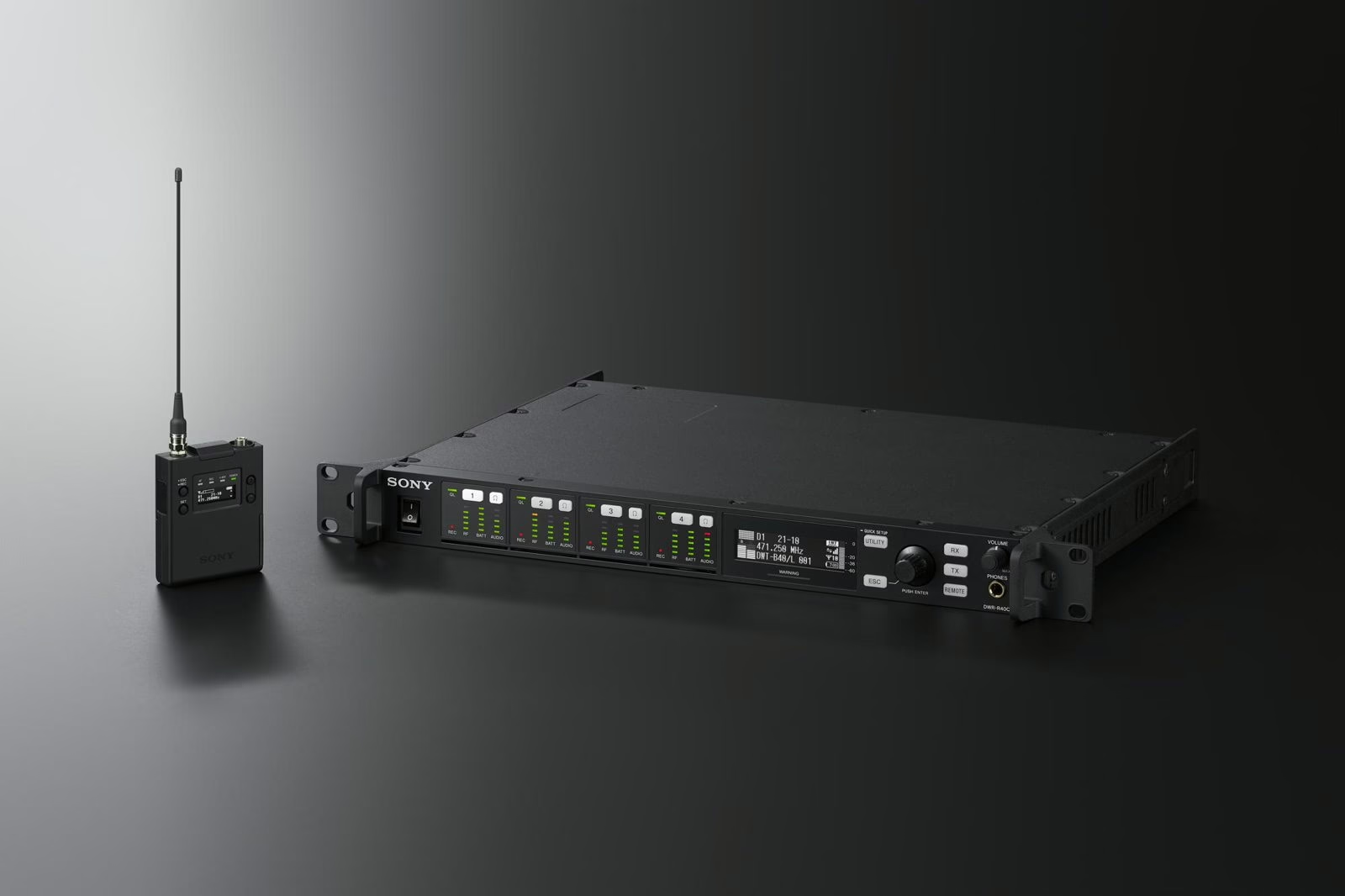
Official brief: Sony DWX 4th generation
Sennheiser EW-DX
The bridge between the demanding pro and a sensible budget. EW-DX is digital UHF with a 134 dB input dynamic range, 1.9 ms latency, an 88 MHz tuning range offering thousands of frequencies, in-device charging (up to 12 hours on the BA70 battery) and Bluetooth control via the Smart Assist app. Pick a two-channel half-rack receiver or a four-channel Dante unit depending on the project, with room to grow. Sets run between $2,200 and $2,700 depending on the handheld or lavalier configuration. For many rental companies, it’s the sweet spot between touring reliability and controlled cost.
At a glance: Sennheiser · sets ≈ $2,200–$2,700 · digital UHF, 134 dB dynamic range, 1.9 ms latency, 88 MHz tuning, in-device charging, Smart Assist, up to 4-channel Dante receivers
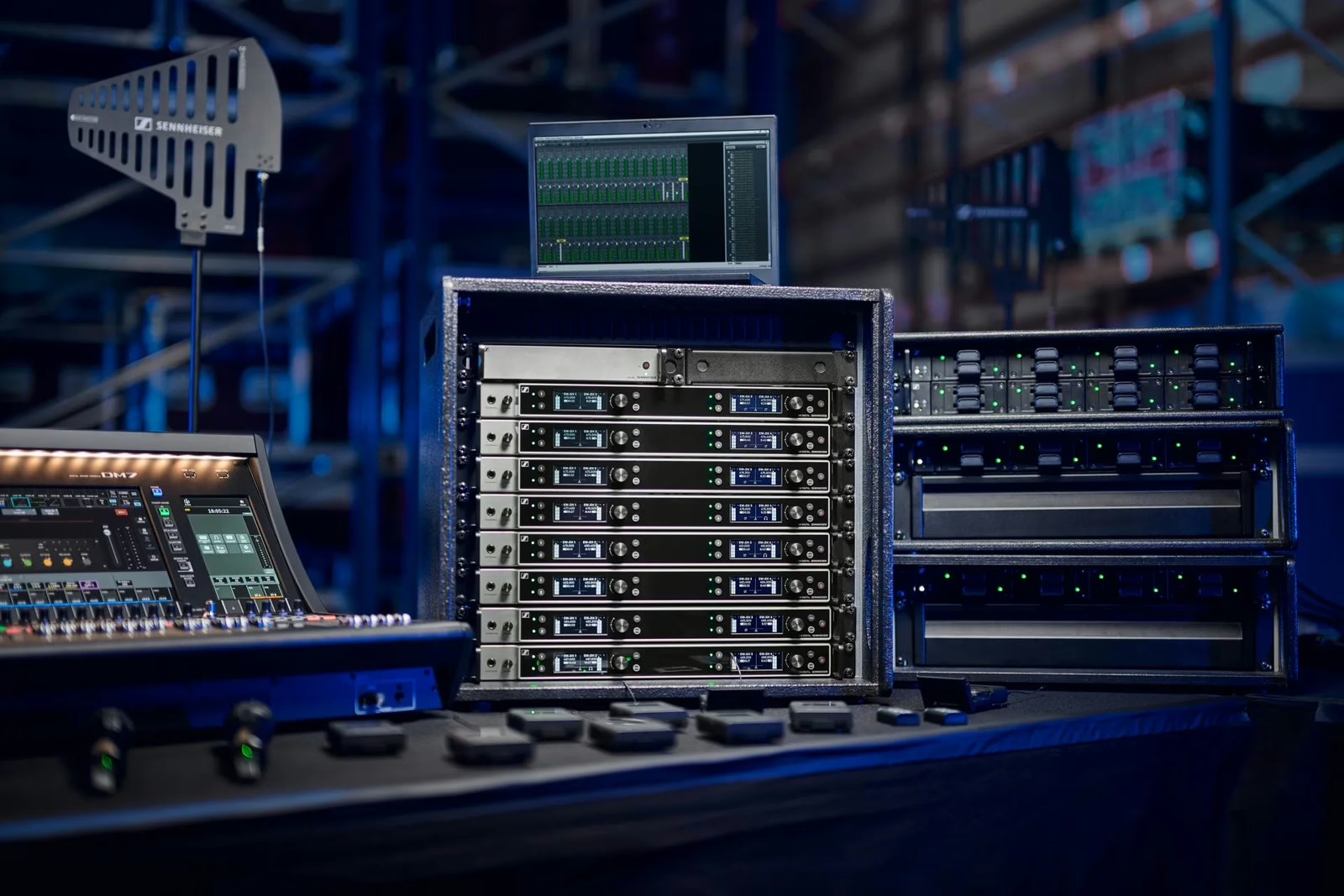
Product page: Sennheiser EW-DX
Reliable and affordable digital
The real good news of the last few years: quality digital wireless has dropped below the $800 mark. Simplified coordination, 24-bit audio, smartphone setup apps — these systems cover the overwhelming majority of small- and medium-scale live sound, worship, conference and band needs.
Shure SLX-D
Shure’s accessible digital line. SLX-D delivers transparent 24-bit sound, a dynamic range above 118 dB and 2.8 ms latency, with up to 32 channels per frequency band and genuine peace of mind on dropouts. It starts around $740, with the SLXD5 portable receiver (ideal for camera and small setups) near $380. Worth noting: Shure has since spun off an SLX-D+ that widens the tuning range and adds ShowLink Ease, encryption and digital feedback reduction — a welcome step up if the budget allows.
At a glance: Shure · from ≈ $740 (portable receiver ≈ $380) · 24-bit digital, >118 dB dynamic range, 2.8 ms latency, up to 32 channels/band, rack and portable versions
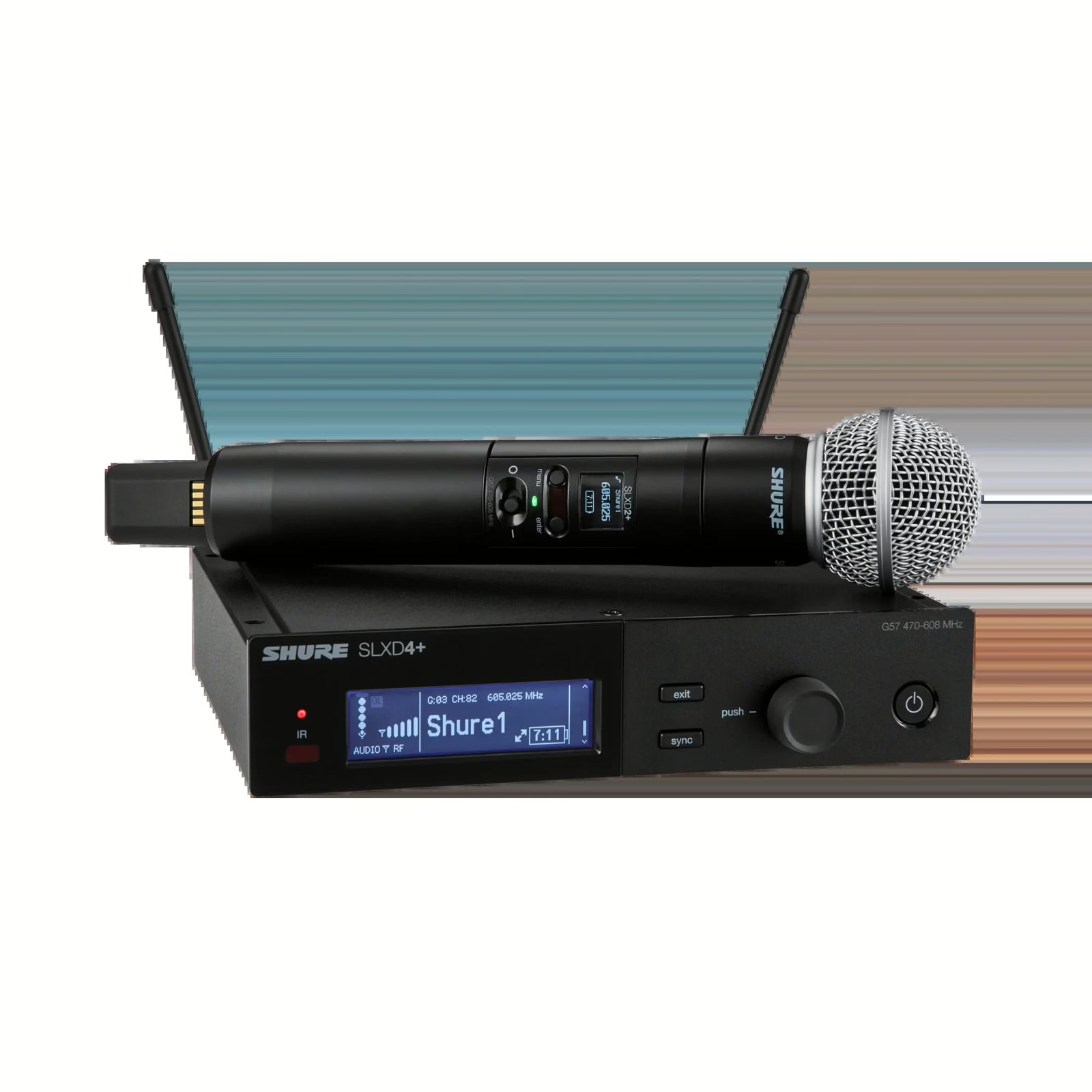
Product page: Shure SLX-D
Sennheiser EW-D
Sennheiser’s digital entry point, and one of the simplest ways to go wireless without breaking the bank. The Smart Assist app automates coordination, the 56 MHz band allows up to 90 channels, the 134 dB dynamic range is surprising at the price, and runtime reaches 12 hours on the lithium-ion battery. Range is around 90 m with very low latency, and a complete handheld set sits around $700. For a house of worship, a classroom or a band, it’s a starting point that’s hard to fault.
At a glance: Sennheiser · ≈ $700 for the handheld set · digital UHF, 56 MHz band up to 90 channels, 134 dB dynamic range, ≈ 90 m range, 12-hour runtime, Smart Assist

Product page: Sennheiser EW-D
The plug-and-play instrument cousin
A word of honesty: the next system only does part of the same job. It frees a guitarist or bassist from their cable, but it doesn’t transmit a vocal mic and doesn’t coordinate like a stage UHF system. It’s a different category — useful, but different.
Line 6 Relay G10S
The most fuss-free instrument wireless around. Plug the transmitter into the guitar jack, drop the stompbox receiver on the pedalboard, and you’re off: uncompressed 24-bit digital audio, roughly 40 m of line-of-sight range, automatic pairing. It all runs on the 2.4 GHz band — the same as Wi-Fi, which can be a question mark in very congested environments, but the channel-lock technology does its job on stage. From around $150 for the G10, a little more for the pedalboard-receiver G10S, it costs about as much as a good high-end cable — to get rid of the cable.
At a glance: Line 6 · from ≈ $150 · 2.4 GHz uncompressed 24-bit digital, ≈ 40 m range, plug-and-play, stompbox receiver — instrument only (no vocal mic)
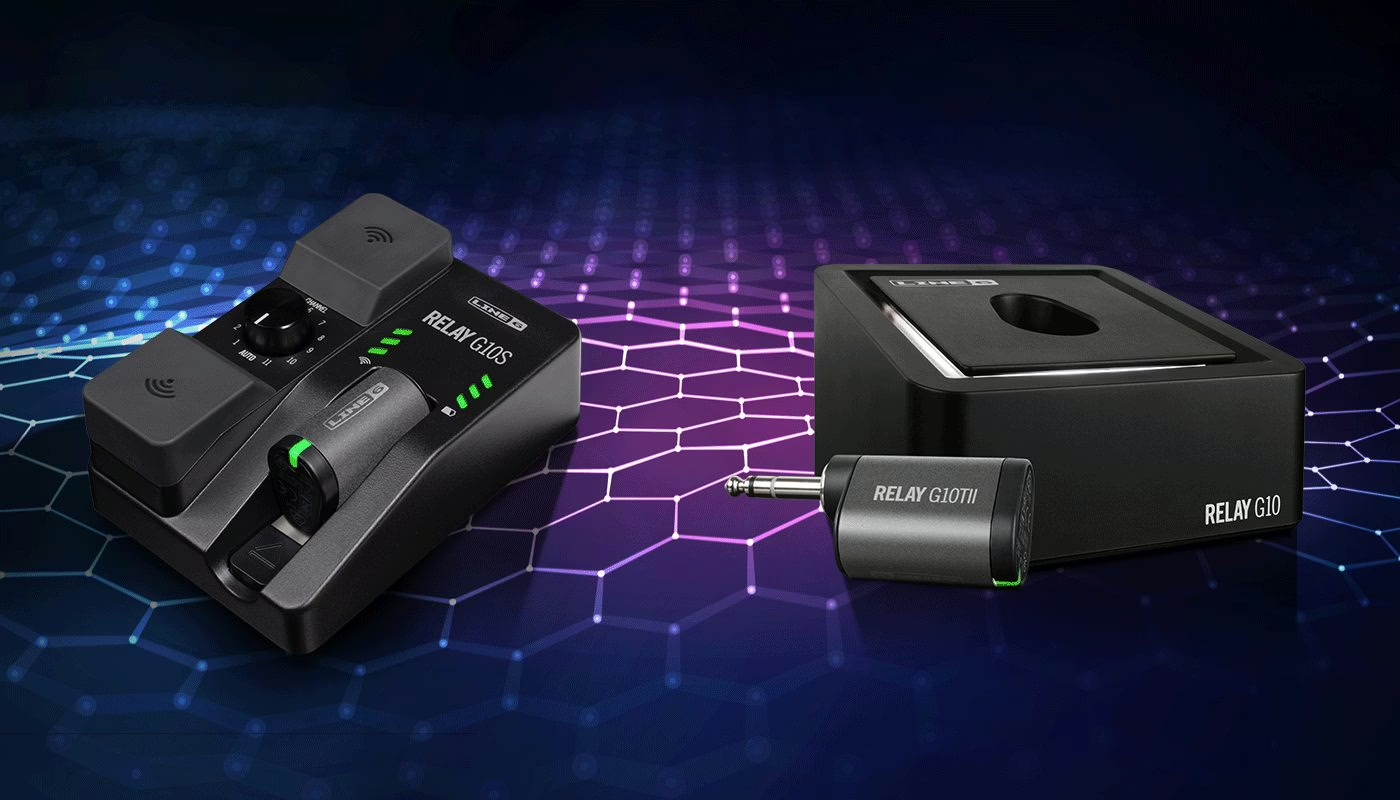
Product page: Line 6 Relay G10S
Quick reference
| Product | Brand | Indicative price | The job in a word |
|---|---|---|---|
| Spectera | Sennheiser | ≈ €9,995 (base) | Wideband |
| Axient Digital | Shure | ≈ $3,900 (receiver) | Broadcast |
| DWX Gen 4 | Sony | TBA (2027) | 32-bit float |
| EW-DX | Sennheiser | ≈ $2,200–$2,700 | Scalable |
| SLX-D | Shure | from ≈ $740 | Accessible |
| EW-D | Sennheiser | ≈ $700 | Entry |
| Relay G10S | Line 6 | from ≈ $150 | Instrument |
Which one should you choose?
For small- and medium-scale live sound, a band, a house of worship or a classroom, the EW-D and the SLX-D handle the essentials without draining the budget; between the two, the call mostly comes down to which ecosystem — Sennheiser or Shure — you already know. Once you stack several channels and start touring, the EW-DX becomes the smart buy: touring reliability, in-device charging, room to scale. The very high end — Axient Digital, and soon the Sony DWX with its 32-bit float — earns its keep when a dropout is not permitted: TV, major stages, no-net shows. Spectera, finally, isn’t aimed at the same buyer: it’s a bet on wideband architecture, reserved for productions juggling dozens of channels. As for the Relay G10S, it replaces none of the others — it just makes an instrument cable disappear, and that’s exactly the point.
The real takeaway for 2026 is that stage wireless no longer forces a choice between budget and reliability. What remains to be seen is how much room on-board 32-bit float will take — a safety net today, perhaps a standard tomorrow. In the meantime, if your need leans toward monitoring rather than the mic, take a look at our roundup of the best in-ear monitors for the stage to round out the rig.