Delay is probably the most commoditised effect in the studio: everyone owns ten, nobody opens them. Continuum, built by JMG Sound and released under the United Plugins banner, tries to break that habit with an idea that’s simple to state and deep in use: two identical, independent delay engines you can make talk to each other until the echo stops being an echo and becomes a space. Its tagline, “Modern brain, vintage heart”, sums it up neatly.
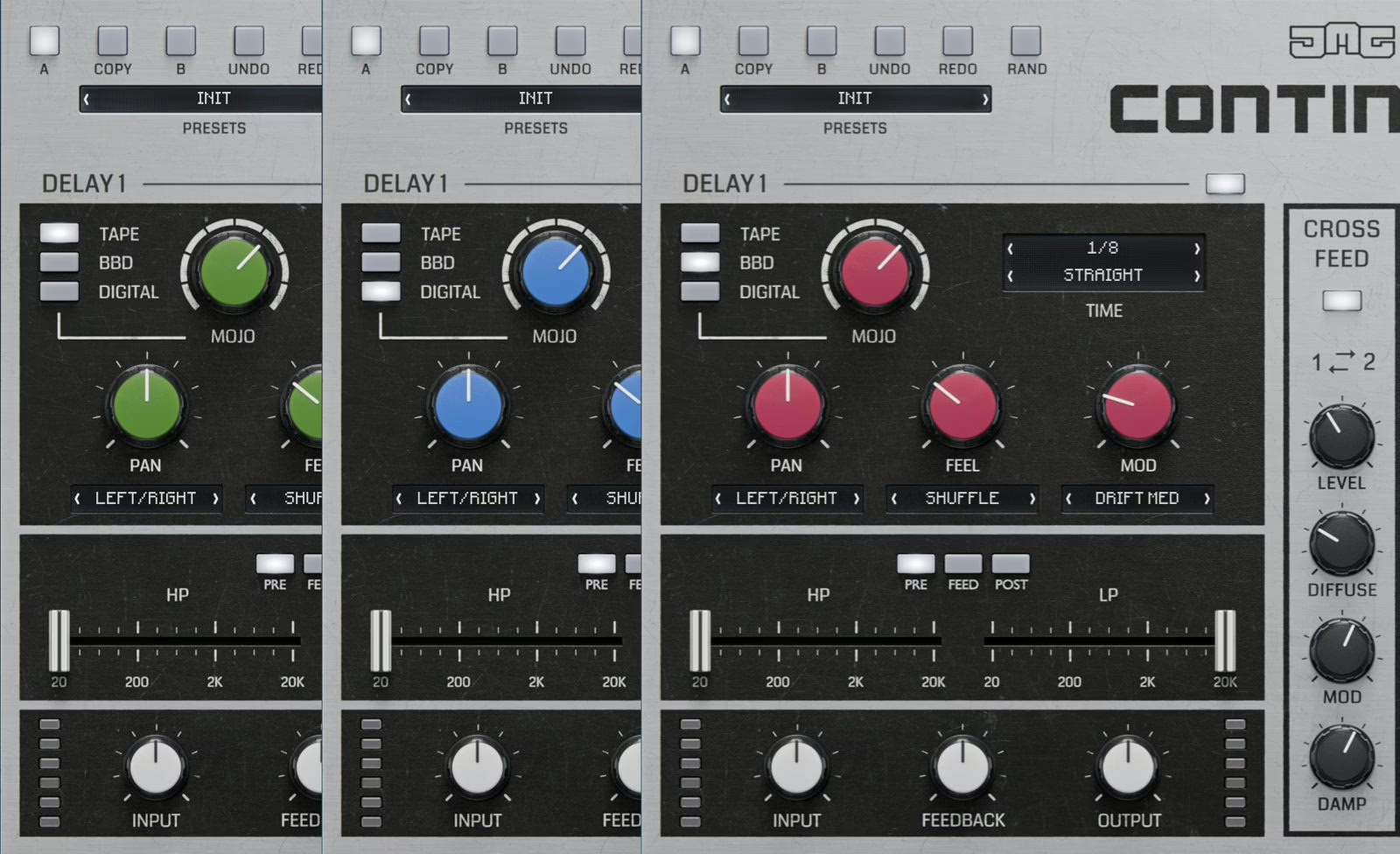
Two engines that cross-feed
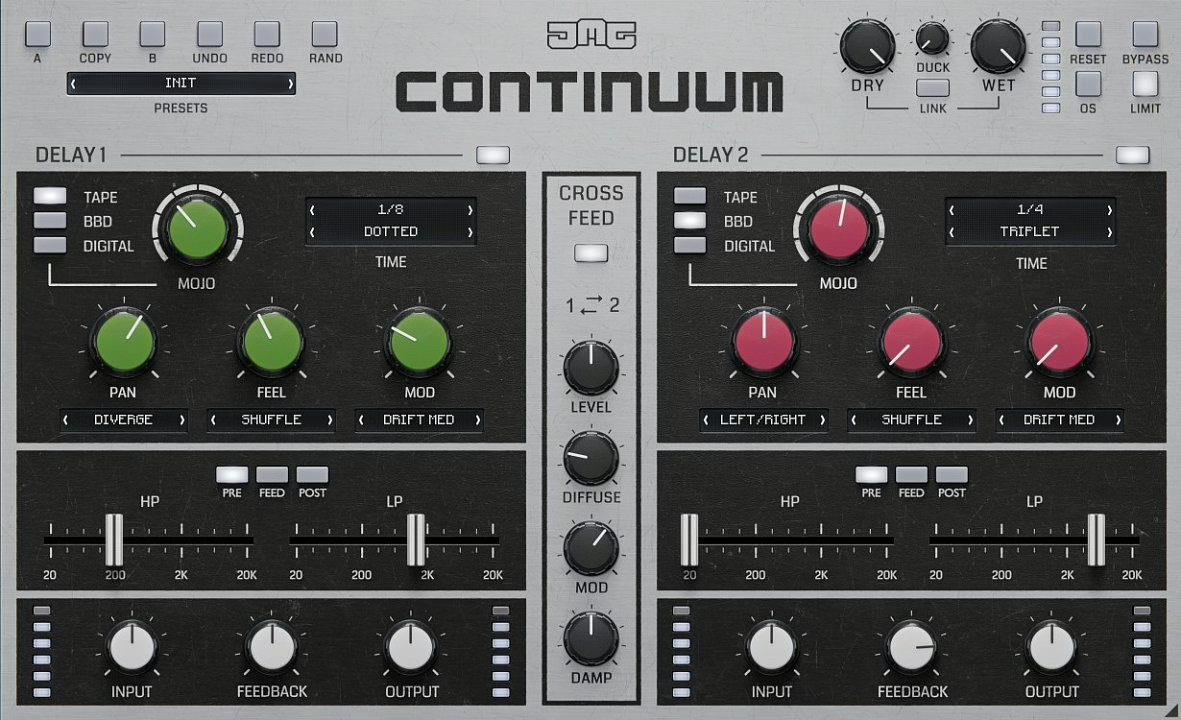
Continuum lines up two identical delay units, fully independent: nothing stops you setting the first to short dotted eighths and the second to a long modulated tail. At the plugin’s core sits a network called Cross Feed: the output of delay 1 is fed back into the input of delay 2, and vice versa. The two lines feed off each other, and it’s that cross-injection that produces the complex rhythmic patterns and resonances a plain ping-pong never will.
Each unit has its own filter section, high-pass and low-pass, routable before the delay, inside the feedback loop, or after it. Put a low-pass in the loop and every repeat darkens a little more than the last — the classic tape-delay recipe, here under surgical control.
Tape, BBD, Digital: three vintage hearts
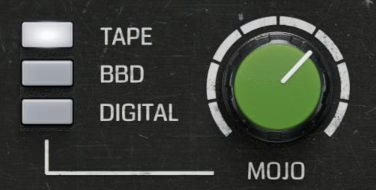
The character of each repeat comes from one of three models:
- Tape: the warm saturation and wow-and-flutter of a tape echo;
- Bucket-Brigade (BBD): the dark, degraded grain of analogue BBD delays, complete with clock-rate reduction;
- Digital: clean and crisp all the way down to the crunchiest low-res bit-crush.
Diffuse: when echo becomes reverb
The most interesting control may well be Diffuse. It inserts all-pass filters into the feedback loop, progressively smearing the repeats until they melt into a continuous halo. Turn one knob and you move from a crisp staccato echo to a three-dimensional reverb wash without ever swapping plugins. That’s where Continuum earns its name: a continuum between delay and reverb, rather than a border.
Spatial handling follows the same generous logic: twelve pan modes, from Mid/Side to a Haas offset, plus dynamic movements (Orbit, Converge, Diverge) and several ping-pong styles. Enough to widen a vocal, animate a static synth or draw a stereo movement that breathes.
Formats, price and availability
Continuum runs as VST, VST3, AU and AAX, on macOS (native Apple Silicon and Intel) and Windows, with a fully functional 15-day trial. United Plugins is running a launch price of €15 (down from €79) until 30 September 2026. At that price, trying it is close to free.
I stay wary of “Swiss army knife” plugins that pile on features: more often than not, the abundance hides a mediocre engine. The angle here is smarter: two simple but well-built delays, a cross-feed, a diffusion control, and you cover a wide stretch of ground from a discreet slap to a full ambient texture. It’s the kind of tool that works best on an aux send rather than an insert, so you dial in space without drowning the source. In the same textural spirit, our look at Minimal Audio Lucid and our Mid/Side explainer are worth a read. The product page is at United Plugins.