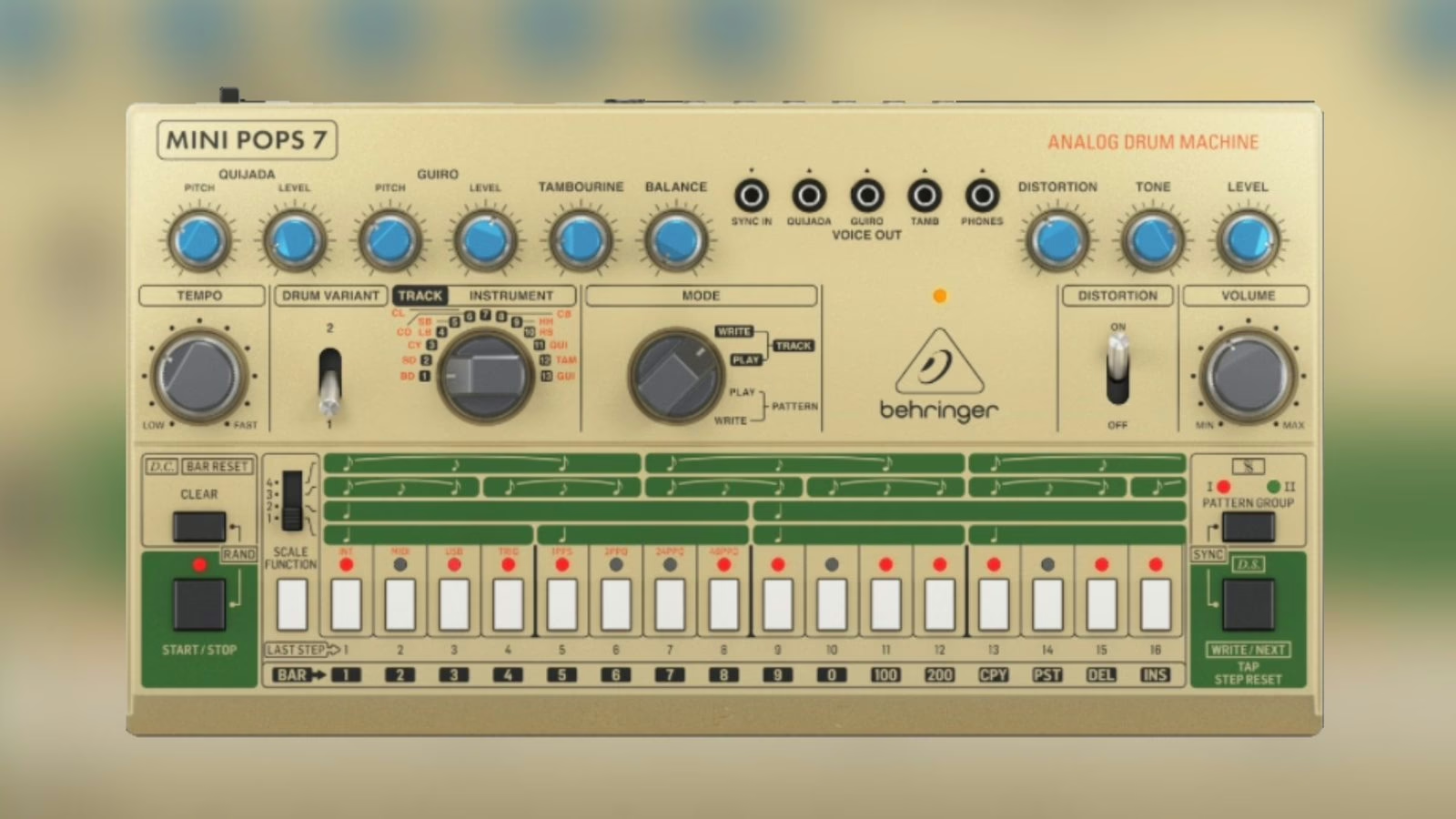
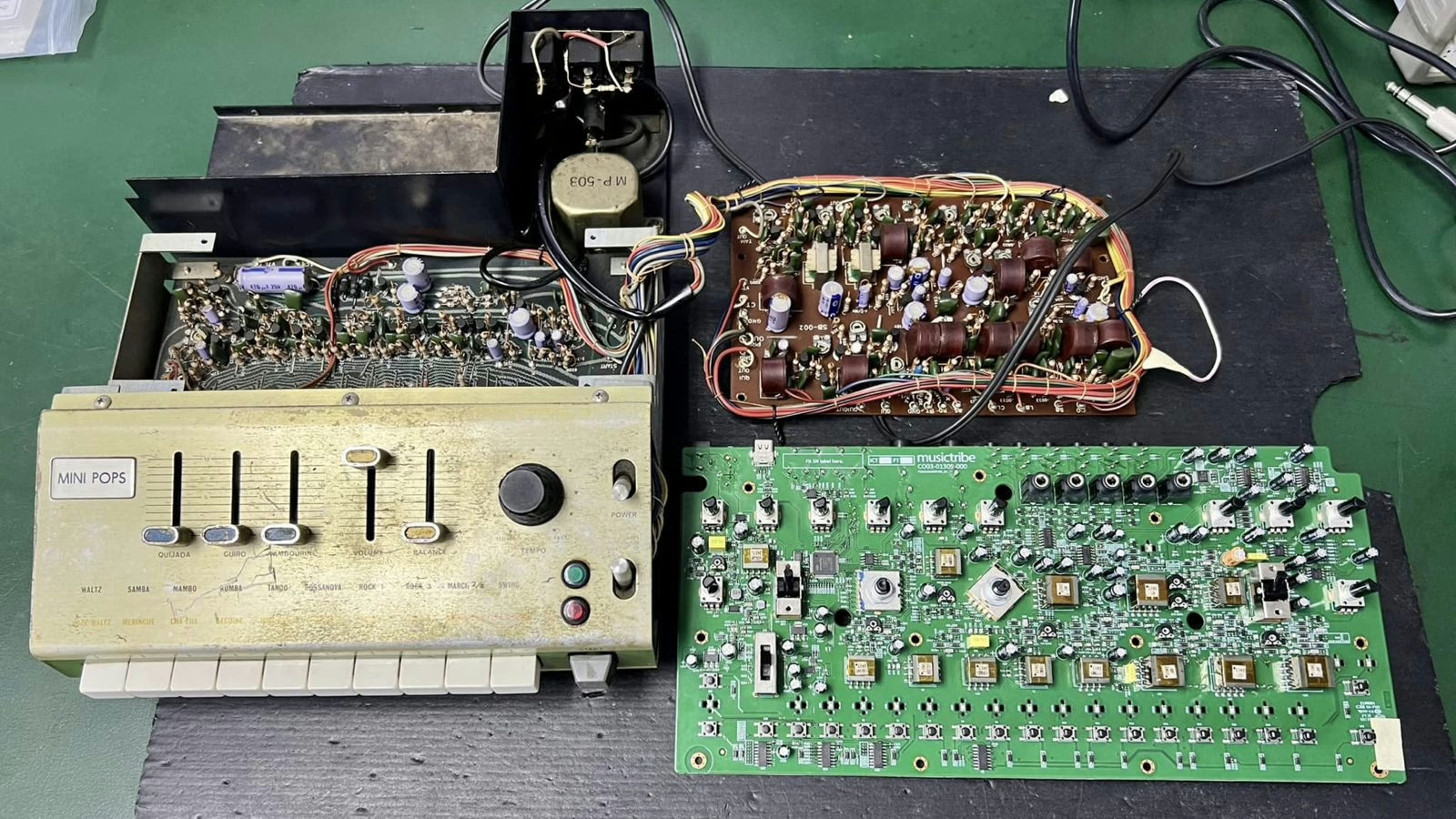
Behringer is bringing back the Korg Mini Pops 7, the 1966 analog rhythm box immortalized on Jean-Michel Jarre’s Oxygène. The modern take promises analog circuitry, a fully programmable step sequencer, a distortion unit and a tone control. Its appearance in Behringer’s Syntribe software points to a release that’s just around the corner.
The rhythm box behind Jarre’s Oxygène
The original Korg Mini Pops 7 dates back to 1966. Back then it was a simple preset rhythm box, the kind you’d plug into a home organ. Its legend was written elsewhere: it’s one of the rhythmic ingredients of Jean-Michel Jarre’s Oxygène, a founding record of mainstream electronic music. Much later it turned up on Aphex Twin’s Syro. For a machine designed as a domestic accessory, that’s a remarkable arc — it became a cult object, prized for the warmth and imperfection of its analog percussion.
True to its playbook, Behringer is going after a rare, expensive vintage classic and dragging it back into affordable territory. The company first teased work on the clone on social media in 2024; the project has resurfaced, and this time everything suggests it’s near the finish line.
What Behringer makes of it
Rather than slavishly copying the original, Behringer uses the compact format already seen on its RD-6 and RD-78. More importantly, it fixes the 1966 machine’s main limitation: where the original only offered fixed pattern combinations, the modern version packs a fully programmable step sequencer, Roland drum-machine style. You pick your sounds and write your own patterns — turning an auto-accompanist into a real rhythm instrument.
- 15 drum sounds from the original-style analog circuitry.
- 20 rhythm patterns plus a programmable step sequencer.
- A distortion section and a tone/filter control to dirty up or smooth the output.
- A circuit faithful to the Mini Pops’ analog design, not a mere sample set.
Where the project stands
The most reliable signal isn’t a marketing teaser but the company’s own software: the Mini Pops 7 has shown up in Syntribe 3.2.2, Behringer’s instrument-management app. When a product is already supported by the control software, development is usually well advanced and release is close. In short: it’s around the corner.
One note of caution on price: no official figure has been given yet. It’s reasonable to expect something in line with the brand’s recent minis — the AKS Mini, for instance, is announced at around $99 — but until Behringer confirms, that’s just a projection. We’ll update as soon as it’s official.
You have to hand Behringer a genuine consistency here: reviving rare, historically important machines and putting them within reach of players who’ll never drop several thousand on a collector’s piece. When the execution follows — and moving to a programmable sequencer is a real upgrade over the original — the result is hard to fault. The sound still needs judging in the flesh, which we’ll do as soon as a unit is available.
In the same Behringer vein: the FLOW 4V field recorder, the AKS Mini pocket synth, and for another analog drum machine, the Vermona drumDING.