Kush Audio returns to one of its favorite battlegrounds — harmonic saturation — with Omega 2. Rather than rebuilding the distortion algorithms, which stay the proven ones from the first generation, the developer reworked everything around them: the filtering, the blending and the workflow. Model A kicks off the series, with the promise of a new model every month and a fifth, kept secret, due in November 2026.
One knob, but real work before and after the stage
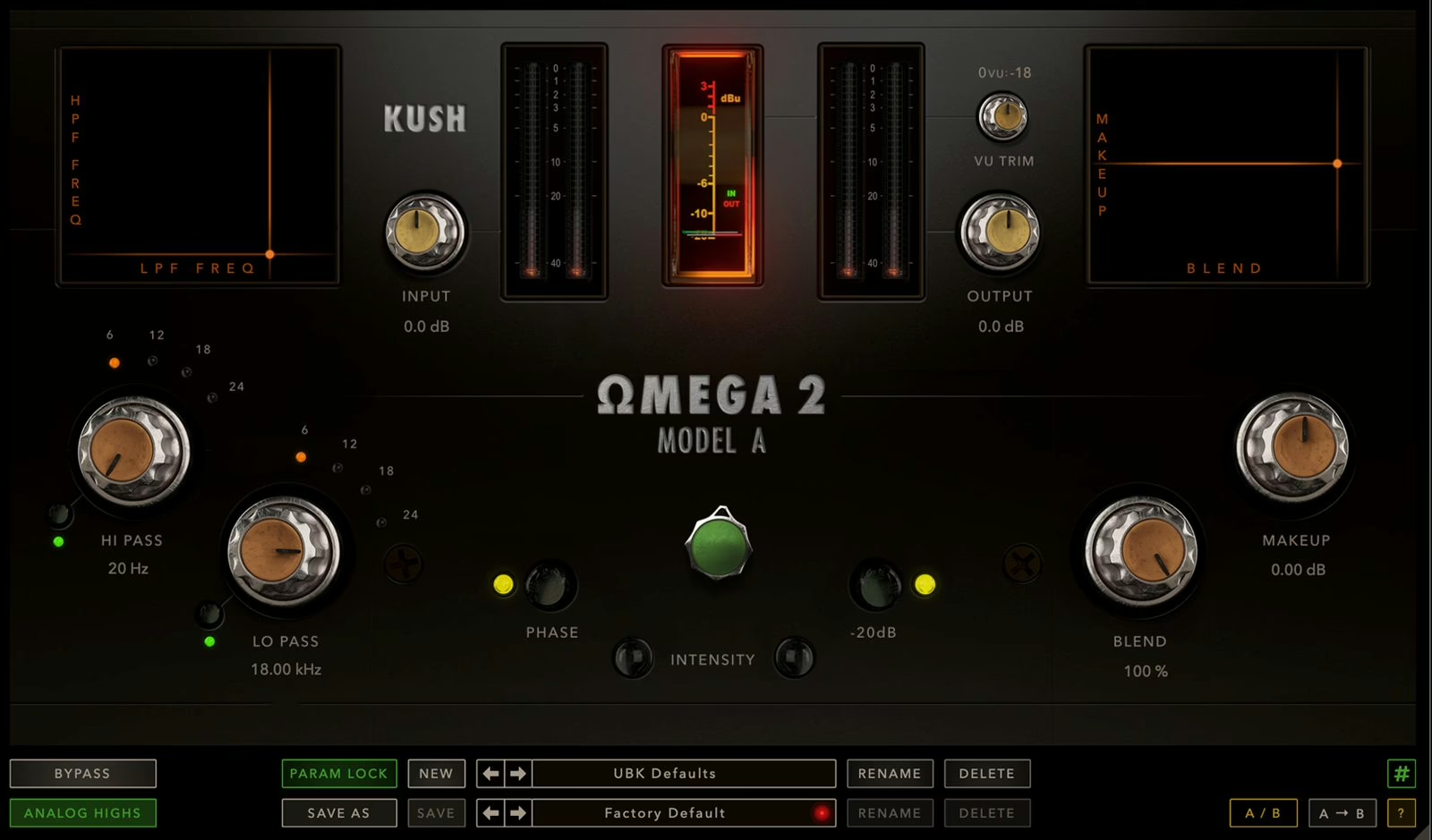
The whole Omega 2 philosophy lives in a single central control, Intensity, that gradually brings the signal’s character into focus. Around it, Kush added phase-friendly high-pass and low-pass filters derived from its Magpha EQ algorithms. Placed before and after the distortion stage, they let you shape the saturated material without the phase shifts that so often drag this kind of processing down. That’s where the real difference from the original Omega lies: the saturation feels more integrated with the sound, less pasted on top.
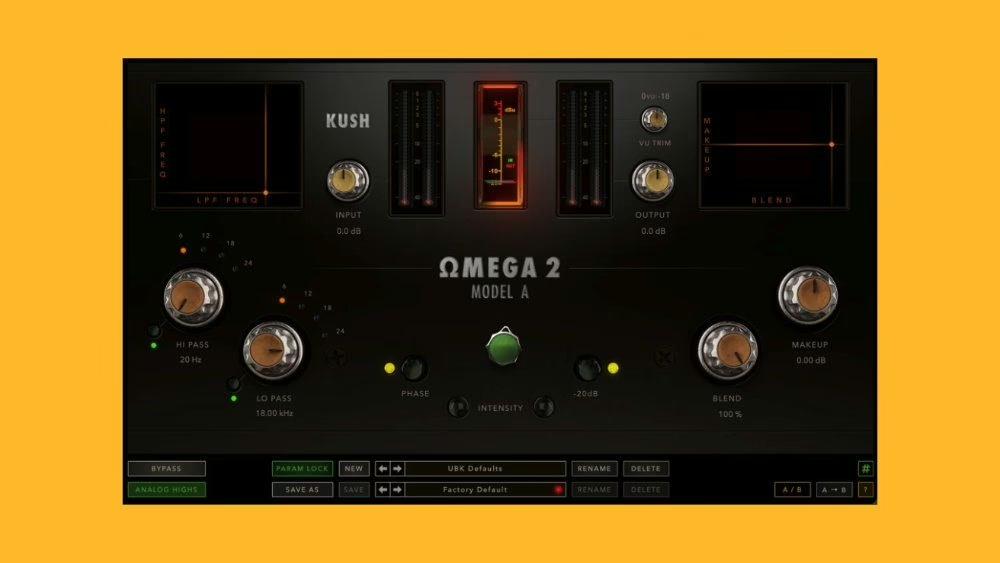
Model A aims at a specific color: a mic plugged straight into a mid-1970s API console. It starts with extra sparkle and sheen before the signal slowly breaks up into a gritty, very vintage saturation. It’s a grain engineers know well, and one people often try to recreate in the digital domain without ever quite nailing it.
The features that matter in the mix
Beyond the Intensity knob, Omega 2 carries a parallel Blend control, preceded by a Makeup Gain placed before the blend — a small detail that keeps the dry/saturated balance honest when you push the distortion. The plugin shows dual input and output peak meters, alongside an old-school VU meter for judging level by feel.
Two modes coexist: an Oversampling mode paired with a high-frequency treatment called Analog Highs, for maximum mix quality, and a Low Latency mode for real-time tracking. You also get cross-plugin copy/paste between instances and a fully resizable interface — two conveniences that quietly save time on a big session.
My take
I like this approach, because it commits to an idea I’ve argued for a long time: fully in-the-box is perfectly viable as long as the processing brings something audible, not just an analog alibi. A saturator driven by one knob isn’t a sign of poverty, it’s a stance — one gesture, one result. Kush has always cultivated that economy of means, against the thirty-parameter interfaces that fake a sense of control without improving the sound. That said, the “a model a month” logic gives me pause: I’d rather have one tool that does a single job well than a collection you complete by subscription. Taken on its own, Model A more than holds up, and its API-console grain is the kind that makes a drum bus or a vocal instantly more alive. For more on analog color, it pairs naturally with a large-format console like the SSL Odyssey.
Formats, price and availability
Omega 2 Model A is available now in VST3, AU and AAX, on Mac and PC. It sells for $39 as a standalone (a $19 upgrade for existing customers), while the full collection is listed at $149; monthly and annual subscriptions unlock the whole catalog. In the same spirit, it slots in nicely alongside other recent mastering tools like Peak Tamer for taming peaks before limiting or the Dangerous Music BAX EQ.