Released at the beginning of 2026, the Boss GX-1 and GX-1B expand the GX series with a compact floor format, designed for guitarists and bassists who want a modern processor without blowing their budget or overcrowding their pedalboard. Despite being entry-level models in the series, these two units take on key elements already found in the larger devices.
Overview of the Boss GX-1 and GX-1B
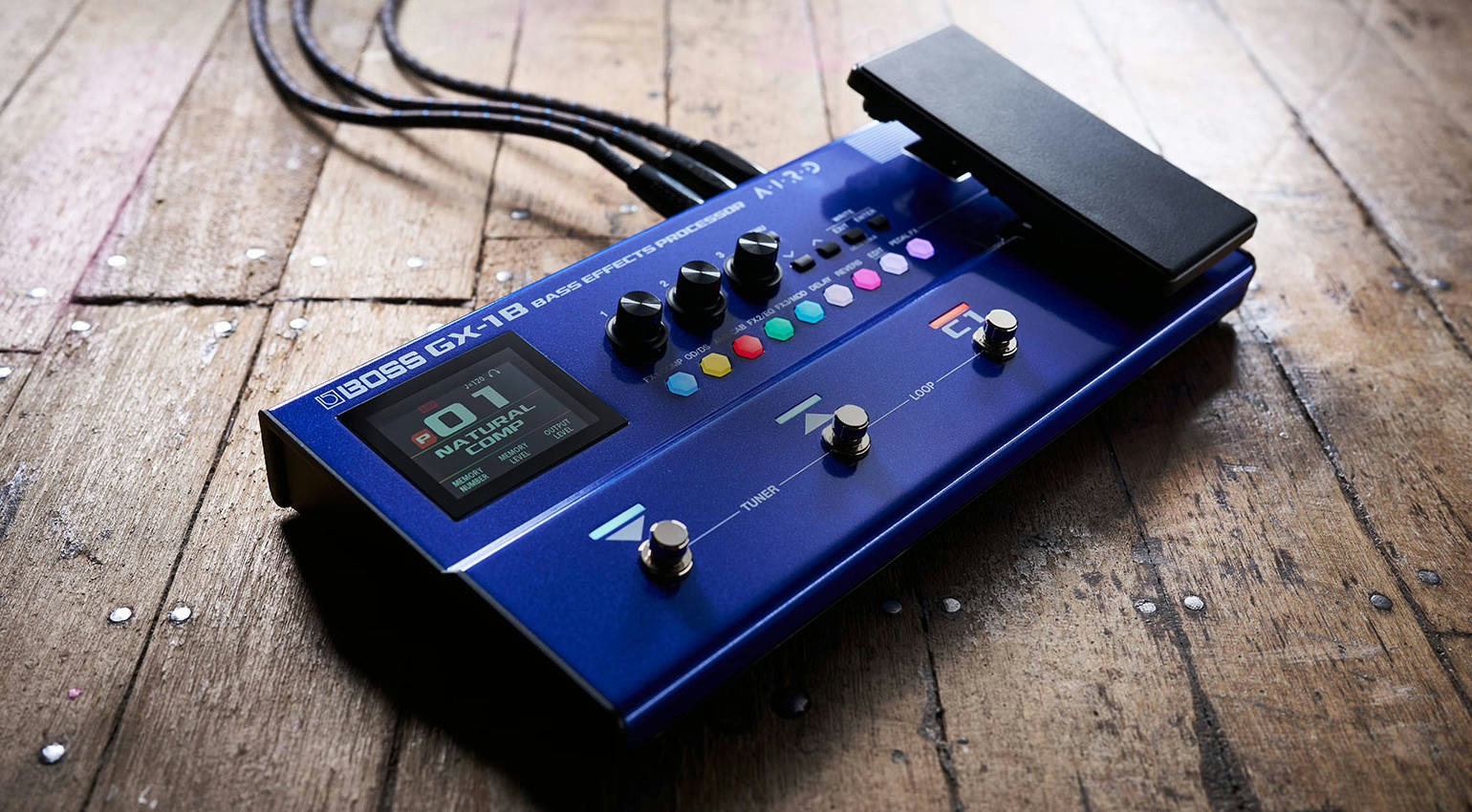
The GX-1 and GX-1B are two multi-effects processors in pedalboard format, very similar in terms of design. Both are based on the manufacturer’s AIRD amp-modelling technology, offer more than 140 built-in effects, and allow up to eight effect blocks to be used in parallel or in series. They come with a colour screen, three assignable footswitches and an expression pedal.
The main difference between the two lies in their target users: the GX-1 is designed for electric guitar, while the GX-1B is aimed at bass, with amp models and effects tailored to lower registers.
Boss GX-1: a compact processor for guitarists
The Boss GX-1 positions itself as a highly portable amp-modelling and multi-effects processor, without compromising on essential features. It includes 23 amp models and more than 140 effects covering the typical needs of a guitarist: drives, modulations, delays, reverbs and more.
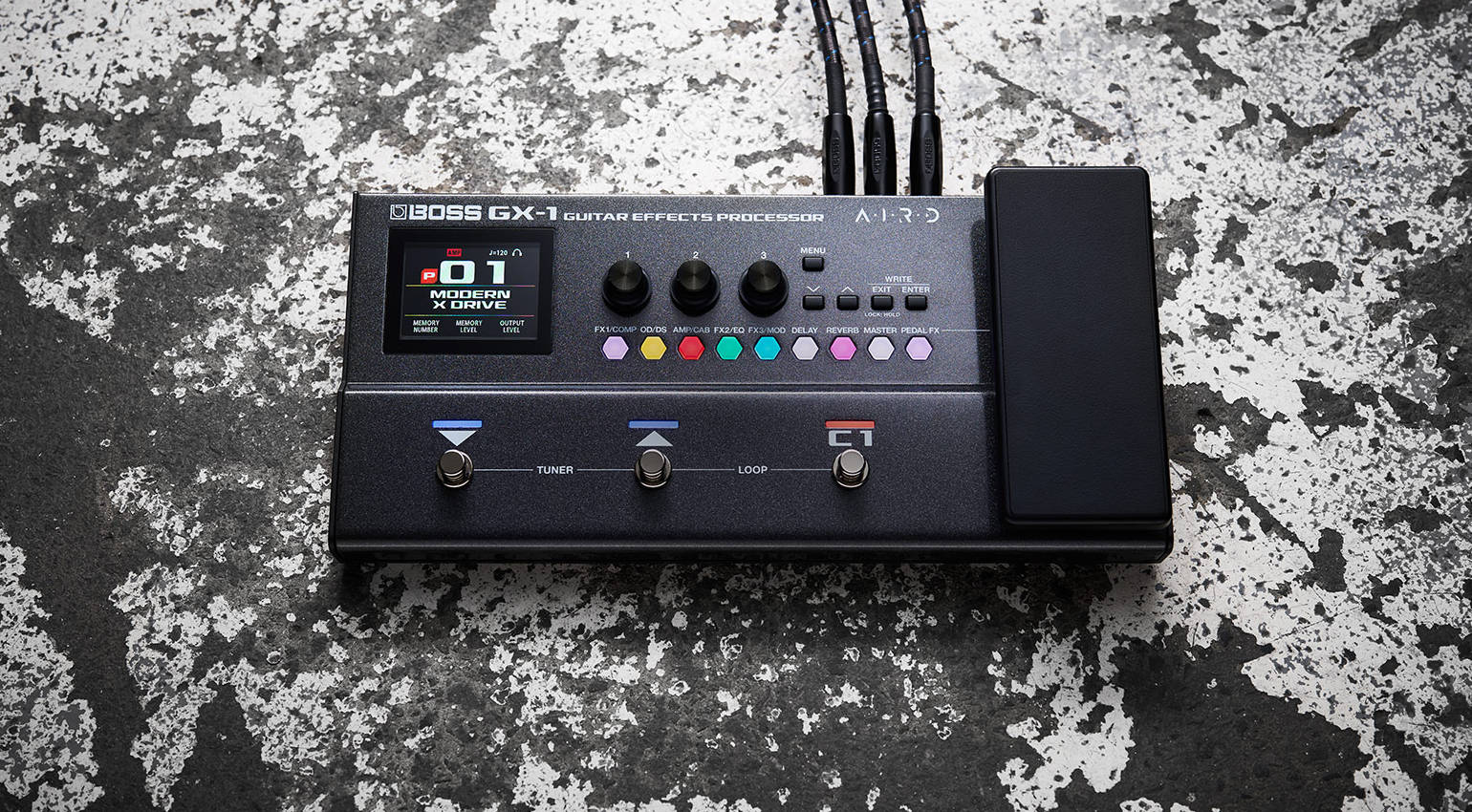
Audio processing is based on 24-bit conversion at the input and 32-bit at the output, delivering professional-level sound quality. With the ability to chain up to eight effect blocks simultaneously, you can create complete signal chains suited to home practice, rehearsals, recording or live performance.
Navigation is via a colour screen combined with menu buttons, making it easy to manage presets and adjust parameters. Three configurable footswitches and an expression pedal complete the interface, allowing direct control of your most-used sounds.
The GX-1 also includes Bluetooth audio playback so you can stream backing tracks from a smartphone, handy for practising songs or improvising. The USB-C port allows the unit to be used as an audio interface, while the BOSS Tone Studio app, available on macOS, Windows, iOS and Android, lets you edit, organise and manage presets from a computer or mobile device.
GX-1 compared with the larger GX models
Within the GX series, the GX-1 is a more accessible and affordable entry point than larger units such as the GX-100. Those offer more amp models, a touchscreen and more advanced routing possibilities.
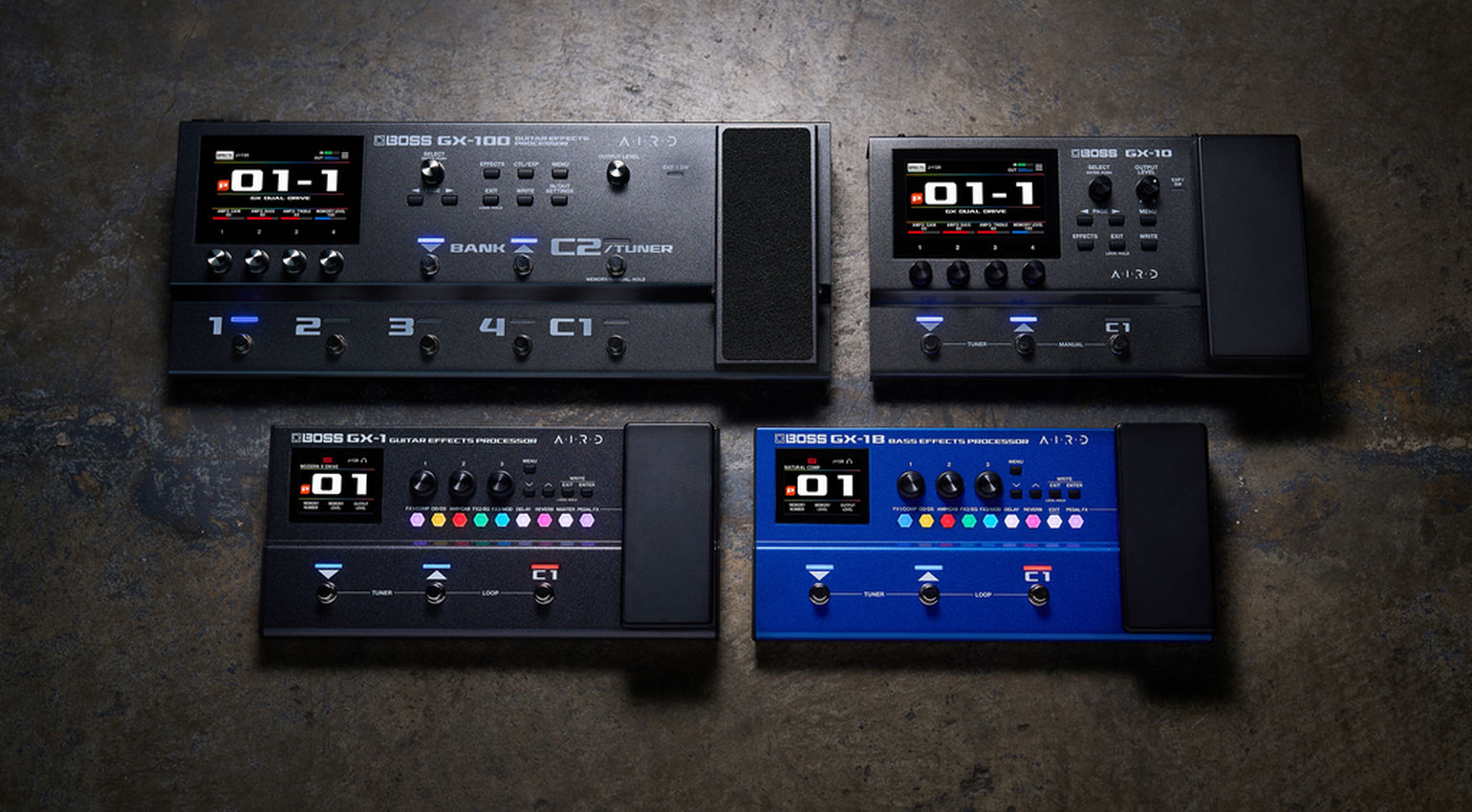
The GX-1 nevertheless retains the essentials: the same sound philosophy, AIRD amp modelling and a wide range of effects, but in a more compact chassis. It is aimed at guitarists who want to enjoy the versatility of the GX series in a format that is easier to transport and to fit on a pedalboard.
This positioning makes it a particularly attractive option for:
- beginners looking for a modern all-in-one unit,
- gigging musicians with limited floor space,
- those who want a professional solution with a smaller footprint.
Boss GX-1 vs Boss GX-1B: what really changes
In terms of hardware, the Boss GX-1 and GX-1B share most of their features. Both models offer AIRD technology, more than 140 effects, a colour screen, up to eight simultaneous blocks, compatibility with the new “Gear Suite” workflow, Bluetooth and USB-C audio for recording and playback.
The real difference lies in the sound banks and built-in models. The GX-1 is designed to reproduce the feel, dynamics and tones typical of an electric guitar. The GX-1B, on the other hand, targets bassists, with amp models and effects optimised for low frequencies so as to preserve clarity and musicality in the bottom end.
The GX-1B is therefore intended for bassists who want a portable, comprehensive sound-shaping tool, without having to adapt a processor originally designed for guitar to the specific needs of bass.
Pricing of the Boss GX-1 and GX-1B
Within the brand’s range of modelling and multi-effects floor processors, there are several series, including GT, GX and ME. It is not always straightforward to see where each model fits. The GX-1 and GX-1B stand out by offering an appealing balance between features and price, making them a particularly attractive entry point into the GX series.
The Boss GX-1 is priced at $259.00, and the GX-1B is listed at the same price.
In summary: who are the GX-1 and GX-1B for?
Both models were designed for musicians who want:
- a compact yet complete pedalboard,
- modern amp modelling with AIRD technology,
- a wide selection of built-in effects,
- versatile use: home practice, rehearsals, gigs and recording.
The GX-1 is better suited to guitarists looking for an all-in-one solution that is easy to carry. The GX-1B will naturally be the choice for bass, thanks to sounds and effects tailored to the specific needs of bass players.
FAQ
Is the Boss GX-1 suitable for a beginner guitarist?
Yes, the GX-1 is particularly well suited as a first multi-effects unit. It combines amp models, more than 140 effects and ready-to-use presets, making it possible to explore different sounds without needing multiple pedals. Its compact format works well for home use as well as rehearsals.
What is the main difference between the GX-1 and the GX-1B?
Both units share the same concept: AIRD technology, more than 140 effects, up to eight simultaneous blocks, a colour screen, Bluetooth and USB-C audio. The key difference lies in their target use: the GX-1 is optimised for electric guitar, while the GX-1B offers amp models and effects designed for bass and low frequencies.
Can the GX-1 and GX-1B be used to record directly to a computer?
Yes, thanks to the USB-C audio port, both models can function as an audio interface. This allows you to record directly to a computer while taking advantage of their amp modelling and built-in effects.
Can sounds only be edited from the device itself?
No, in addition to the physical controls and colour screen on the pedalboard, the GX-1 and GX-1B are compatible with the BOSS Tone Studio app. This application, available on macOS, Windows, iOS and Android, lets you edit, organise and manage presets more comfortably from a computer or mobile device.