On a shoot, a TV floor or a festival control area, crew comms are a permanent point of friction. Historically, reliable full-duplex — talking and listening at once, no push-to-talk — was the preserve of expensive comms systems. SYNCO goes after that ground with the Xtalk XPro, a wireless intercom that promises full duplex with no base station and no bodypack, in a true-wireless logic. Entry price: 129 euros for a single unit, with the range then scaling by kit.
An intercom with no base, no bodypack
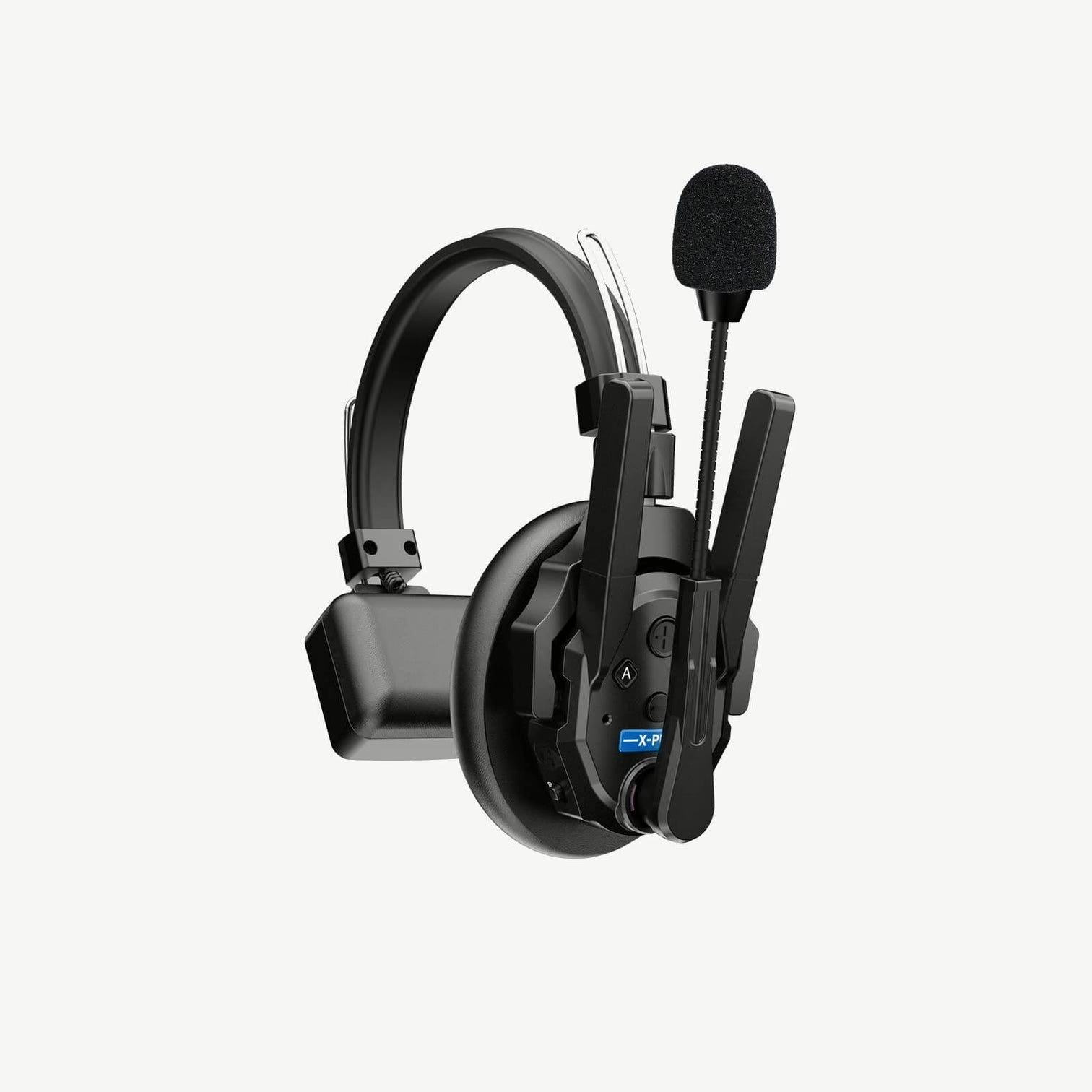
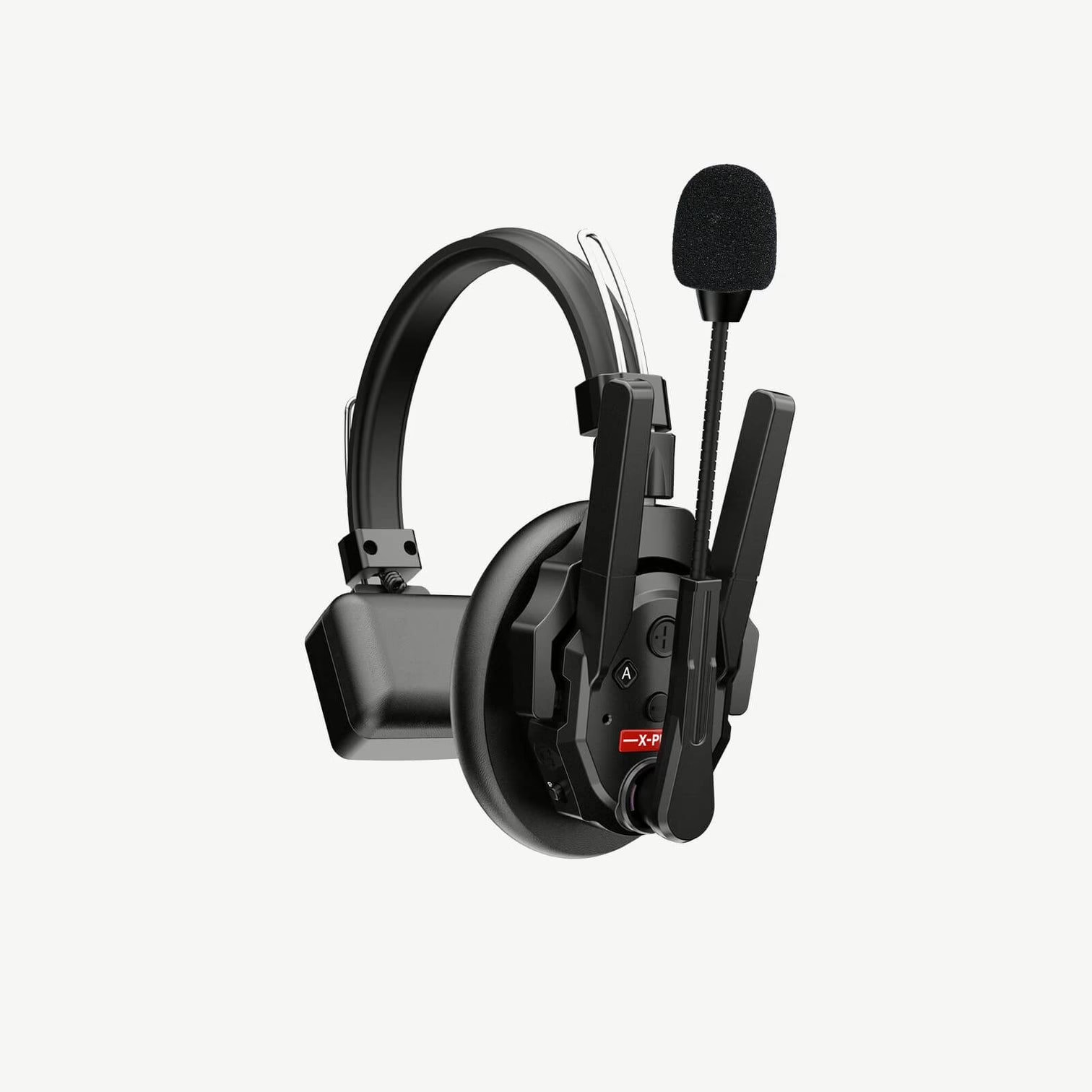
The Xtalk XPro’s core argument is its architecture: each headset is self-contained and talks directly to the others, with no base station to set up and no belt-pack to wear. The system runs at 2.4 GHz and relies on SYNCO’s MasterFree technology, which lets any unit act as master and allows the system to be split into several independent groups. For a small crew on the move, that lack of infrastructure is the whole point: hand out the headsets, pair, and go.
Dual antennas, boost mode and a claimed 500 metres
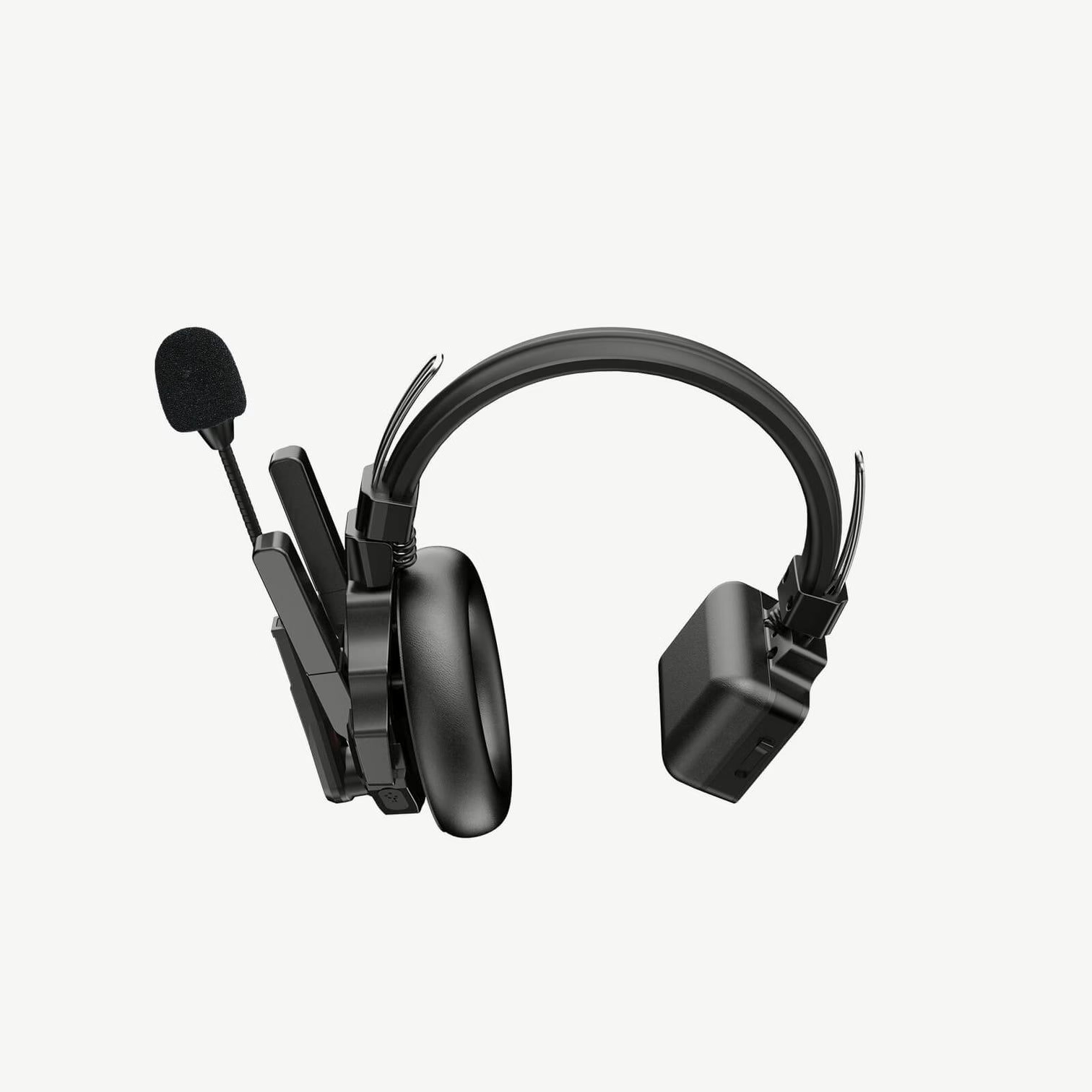
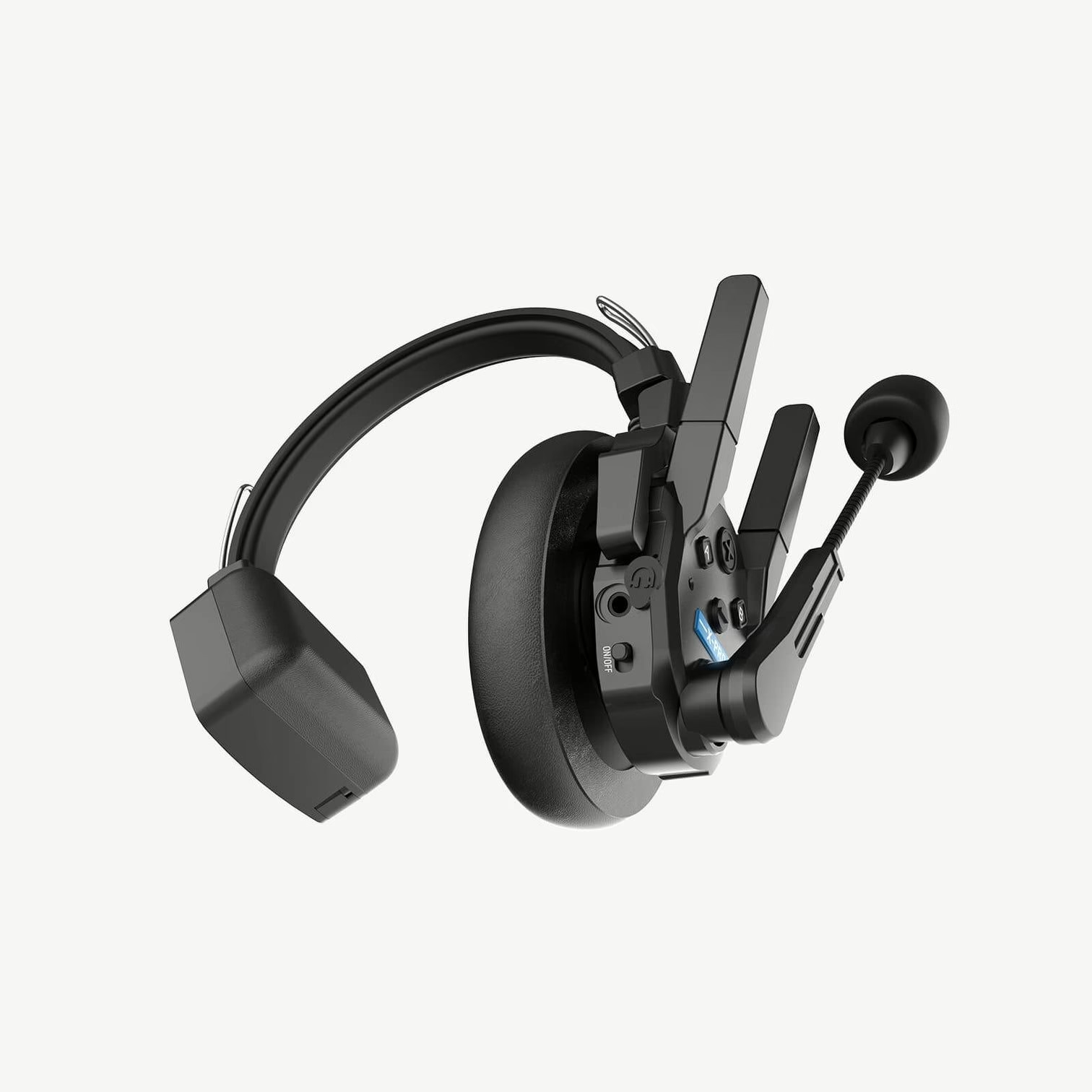
The XPro sets itself apart from the original Xtalk X with two external antennas, meant to firm up the link and push the claimed range to 500 metres in the open. SYNCO adds a boost mode: intelligent spectrum switching designed to hold communication through concrete walls, buildings, or during fast movement. The system handles up to 13 connected units, includes an ENC 2.0 noise-reduction algorithm and offers a 3.5 mm real-time monitoring output. Claimed latency is 80 milliseconds, and battery life tops 24 hours thanks to rechargeable, hot-swappable batteries.
Management aims to be modern: one-click pairing via the SYNCO EasyGo software, OTA firmware updates, and two firmware variants — one built around a master unit, the other fully master-free. The ecosystem also scales upward, with higher unit counts and dedicated master devices, so the system can be sized to the crew rather than replaced.
Who is it for?
The Xtalk XPro clearly targets video production, events, houses of worship, small broadcast control and, more broadly, any crew that needs hands-free talk without deploying heavy infrastructure. In that bracket it faces the consumer wireless systems of a well-known name in the field, playing the features-per-euro card. It does not replace a professional comms system wired into fixed infrastructure, and makes no such claim; it goes for mobility and accessibility, where cable or big systems are overkill.
The comfort of talking without thinking about it
In live sound and at festivals, I knew the era when reliable intercom meant cable, heavy boxes and temperamental RF links. Hands-free full duplex coming down to this price, with no base to wire, would have been a luxury only a few years ago. The real arbiter will be use in the field — link stability in a busy RF environment, felt latency, headset durability — but the direction is right: making crew comms simple and affordable removes a recurring source of stress for the people keeping a set running.
The configuration details are on the manufacturer’s page. In the same vein of wireless audio built for mobile production, set it against the Hollyland MELO P1.
Frequently asked questions
Does it need a central box or base station?
No. The Xtalk XPro is true wireless: each headset talks directly to the others, with no base and no bodypack. MasterFree technology lets any unit act as master and create several independent groups within one system.
How many users can it link, and over what range?
The system handles up to 13 connected units. Claimed range is 500 metres in the open, achieved through the XPro’s two external antennas. A boost mode switches spectrum intelligently to hold the link through walls and buildings or during fast movement.
What is the battery life, and are the batteries replaceable?
SYNCO cites over 24 hours of use. The batteries are rechargeable and hot-swappable, so you can run back-to-back sessions without tying up a unit to recharge.
How do updates and pairing work?
Pairing is one-click via the SYNCO EasyGo software, and firmware updates install over the air. Two firmware variants coexist, one with a master unit, the other fully master-free.
What is the claimed latency?
Stated latency is 80 milliseconds, an order of magnitude suited to full-duplex crew comms, though only real-world use tells you how it holds up in a crowded RF environment.