Hollyland, best known for its wireless video systems and intercoms, is going after the creator’s audio chain with the MELO P1. The idea: fold what used to take several devices, from mic to mixer to monitoring, into a single box, and make the whole thing fully wireless. It’s a pitch aimed squarely at podcasting, streaming and mobile creation.
A capture studio inside a charging case
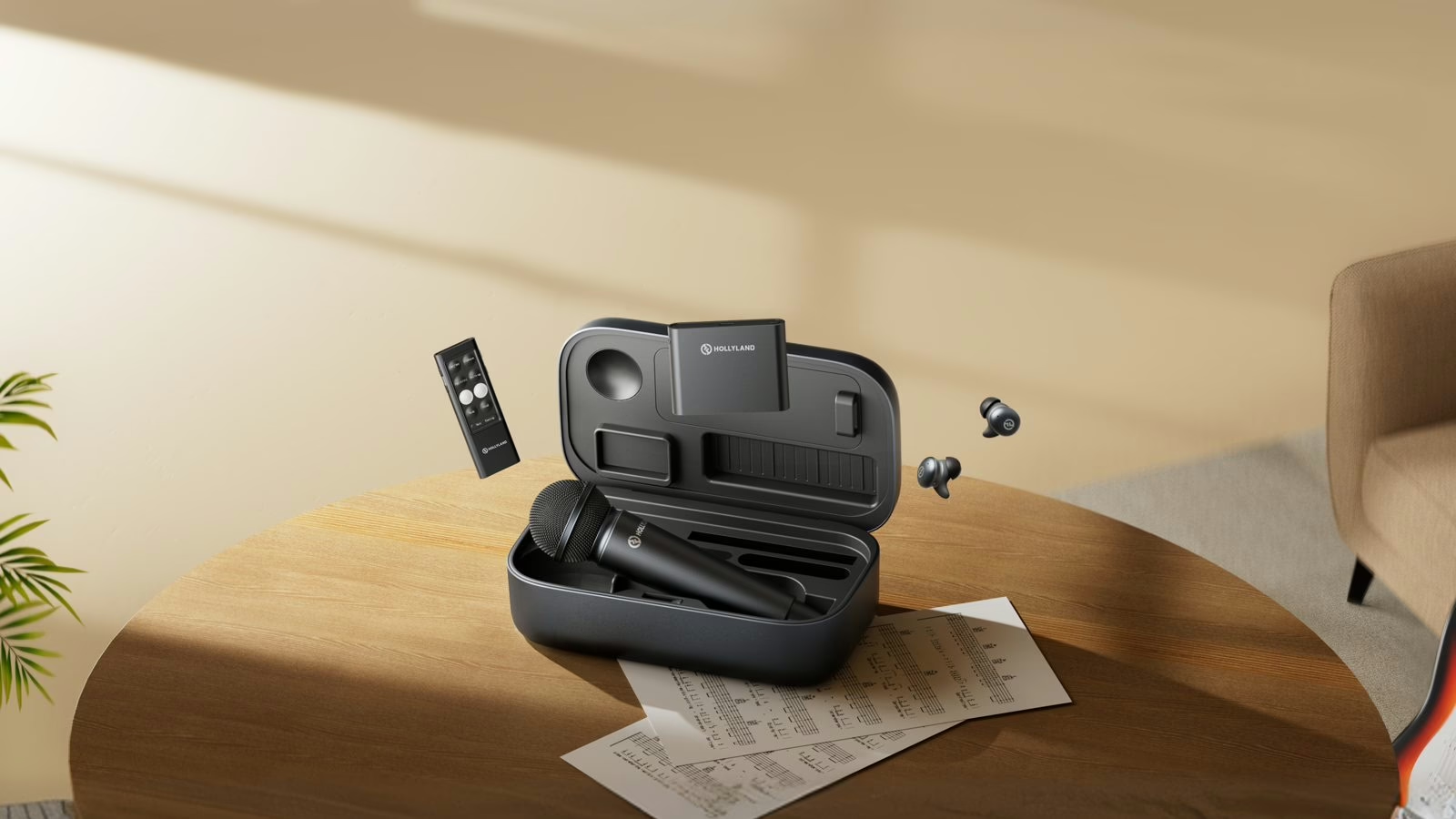
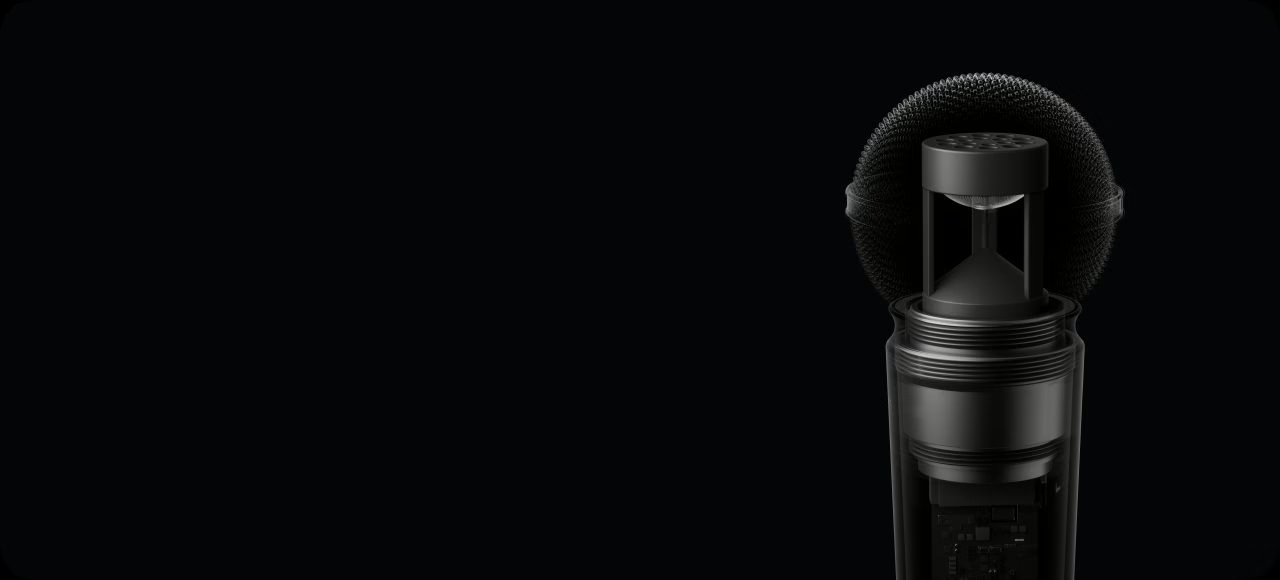
The MELO P1 gathers a 1-inch large-diaphragm condenser mic, a smart audio mixer, wireless monitoring earphones, a remote and the charging case that houses it all. The mic packs a shock-absorbing chamber, a careful preamp and AI-assisted noise reduction; it claims 32-bit capture and a high maximum sound pressure level, enough to take loud sources without clipping.
32-bit float capture is the central argument for this kind of use: it forgives level mistakes, since you can re-adjust gain in the edit without wrecking a signal that ran too hot or too low. For a creator recording alone, with no engineer watching the peaks, that’s a real safety net.
A 55-gram mixer that juggles four sources
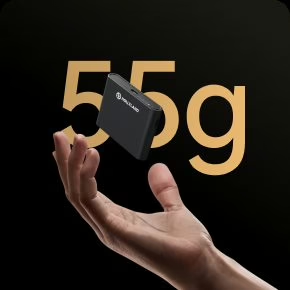
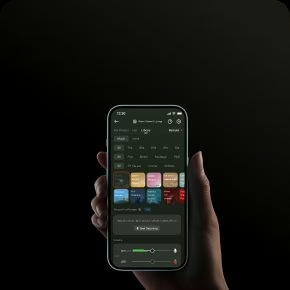
The centrepiece is that 55-gram smart mixer with dual DSP. It blends up to four sources in real time: two wireless mic inputs, a 3.5 mm instrument input and a backing track sent over Bluetooth, all handled in a 32-bit digital path. You control everything from the HollyAudio app, which offers over a hundred presets and a studio-grade effects chain.
The link between mic and earphones runs on low-latency 2.4 GHz, with a claimed range of up to 60 metres in the open, while the remote and backing tracks go over Bluetooth across about ten metres. For I/O, there’s a 3.5 mm in/out, a USB-C output and a fast-charge port.
Key points
| Spec | Detail |
|---|---|
| Mic | 1-inch large-diaphragm condenser, damped chamber, AI noise reduction |
| Capture | 32-bit, high maximum SPL |
| Mixer | 55 g, dual DSP, up to 4 sources in real time |
| Wireless | 2.4 GHz up to 60 m; Bluetooth for remote and backing tracks |
| Battery | Charging case up to 40 h total, USB-C fast charging |
| Versions | Solo, Combo, Ultimate Combo, roughly $249 to $449 |
Battery life is clearly built for a shooting day: the mixer lasts several hours, the earphones and mic longer, and the case supplies several full recharges, with fast charging over USB-C Power Delivery. Three versions are offered, from the essential kit to the fullest bundle.
My take
This kind of all-in-one kit won’t replace a real studio chain, and that isn’t its job. Where it earns its keep is mobile capture: an outdoor podcast, a street live set, a shoot with no control room. The 32-bit float capture is the one argument I accept without reservation, because it genuinely changes life for anyone recording solo. On the AI noise reduction, I stay cautious: it’s a useful fix in a pinch, never a substitute for a good capsule and proper mic placement.
The full presentation is on the Hollyland site. To dig deeper into feeding remote guests, revisit our guide to mix-minus in radio and podcast and our walkthrough of the Tascam Model 12 for podcast.
Frequently asked questions
What exactly is in the MELO P1?
The system brings together a 1-inch condenser mic, a smart audio mixer, wireless monitoring earphones, a remote and a charging case. Depending on the version chosen, the number of included pieces varies.
How many sources does the mixer handle?
Up to four at once: two wireless mics, a 3.5 mm instrument input and a backing track over Bluetooth. Mixing happens in real time through the dedicated app.
What is the wireless range and battery life?
The 2.4 GHz mic-to-earphones link is rated up to 60 metres in the open. The charging case totals around forty hours of use and supports USB-C fast charging.
Does 32-bit capture actually help?
Yes, for solo recording. It offers wide dynamic headroom and lets you rescue a badly set level in the edit, without clipping on peaks or excessive noise on quiet passages.