This is a real turning point for a company that long kept the all-digital world at arm’s length: Rupert Neve Designs has released its first in-house plugins. Three of the most respected modules in the catalogue move into the DAW: the Portico II Master Buss Processor, the 551 Inductor EQ and the 542 Tape Emulator. The brand has lent its signature to other developers before, but never under its own name, and never with this ambition of faithfully porting the behaviour of the circuits.
Three catalogue classics, now in software
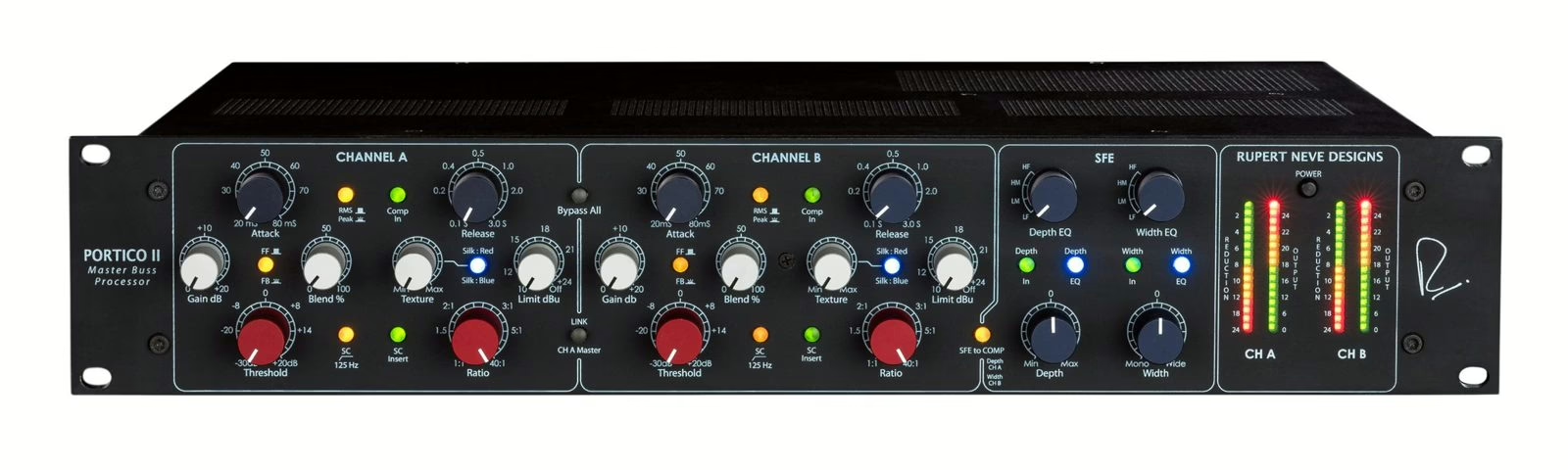
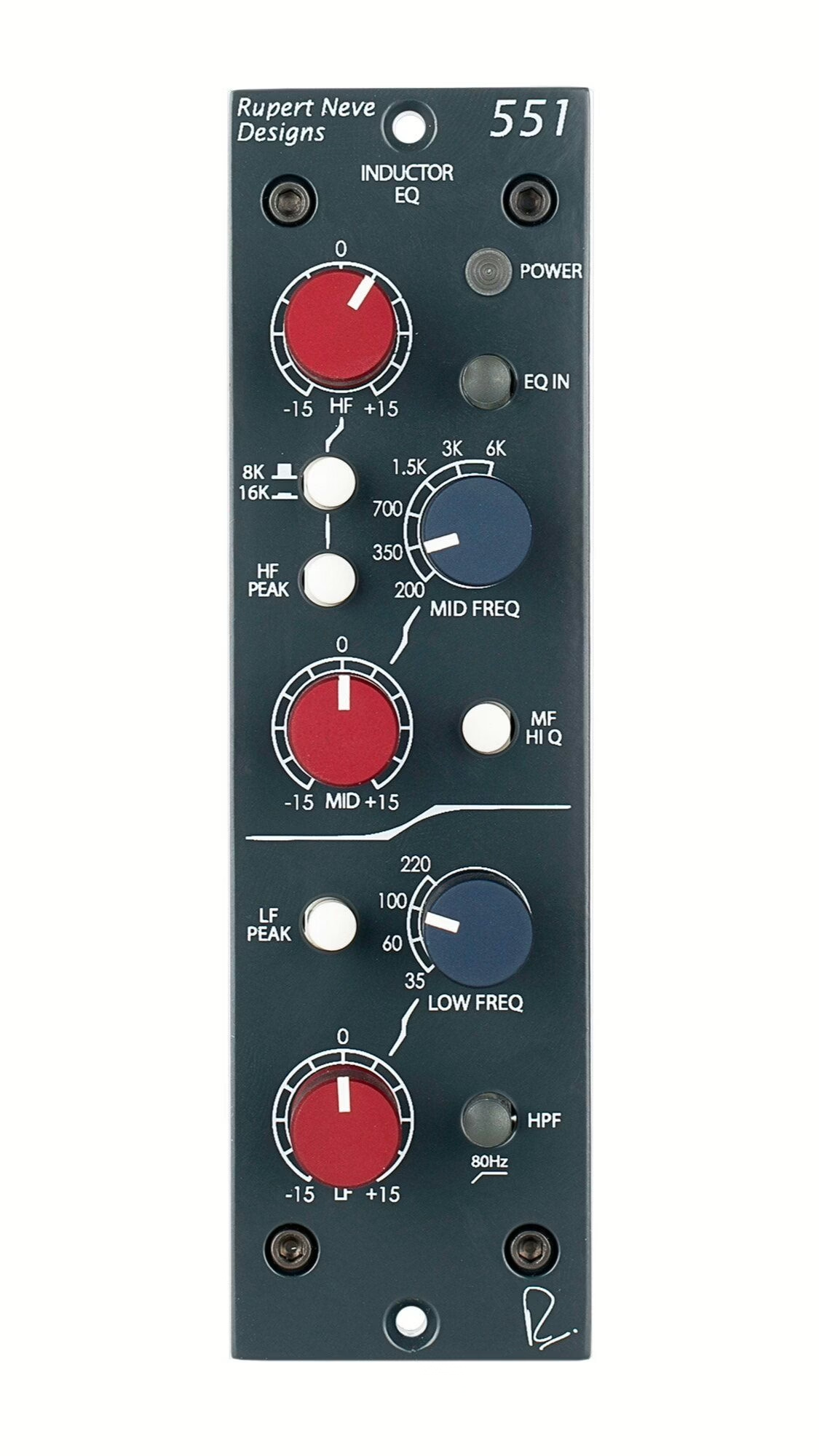
The trio is far from random. The Master Buss Processor is the brand’s reference stereo-bus tool: compressor, limiter, stereo-width stage and, above all, that famous Silk control that shifts the harmonic texture of the transformers. On a master or gluing a mix together, it adds density without crushing dynamics. The 551 Inductor EQ brings the 500-series inductor equaliser: broad, musical curves that shape a source without ever sounding surgical. The 542 Tape Emulator models the back-and-forth of analogue tape, with its saturation stage and variable head circuit that rounds off the top end.
What these three share is colour. This is not transparent correction: it is added substance, harmonics, a kind of analogue cohesion. That is exactly what many will reach for in a Neve-badged plugin rather than in yet another neutral EQ. To place each one in a chain, our guide to mastering chain order and our EQ explainer set the scene.
Development handed to McDSP
Rupert Neve Designs did not go it alone in code. Development was carried out with McDSP, a respected developer with deep experience modelling analogue stages. The choice makes sense: rather than shipping a rough first attempt, the brand leaned on a partner whose whole business is making a circuit fit into an algorithm. The stakes are reputational as much as technical. When your name is Neve, a plugin that sounded “off” would do more harm than staying out of the software market. This is not the first time the Rupert Neve spirit has slipped into a digital chain: it recently arrived on the hybrid-hardware side with the Focusrite ISA C8X and its transformer preamp.
Formats, compatibility and price
On integration, the brand aimed wide. All three plugins run in AAX, AU and VST3, natively on Intel and Apple Silicon, and are compatible with most DAWs on the market: Pro Tools, Logic Pro, Cubase, Nuendo, FL Studio, Ableton Live, LUNA, Reaper, Sonar and Studio One. Nothing exotic to plan for, then, to drop them into an existing session.
- Portico II Master Buss Processor — compressor, limiter, stereo width and Silk: $199.
- 551 Inductor EQ — 500-series inductor equaliser: $129.
- 542 Tape Emulator — tape saturation and colour: $129.
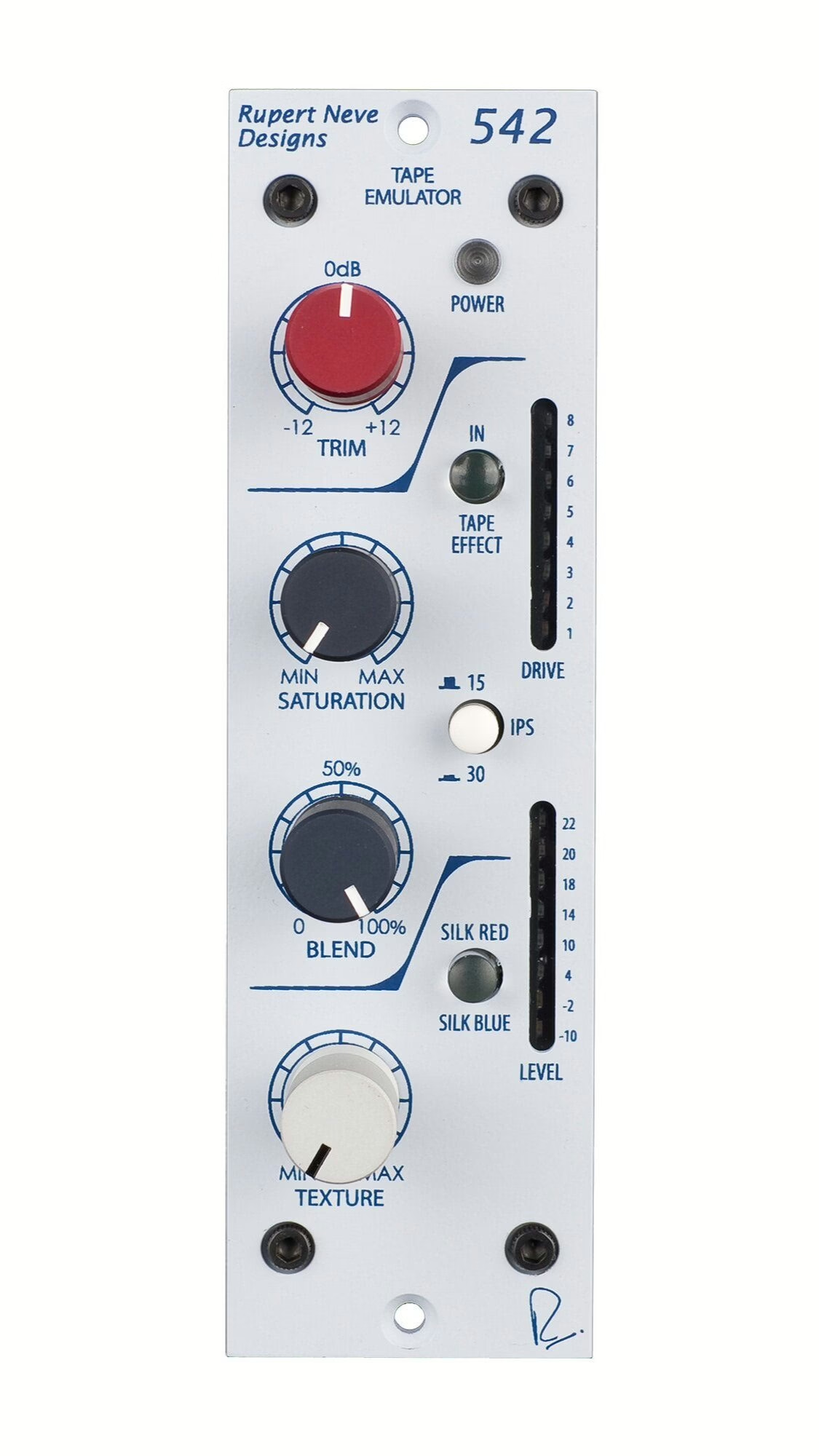
The three modules are available directly from the brand and through its resellers. The pricing puts these plugins at the upper end of emulations, without being outlandish: this is not a loss-leader, but the stance of a premium developer that owns its perceived value. Whether trial versions and bundles follow, to ease adoption, remains to be seen.
My take
About time, and rather well handled. The Master Buss Processor is a cult object on stereo buses, and seeing it arrive natively fills a genuine gap for anyone working entirely in the box. The McDSP partnership is reassuring: this is exactly the kind of project where a mediocre model would have tarnished a name that did not need the risk. The open questions are the price, a notch above the competition, and how faithful it really is, which only blind sessions will settle. But the intent is right: unapologetic colour, not one more plugin promising transparency.