Remote podcasting has become the norm: one guest in London, another in Toronto, and a mic each. The problem is that the quality of a video call has nothing to do with the quality of a recording. Between compression, latency and dropouts, capturing a Zoom feed directly means condemning yourself to a muffled, unstable voice. The solution comes down to one word: the double-ender. Here is how to record a remote conversation cleanly, and why the method changes everything.

Why a call is not enough
When you record a call, you capture whatever survived the journey: a signal encoded for transmission, thinned by the codec, slowed by latency and sometimes chopped by a drop in bandwidth. Perfect for understanding each other in real time, disastrous for a polished edit. The contribution codecs broadcasters use exist precisely to limit that damage, but they remain a transmission constraint. For a podcast, you want the opposite: each voice as it sounds in its own room, with no network compromise.
The double-ender: each voice recorded locally
The principle is simple and devastatingly effective. Each participant records their own voice, locally, on their own machine, in full quality. The call is now only for talking and coordinating; it no longer carries the recording. At the end, everyone sends their file, and you end up with as many clean tracks as there are speakers, perfectly isolated. It is called a double-ender because recording happens at “both ends” of the link, independently of the pipe connecting them.
The benefits are immediate: no latency in the final file, no network compression, and above all separate tracks that allow real mixing — EQ one voice without touching another, fix a level, cut a breath. It is the same editing comfort described in our processing chain for voice in a video edit, applied to the remote interview.
The platforms that automate it
Doing a double-ender by hand — everyone starts their own recorder, then transfers the file — works, but stays fragile: one guest forgets to hit “rec” and the track is gone. That is why a generation of tools has automated the process. Services like Riverside, Zencastr, SquadCast or Descript record each participant’s voice (and often video) locally in their browser, then upload the files progressively to the cloud. You get high-quality tracks even if the connection faltered during the conversation, since the recording never depended on the network. The convenience has a price — the subscription — but it removes the main cause of accidents: human error on the guest’s side.
Mix-minus, foldback and backup: running a remote
Recording locally does not remove the need for a proper setup on the host side, especially if you mix remote guests with a physical studio. That is where mix-minus comes in: you send the guest the whole mix except their own voice, so they do not hear their own echo delayed by the link. A podcast production console like the RODECaster Pro II handles this natively and records each channel to multitrack in parallel, giving you a local safety net even when an online service already handles the guests.
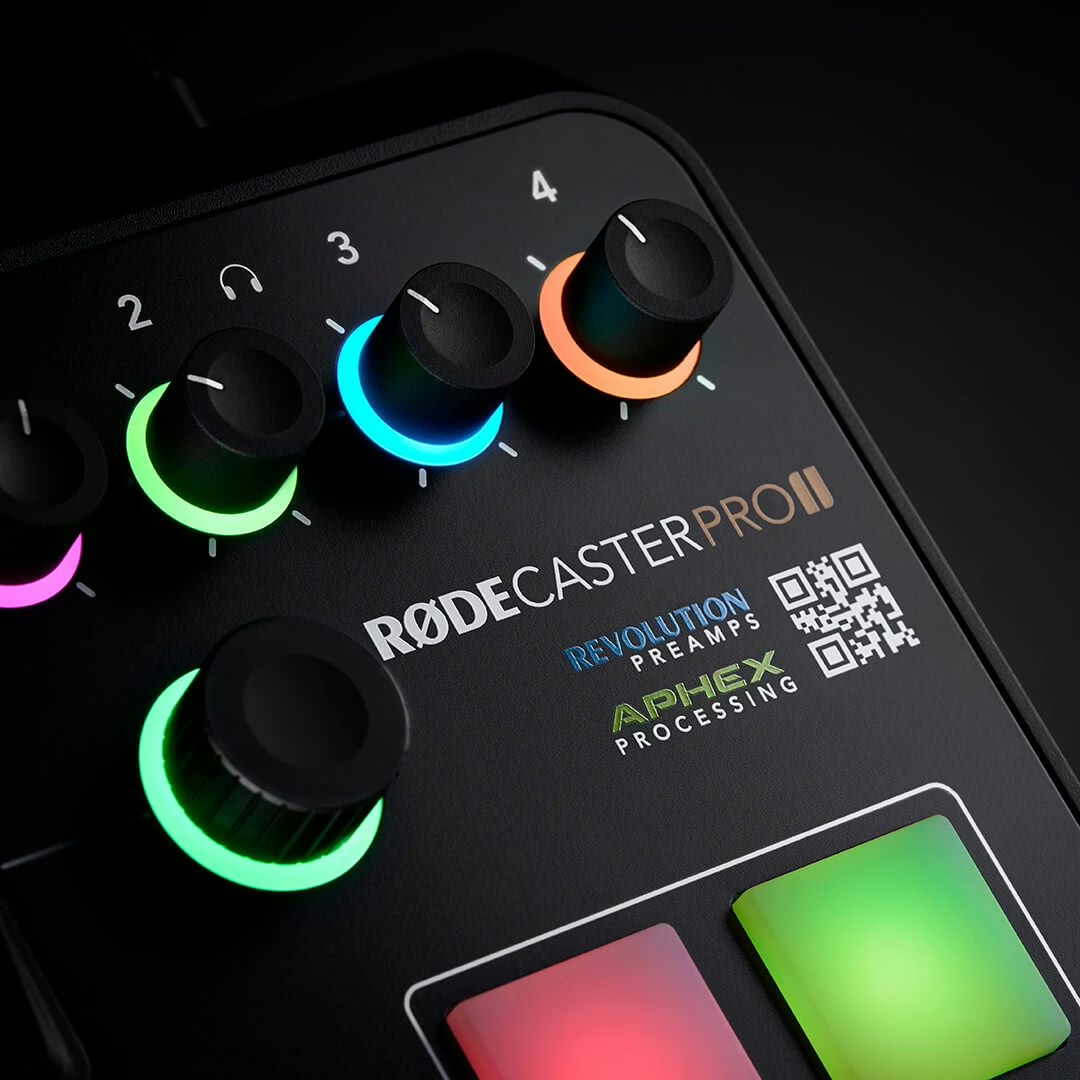
The golden rule of live work applies to the recorded podcast: always plan a backup. A local recording of the full session, on top of the platform’s tracks, will save you the day a cloud file arrives corrupted. To go deeper on this kind of console, see our RODECaster Pro II multitrack guide.
Pitfalls to anticipate
- Sync: tracks recorded on different machines can drift slightly. A clap at the start, or a common cue, makes alignment easier in the edit.
- The guest’s room: the double-ender also captures the space. Headphones and a few setup tips beat a de-reverb plugin in post.
- Upload bandwidth: platforms upload in the background. A guest on a weak connection will see files arrive long after recording.
- Recording consent: always tell people, an ethical as much as a legal must.
My take
The double-ender is the best thing to happen to the interview podcast. For years we put up with guest voices at phone quality; today, getting a clean local track takes only a little method. Automated platforms earn their subscription the moment a guest is not a technician, precisely because they take the procedure out of their hands. One habit never to drop: the local backup on the host side. The cloud is wonderful, right up until the day a file goes missing — and that day always comes at the worst possible moment.