Why the Universal Audio Volt 876 is making waves in the studio world in 2025
A recent launch aimed squarely at bands and advanced home studios
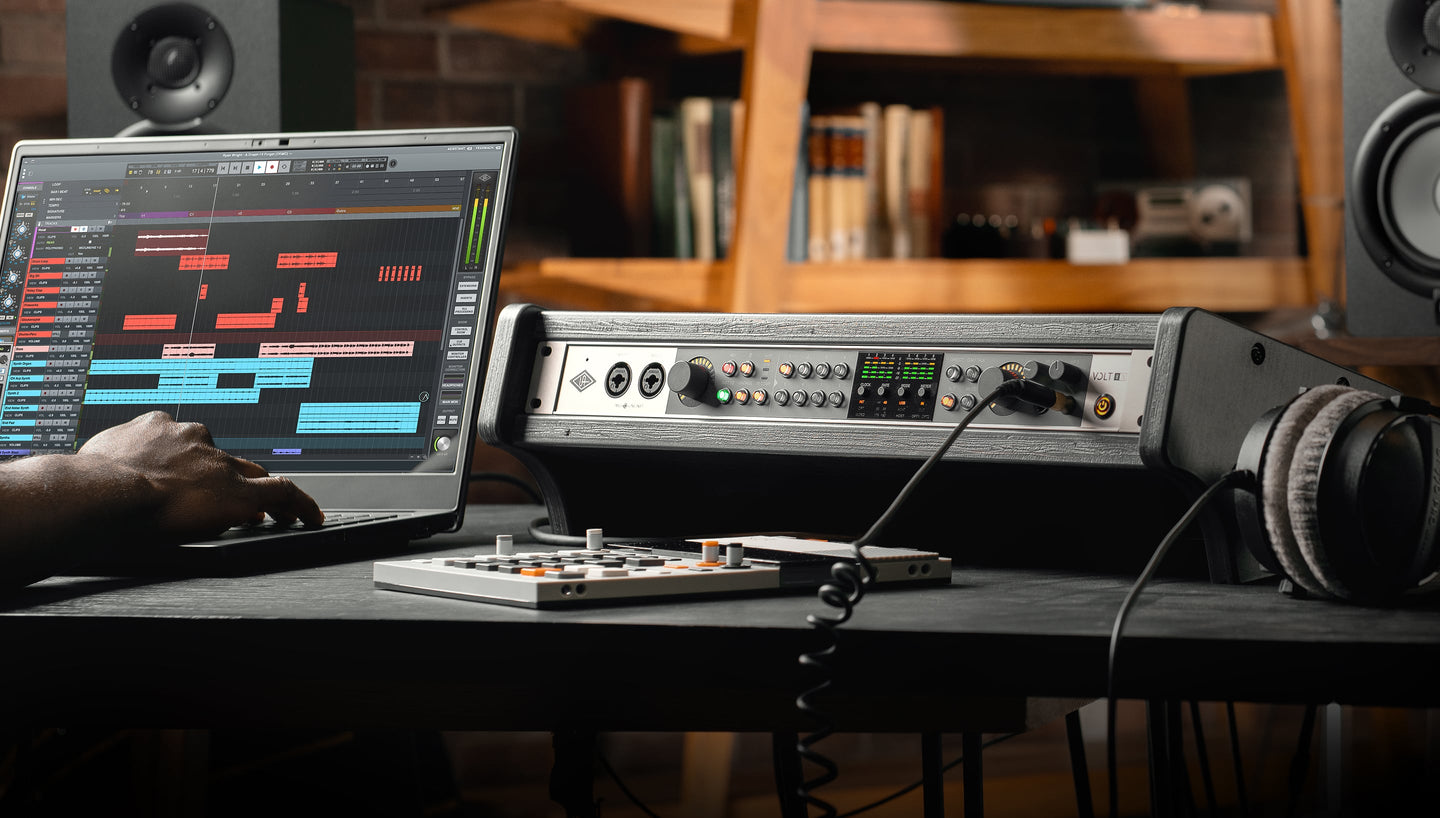
Unveiled at the end of September 2025 and available from mid-October, the Volt 876 arrives as the most ambitious rackmount audio interface in the Universal Audio Volt range. The unit is described as a 32-bit / 192 kHz USB interface designed for band productions, with 24 inputs and 28 outputs and the option to expand the system via ADAT up to 24 channels, or to pair it with an existing Apollo interface.
At several major European retailers, the Volt 876 is priced at around €990 including VAT, in a segment already populated by contenders such as the SSL 18 (around €922) or the Audient iD48 (around €888). This puts it in the “accessible high-end” rack interface category for home and semi-pro studios, as a more affordable alternative to Apollo-based setups.
Universal Audio: from the legendary Apollo to the “budget” Volt range
The Volt 876 is designed by the same team behind the Apollo interfaces, but it takes a different approach: it doesn’t feature onboard DSP or Unison preamps and relies on a 100% USB architecture. The goal is to offer a UA interface for bands and drum-recording home studios at a more manageable cost, while retaining several key elements of the Apollo ecosystem:
- 32-bit / 192 kHz audio conversion suitable for demanding productions;
- tight integration with the UAD Console application and the LUNA DAW;
- a bundled UAD plug-in suite, with emulations of well-known compressors, EQs and amps.
The Volt range therefore brings part of the UA experience in terms of workflow and software, while staying in a more accessible price bracket for home producers and project studios.
Volt 876 at a glance: what this rack audio interface actually offers
Rack format and connectivity: 24 in / 28 out for band-oriented setups
The Volt 876 is a 19″ / 1U rackmount USB audio interface, with a height of around 46 mm, a width of 432 mm (without rack ears) and a depth of 333 mm. It weighs around 4.08 kg, making it suitable for a fixed rack installation or a dedicated flight case.
The connectivity is particularly comprehensive for a rack interface aimed at bands and home studios:
- 8 mic/line inputs on XLR / 1/4″ jack combo sockets, including 2 Hi-Z instrument inputs on the front panel for plugging guitars or basses directly in;
- 8 line outputs on 1/4″ jacks, including two Monitor outputs and two ALT outputs for managing two pairs of speakers or additional sends;
- 2 independent headphone outputs on 1/4″ stereo jacks, with dedicated controls on the front panel;
- 2 ADAT inputs and 2 ADAT outputs (optical, S/PDIF usable), for adding external preamps or converters and going up to 24 channels at 44.1/48 kHz;
- Word Clock in and out on BNC for synchronising with other digital equipment;
- DIN MIDI in and out to connect keyboards, controllers or MIDI hardware without needing a separate MIDI interface;
- USB-C port compatible with USB 2.0 for connecting to a computer or compatible mobile devices.
Power is supplied via a dedicated external PSU, included with the interface. This choice makes sense given the number of inputs/outputs and the presence of analogue circuitry (preamps and compressors) on eight channels.
8 Vintage preamps and 8 1176-style compressors: real-world benefits at the tracking stage
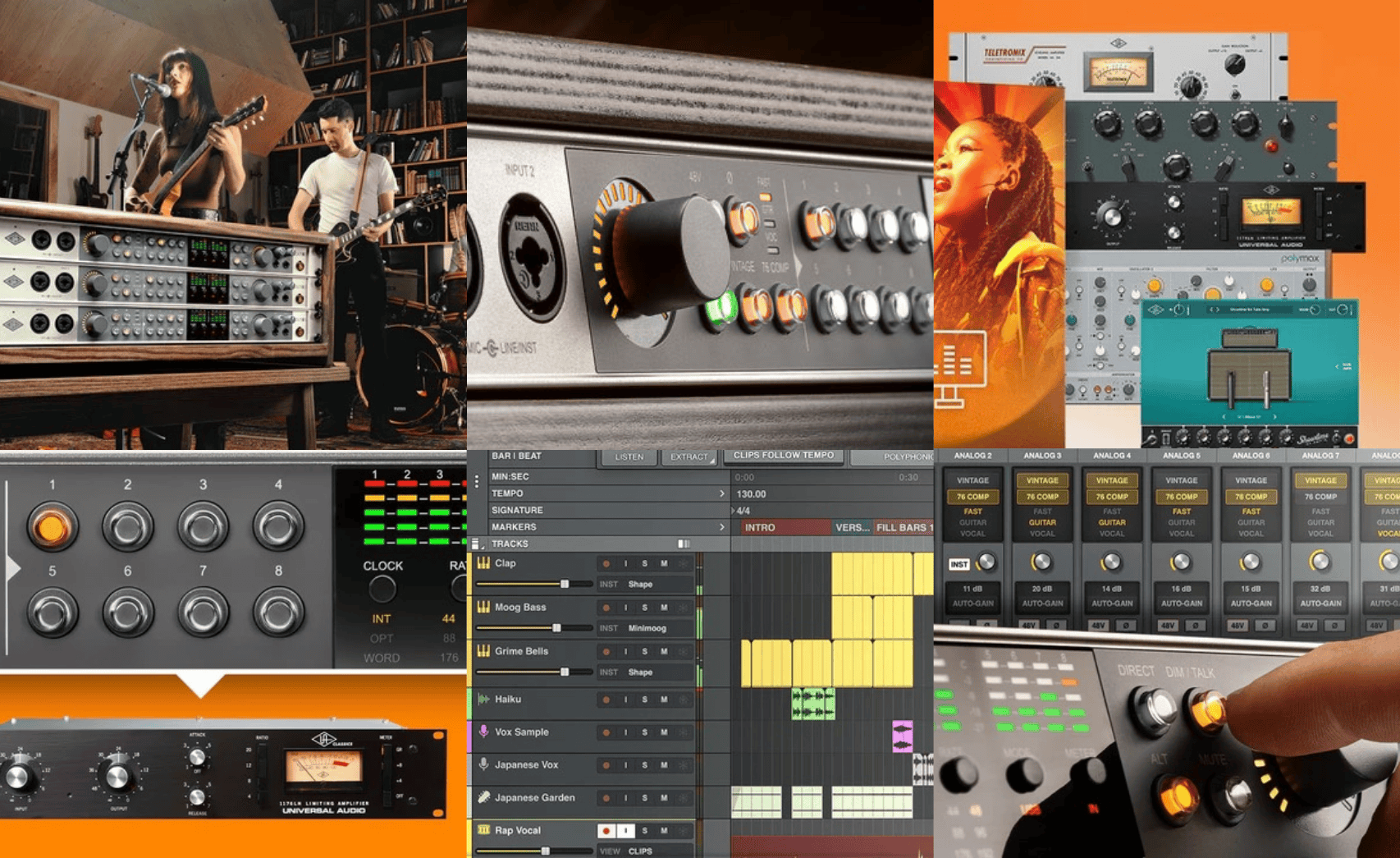
The standout feature of the Volt 876 is that it houses 8 “Vintage” mic preamps and 8 analogue “76” compressors inspired by the famous UA 1176 limiter, directly accessible on the front panel.
- The Vintage mode is based on a hardware-style emulation of the UA 610 tube preamp. This classic circuit is known for the warmth and presence it adds to vocals and instruments. Each preamp can switch between a neutral operating mode and this Vintage mode.
- The “76” compressors are analogue compressors inspired by the 1176, with preset settings tailored to different uses (vocals, guitars, synths, fast mode for drums). They let you add dynamic control and character at the recording stage, without having to rely on a plug-in.
A user review posted at a retailer highlights generous gain, very low noise and behaviour described as neutral when Vintage mode is disabled. Engaging the UA 610 emulation is perceived as a subtle but effective enhancement, while the three fixed settings on the 76 compressor are described as genuinely usable. The user also notes an audible difference compared with a Focusrite Scarlett, as well as a sonic character perceived as more “vintage” compared with more “modern” RME preamps, while stressing that this is a subjective assessment.
32-bit / 192 kHz conversion and operating modes
The Volt 876 features 32-bit / 192 kHz conversion for recording and playback, putting it on a par with the most modern USB audio interfaces. Universal Audio envisages several use cases:
- a full USB audio interface for Mac, PC, iPad or iPhone (with the appropriate adapter for mobile devices);
- a standalone ADAT expander, in “ADAT standalone” mode, to add extra preamps and conversion to another interface (Apollo, RME, SSL, etc.).
The manufacturer states that you can connect up to three Volt 876 units in UAD Console to build a 24-track system, or add the interface to an Apollo setup or any other ADAT-based rig.
Real-world scenarios: what does a setup built around the Volt 876 look like?
Recording drums, bass and guitars live in a home studio
With its 8 mic/line inputs and ADAT expansion options, the Volt 876 is well suited to “full band” tracking in a drum-capable home studio. A typical configuration might include:
- four to five mics dedicated to the drum kit (kick, snare, overheads, toms);
- a Hi-Z instrument input for DI bass;
- one or two inputs for guitars, either via mics in front of amps or direct inputs.
The Vintage preamps and 76 compressors let you tailor the behaviour of each channel to the source you’re recording. Real-time direct monitoring, with dedicated controls on the front panel, helps keep latency very low for the musicians during the session.
Hybrid production: hardware synths, drum machines and outboard
The 8 TRS line outputs and two pairs of ADAT ports make it easy to integrate a collection of synths, drum machines and external processors. For example, you can:
- send outputs from the DAW to external effects via the Volt 876’s line outputs, then return them to the interface;
- use external preamps connected over ADAT to complement the eight built-in preamps;
- use the ALT outputs to send a mix to a second monitoring system or to an external recorder.
The presence of Word Clock in and out lets you synchronise every digital device in the chain accurately, which becomes important as soon as you start multiplying converters.
Use in a small venue, place of worship or rehearsal room
Thanks to its two headphone outputs, Monitor and ALT outputs, and low-latency headphone mix capabilities via UAD Console or LUNA, the Volt 876 can also act as the audio hub in a small venue, rehearsal space or place of worship. It allows you to plug in several mics and instruments, manage headphone or speaker monitor mixes, and record sessions to a computer or iPad.
Software and the UA ecosystem: what you get beyond the hardware
UAD Console, Assistive Auto-Gain and recall
Software integration is one of the main selling points of this band-ready rack audio interface. The Volt 876 works with the UAD Console application, which offers several features designed to streamline sessions:
- an Assistive Auto-Gain system that automatically sets preamp gain based on the incoming signal;
- full recall of front-panel settings (gains, Vintage modes, 76 compressors) and headphone mixes;
- two low-latency stereo cue mixes, along with a built-in talkback mic for communicating with musicians.
The Volt 876 also benefits from deep integration with LUNA, Universal Audio’s DAW. LUNA offers unlimited audio tracks, AI-assisted tools such as “Hey Luna” voice control, instrument detection and tempo-follow features, as well as advanced hardware/software integration with UA interfaces.
Included plug-in and instrument bundle
When you buy the Volt 876, Universal Audio includes the UAD Producer Suite, which brings together several of the brand’s plug-ins and software instruments. Among the main components are:
- the Teletronix LA-2A and UA 1176 Classic FET compressors;
- the Pultec Passive EQ Collection equaliser bundle;
- the Century Tube Channel Strip console strip;
- the Oxide Tape Recorder tape simulation;
- the Verve Analog Machines Essentials collection;
- the Pure Plate reverb and Galaxy Tape Echo tape delay;
- the PolyMAX virtual synth;
- the Showtime ’64 Tube Guitar Amp virtual guitar amp.
The bundle also includes third-party software and tools to get you started quickly, such as Ableton Live Lite, Melodyne Essential, bass and guitar amp bundles (Ampeg and Marshall), as well as virtual instruments from UJAM and Spitfire Audio (LABS).
Up against the competition: Volt 876, Apollo or Audient / SSL?
Quick comparison: I/O, price, perceived quality and target users
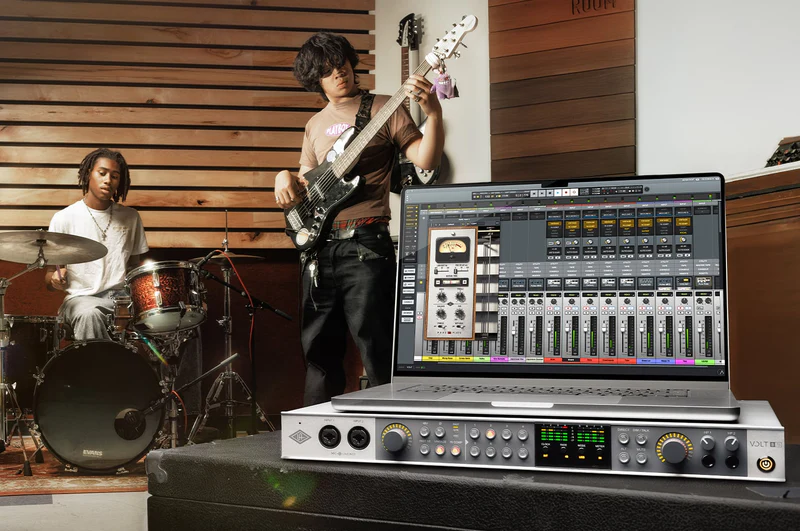
In the market for rackmount audio interfaces for home and project studios, the Universal Audio Volt 876 lines up against models such as the SSL 18 or the Audient iD48, and as a more affordable alternative to certain Apollo configurations.
- The SSL 18 is cited by users as a direct competitor in terms of price, with very good audio quality, but without the UAD bundle or built-in UA 610 / 1176-style preamps or compressors.
- The Audient iD48 sits in a similar price range, with highly regarded preamps and advanced routing, but without the Console/LUNA ecosystem and without built-in Vintage-style circuits like those in the Volt 876.
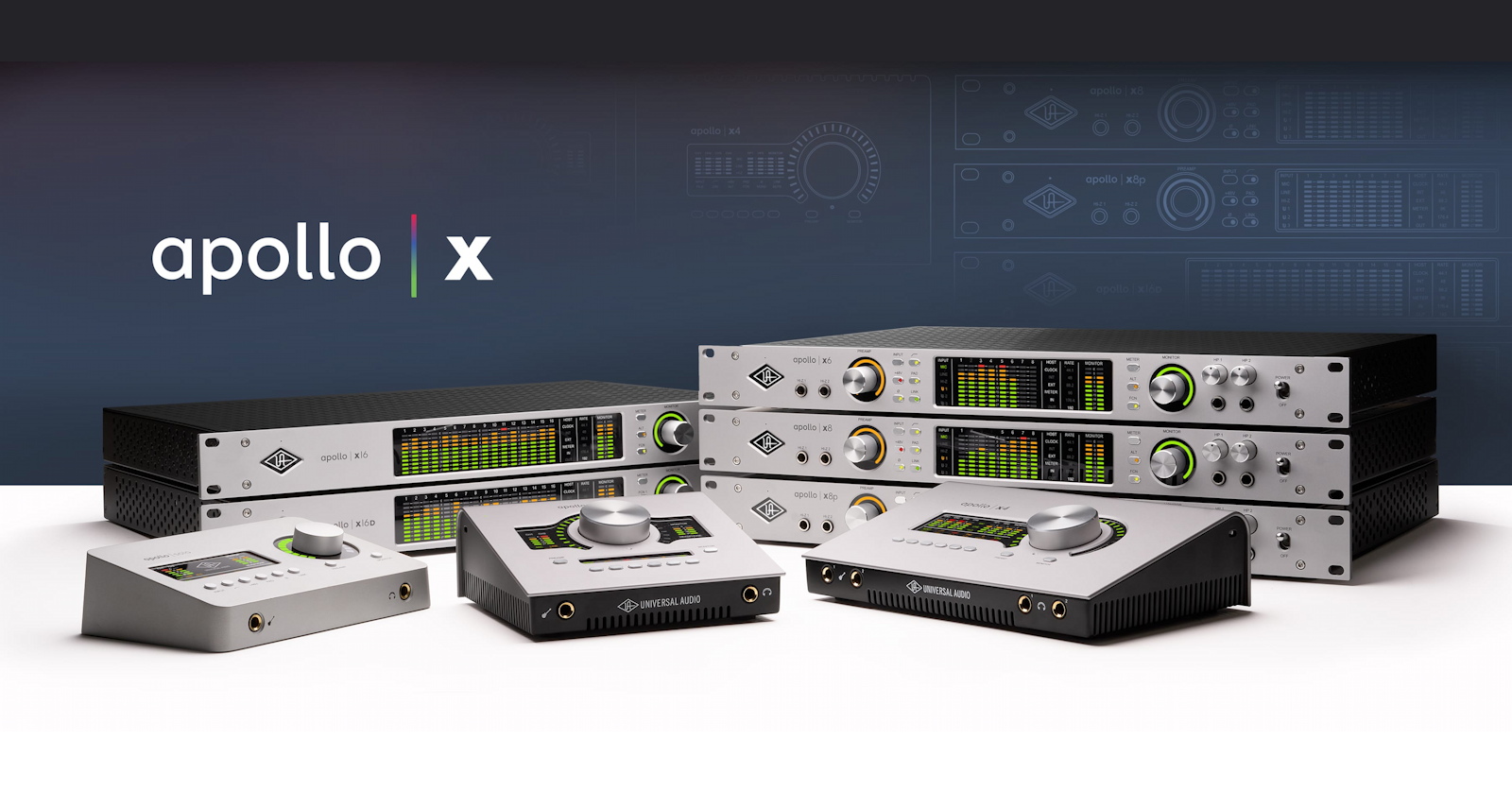
- Apollo interfaces stand out thanks to their onboard DSP and Unison preamps, which allow UAD plug-ins to run at ultra-low latency directly on the interface. The Volt range, including the 876, does not feature DSP or Unison preamps: the included plug-ins run natively on the host computer.
Several user discussions highlight that the Volt 876 mainly targets people who don’t need onboard DSP but want a UA band interface with plenty of I/O, Vintage preamps, usable analogue compressors at the tracking stage, and integration with Console and LUNA.
When the Volt 876 is the best choice
The Volt 876 makes particular sense when:
- you’re looking for a multichannel rackmount audio interface for a home or project studio that regularly records full bands;
- you want to benefit from the Universal Audio sound (Vintage preamps, 76 compressors, UAD plug-ins) without investing in a more expensive Apollo setup;
- you need ADAT and Word Clock connectivity so you can expand your system over time;
- you use or are considering using LUNA as your main DAW and want a high level of hardware/software integration.
Who might be better off with a different model
That said, some user profiles will still be better served by other interfaces:
- users for whom onboard DSP and Unison preamps are essential (for example for heavy real-time plug-in chains) will continue to favour the Apollo range;
- those who don’t need 8 preamps or full ADAT connectivity can opt for more compact and cheaper interfaces, including other models in the Volt range (Volt 476P, Volt 276, etc.);
- users already happy with an SSL 18 or an Audient iD48 and not particularly interested in Vintage preamps, built-in compressors or the UAD ecosystem won’t necessarily see a decisive benefit.
Verdict: who is the Volt 876 really for?
Recommended user profiles for the Universal Audio Volt 876
Given its features and pricing, the Volt 876 is primarily aimed at:
- advanced home studio owners who are moving into drum and full-band recording and need a rackmount audio interface with enough mic inputs and outputs to handle multiple headphones and monitoring systems;
- project studios and freelance engineers who want a versatile, rackable interface, integrated with Console and LUNA, and bundled with plug-ins they can put to work straight away;
- users who care about the Universal Audio sound (610 preamps, 1176, UAD plug-ins) but have found Apollo configurations too expensive or overkill for their needs.
Example of a minimalist setup built around the Volt 876
For a home studio planning to use the Volt 876 as its central interface, a minimalist setup could include:
- the Volt 876 in a rack, connected via USB-C to a Mac or PC powerful enough to run native UAD plug-ins;
- a pair of studio monitors connected to the Monitor outputs, and optionally a second pair on the ALT outputs;
- two to four dynamic or condenser microphones for vocals, guitar amps and certain drum elements;
- one or two studio headphones plugged into the headphone outputs for vocal and instrument tracking;
- a MIDI keyboard or controller connected to the DIN MIDI ports if needed.
From this base, you can still add external preamps via ADAT, analogue processors on the line outputs and gradually expand the system without changing your main interface.
FAQ: Universal Audio Volt 876 in a home studio
Is the Volt 876 suitable for a simple guitar/vocal home studio?
Yes, the Volt 876 can absolutely serve in a guitar/vocal-focused home studio, thanks to its Vintage preamps and built-in 76 compressors. However, for very simple use with just a few inputs, a more compact model in the Volt range (Volt 1, Volt 2, Volt 276, etc.) will generally be more cost-effective and perfectly adequate, while offering comparable audio quality.
Can you daisy-chain other external preamps or converters via ADAT?
Yes. The Volt 876 has two pairs of ADAT inputs and outputs, allowing you to add compatible external preamps or converters. This makes it possible to increase the number of available channels or to use the Volt 876 as a standalone ADAT expander within an existing system.
What’s the practical difference between “Vintage” preamps and a neutral preamp?
In neutral mode, the Volt 876’s preamps are designed to stay transparent, with generous gain and low noise. Enabling Vintage mode engages a hardware-style emulation of the UA 610 tube preamp, adding subtle coloration inspired by analogue consoles, with more warmth and presence, particularly on vocals, guitars and certain drum elements.
Does the Volt 876 fully replace an Apollo in a professional studio?
The Volt 876 brings several elements of the UA ecosystem (Console, LUNA, UAD plug-ins), but it doesn’t provide onboard DSP or Unison preamps. In a studio that relies heavily on UAD plug-ins running in real time on Apollo DSP, a Volt 876 is therefore not a drop-in replacement for an Apollo setup. However, it can serve as the main interface or as an ADAT expansion unit in a project or home studio that primarily works with native plug-ins.
Does the Volt 876 include DSP or Unison preamps?
No. The Volt range, including the Volt 876, doesn’t feature internal DSP or Unison preamps. The included plug-ins run natively on the host computer. The Vintage preamps and 76 compressors are analogue circuits built into the interface, independent of the DSP-based processing that characterises the Apollo range.