Drawmer expands its 500-series range with two single-channel compressors that share an identical control layout but pull in opposite directions. The OC1 is the British brand’s first-ever opto design, aiming for smoothness and consistency; the FC1 borrows the FET circuit of Drawmer’s 1970s range and goes for speed and bite. Announced price: 290 GBP plus VAT per module.
Two topologies, one interface
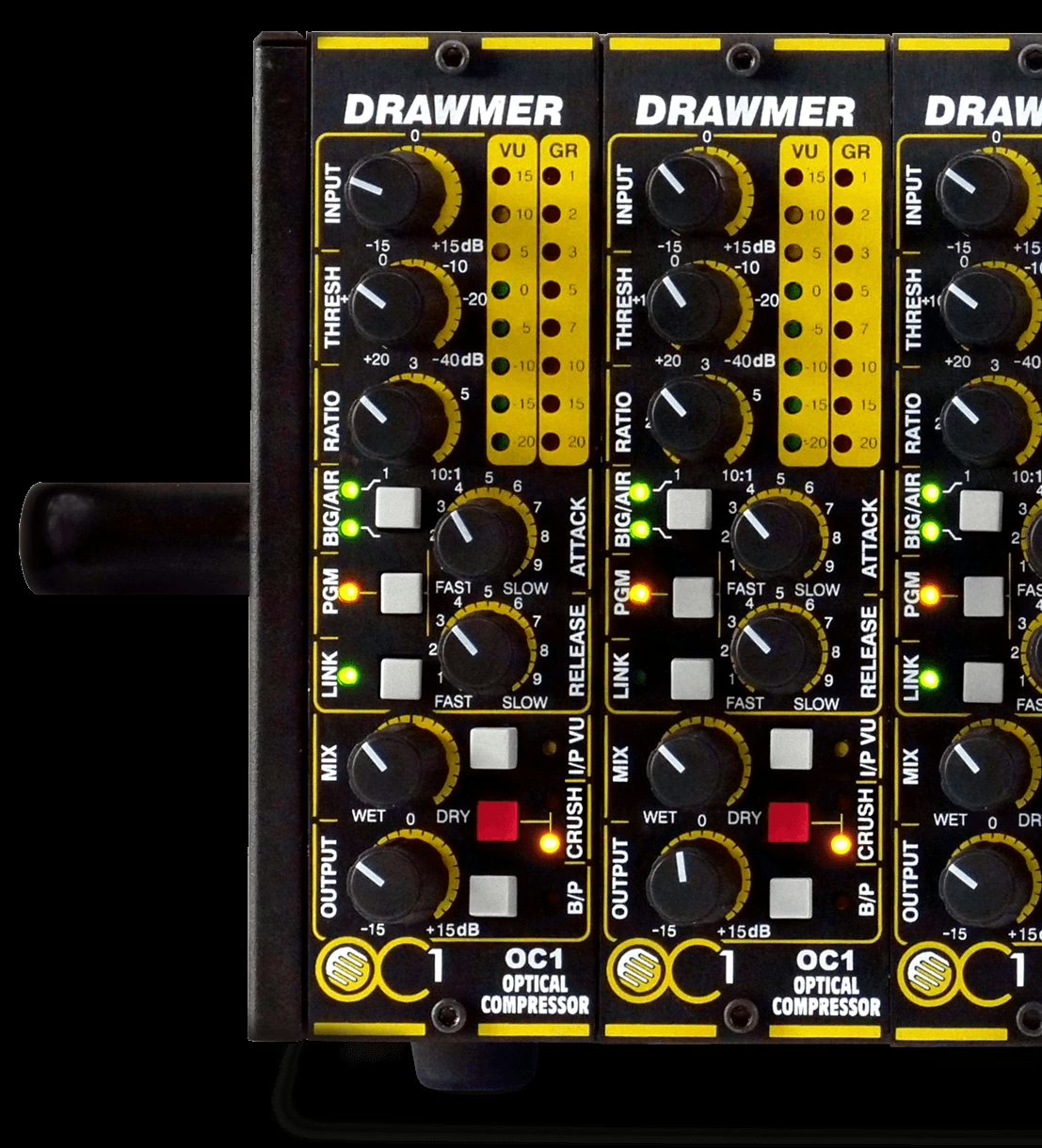
Both modules share the exact same control set: input gain, threshold, ratio, attack, release, and soft-knee feedback compression, where detection happens after the gain cell. Crucially, every control runs on 21-position detented pots. In a session that’s a real comfort: a setting can be written down, found again and recalled identically from one day to the next, something continuous pots never quite allow.
Each module also offers a VU meter switchable between input, output and gain reduction, a true hardware bypass, and a link pin (pin 6 of the 500-series chassis) to couple two matched modules for stereo work.
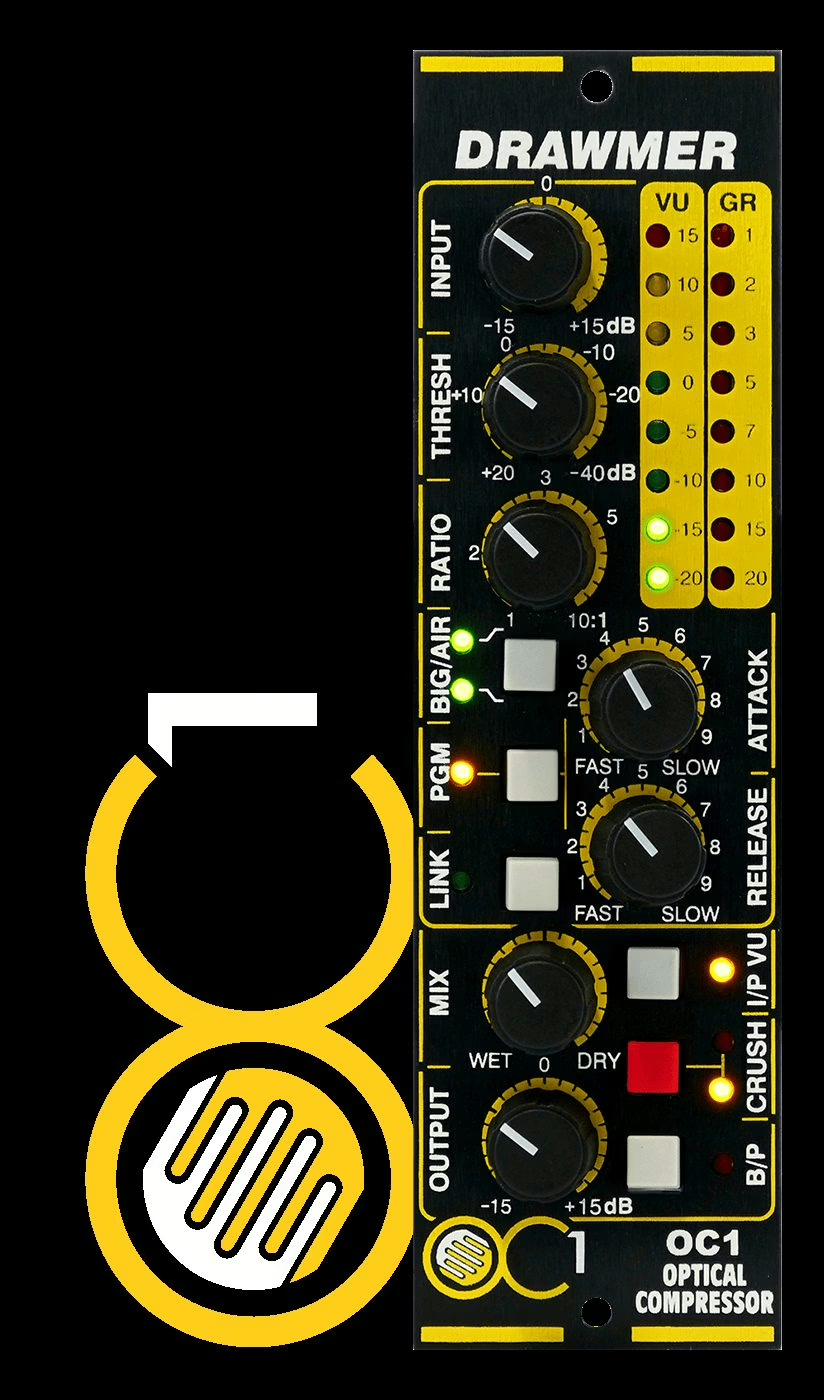
OC1: Drawmer’s first opto
The OC1 is the first optical compressor Drawmer has ever built, despite the brand’s long-standing reputation for dynamics processors. The opto cell delivers a progressive, program-dependent gain reduction: attack and release follow the material rather than a rigid curve. The result is a smooth, warm, natural compression that stays out of the way.
That’s the ideal profile for vocals, acoustic instruments, bass and the mix bus, wherever you want transparency, consistency and gentle levelling without aggression. Opto shines when you need to sit a vocal forward without ever crushing it.
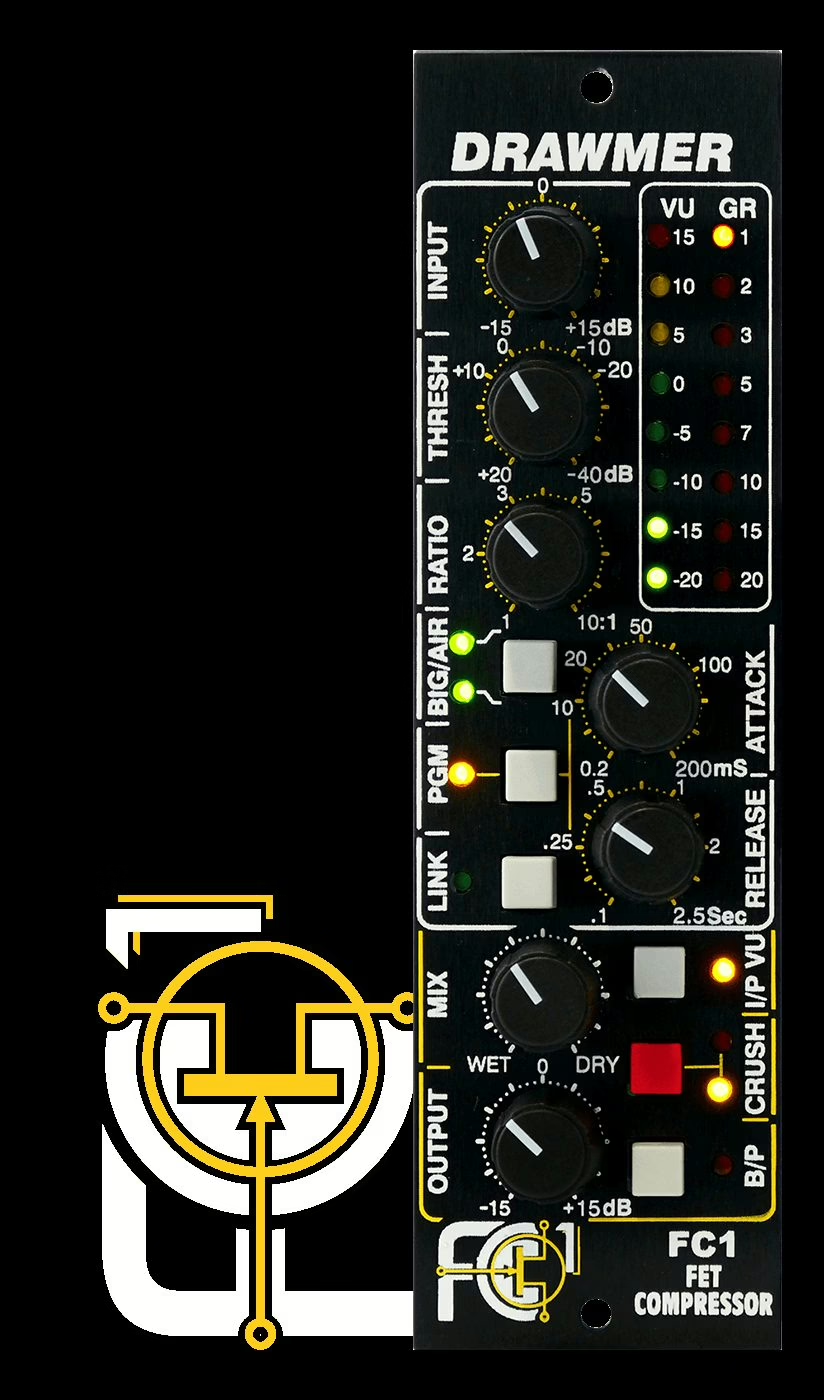
FC1: FET bite from the 1970s
The FC1, by contrast, takes its architecture from the FET design of Drawmer’s 1970s range. A FET compressor reacts fast, very fast, and stamps a strong character on the sound: it tames transients, adds punch, attitude, sometimes a touch of controlled aggression, and pushes a source forward in the mix. Drums, electric guitars, energetic vocals: that’s its home turf.
Having both topologies in a box with identical controls is a smart move. You pick the character without relearning the unit, and you can switch between opto and FET per track, or even chain them.
BIG, AIR and CRUSH: colour on tap
Beyond straight compression, both modules pack a few shaping tools. BIG and AIR modes add low-end richness and high-end sparkle respectively, an easy way to flatter a source without reaching for an EQ. The CRUSH circuit, already a Drawmer favourite, brings dial-in harmonic saturation to thicken the signal. A mix control finally allows parallel compression right on the module.
OC1 and FC1 at a glance
| OC1 | FC1 | |
|---|---|---|
| Topology | Optical (opto) | FET |
| Character | Smooth, warm, natural | Fast, punchy, assertive |
| Best on | Vocals, acoustic, bass, bus | Drums, guitars, energetic vocals |
| Shared | 500 series, soft-knee feedback, 21-position detented pots, BIG/AIR/CRUSH, mix, stereo link | |
Our take
Drawmer built its name on reliable, musical dynamics processors, and this pair extends that logic with a simple, sound idea: offer a choice of character without changing the ergonomics. I’m far from dogmatic about all-analogue, but a well-designed compression stage does sometimes bring something audible, and the detail that matters here sits well away from the marketing copy: those 21-position detents that guarantee recall. On a session where you have to nail yesterday’s setting exactly, that kind of precision is worth its weight, and often marks the line between a studio tool and a gadget.
For more, see our piece on the tube-opto Antelope Audio A4-1B or our round-up of eight channel strips to colour your tracks. Product pages are on the Drawmer website.