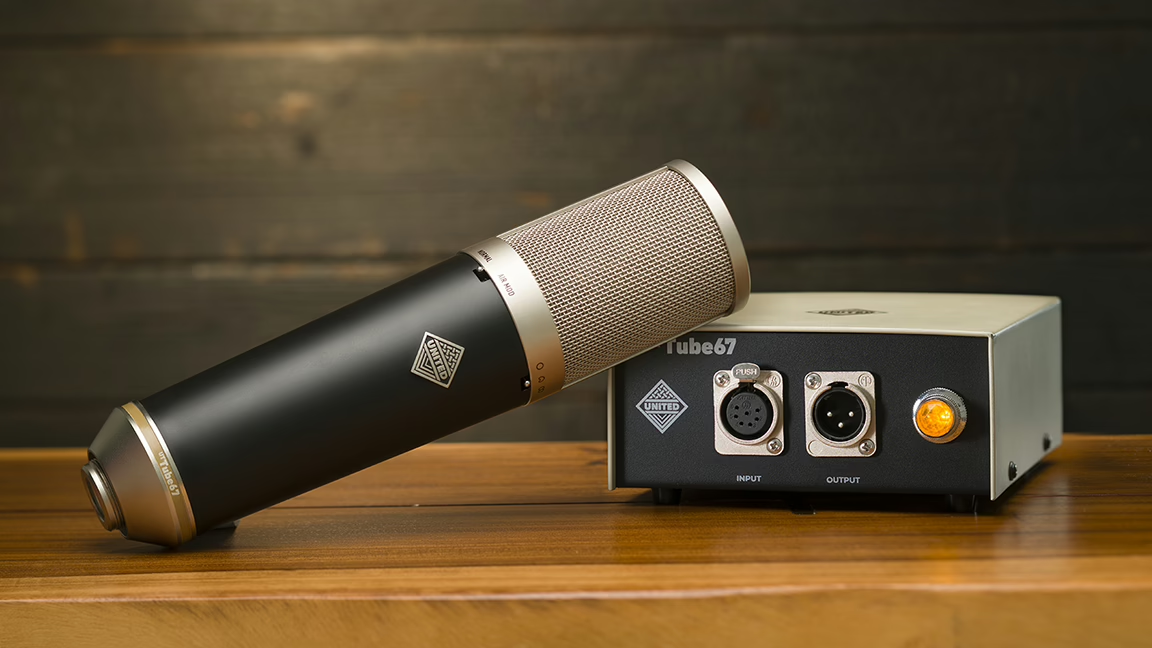
United Studio Technologies arrives with the UT Tube67, a valve microphone that clearly embraces its heritage: that of the legendary Neumann U67. But beyond the vintage nod, this model mainly aims to offer a genuine versatile “workhorse mic”, usable both for modern, C‑800G‑style vocals and in a more classic studio context.
For which uses is the United UT Tube67 really relevant?
Historically, the U67 was designed as the successor to the U47, with a K 67 capsule and an EF86 valve, in particular to better manage proximity effect in close‑miking situations. The UT Tube67 follows this lineage: it is a large‑diaphragm valve microphone designed to stay controlled in close‑miking, where many “U47/U67‑style” clones quickly become muddy in the low end.
In practical terms, the UT Tube67 positions itself as a serious candidate for:
- Lead vocals in the studio: very close miking without out‑of‑control low end, thanks to the integrated acoustic filters inspired by the U67.
- Ensembles and backing vocals: variable polar pattern (cardioid, figure‑8, omni) to adapt the width of the captured field.
- Versatile instrumental recording: acoustic guitars, guitar amps, woodwinds, strings, brass, drums, piano… with the ability to move from a more “classic” sound to a brighter profile via the AIR MOD.
On the market, it clearly goes up against modern interpretations of the U67 (Warm Audio WA‑67, Lauten, Telefunken, etc.) but with a specific twist: the stated intention to offer, in a single microphone, both a “U67” character and an option closer to the very forward signature of a C‑800G for contemporary pop/rap vocals.
A valve microphone designed as a studio “workhorse”
The brief for the UT Tube67 is to become your main large‑diaphragm microphone, not just a “colour mic” that only comes out for the annual jazzy ballad. United Studio Technologies has therefore worked on every building block of the circuit, aligning it with the key components of the original U67.
It features:
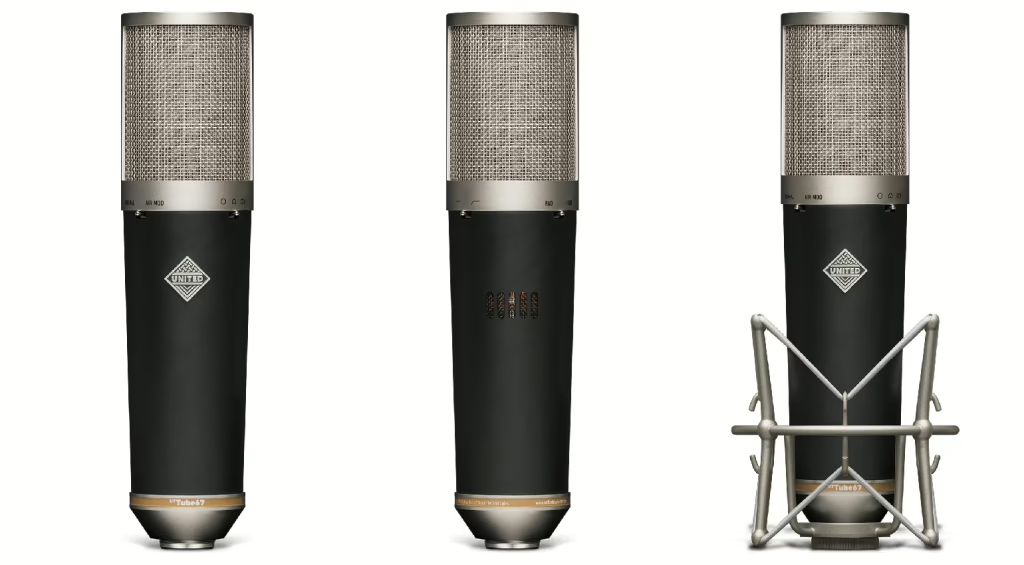
- A custom dual‑diaphragm capsule in gold‑sputtered Mylar, in the spirit of the K 67.
- A UT‑BV12 transformer, a crucial element for the tone and handling of the low‑midrange.
- Faraday‑type shielding to limit RF interference, a critical point in home studios full of Wi‑Fi, smartphones and switch‑mode power supplies.
The intended result: a valve microphone capable of delivering a warm and detailed image, but clean and quiet enough to stand up to modern recording standards, including heavily compressed “in the box” productions.
AIR MOD mode: from U67 to C‑800G‑style profile at the flick of a switch
The differentiating feature of the UT Tube67, compared with many “U67‑inspired” microphones, is its AIR MOD switch. When engaged, the mic moves closer to a C‑800G‑style profile, highly prized for Pop, Hip‑Hop and RnB vocals:
- Emphasised high frequencies, to cut through a dense mix without having to push the EQ.
- Increased definition on articulation, “air” and consonants.
- A more “modern studio vocal” character, whereas the normal mode stays faithful to a more U67‑type balance, smoother in the upper spectrum.
In practice, this allows an engineer or producer to cover, with the same microphone, two major vocal aesthetics:
- The classic studio sound (ballads, jazz, singer‑songwriter, folk, controlled rock vocals, demanding voice‑over).
- The very bright and present sound favoured in current Pop/RnB productions, often referenced against the C‑800G.
This dual personality makes it a particularly interesting tool for studios on a tight budget that cannot accumulate multiple high‑end vintage references, but still want to offer their clients several convincing tonal colours.
Recording versatility: polar patterns, pad and filter
The UT Tube67 remains faithful to the spec of a high‑end studio microphone:
- Three polar patterns selectable directly on the body: cardioid, figure‑8, omnidirectional.
- 80 Hz high‑pass filter to clean up rumbles, footsteps, air conditioning noise, etc.
- -10 dB pad to handle very loud sources (cranked guitar amp, brass, close drum overheads, etc.).
These functions are not there for marketing purposes: they are practical tools to broaden the range of applications for the UT Tube67. For example:
- In omni in a good‑sounding room, on a piano or string ensemble.
- In figure‑8 for recording two singers facing each other, or a guitar/vocal duo in Mid/Side with another cardioid.
- In cardioid + 80 Hz filter on a very close vocal, to reduce stand vibrations without (or with minimal) EQ in the mix.
Build, power supply and accessories
The UT Tube67 comes with:
- A dedicated external power supply (PSU), connected to the mic via a 7‑pin XLR cable.
- A shockmount for studio use, essential to fully benefit from the mic’s low noise and to avoid mechanical vibrations.
The inclusion of Faraday‑type shielding in the design is not a minor detail: valve microphones are sensitive to RF interference, and modern home‑studio environments are often more polluted than yesterday’s broadcast studios. This is a concrete point to bear in mind if you work near computers, routers, screens and digital consoles.
Price positioning: an affordable “modern classic”?
The UT Tube67 is listed at €1,379.00 and is available on request from dealers. At this price level, it is no longer entry‑level, but still far from the cost of a vintage U67 or an original C‑800G.
In this bracket, the microphone falls into the segment of “workhorse” large‑diaphragm valve microphones for serious studios, schools, pro home studios and small commercial studios that want:
- A microphone that is both a versatile reference and a character piece.
- A credible alternative to the great historical icons, without drifting into collector fetishism.
- A tool capable of covering everything from jazz to modern rap by simply flipping a switch.
For a sound engineer or producer working with a wide range of voices, this mix of versatility and targeted character makes it a particularly compelling proposition at this price.
FAQ: key questions about the United UT Tube67
Can the UT Tube67 really replace a U67 in a pro studio?
It does not replace a vintage U67 in terms of collectable value or brand prestige, but its goal is to get close in real‑world use: management of proximity effect, warm and detailed tonal balance, and versatility on vocals/instruments. For a studio that needs a credible “workhorse” without investing in an original, it can fulfil that role without hesitation.
Is it a good choice for current rap, pop or RnB vocals?
Yes, that is actually one of the model’s strong points. Thanks to the AIR MOD switch, the UT Tube67 adopts a profile closer to a C‑800G, with more present highs and more pronounced “air”. For highly produced, compressed vocals that sit right at the front of the mix, this mode is clearly designed for modern aesthetics.
Do you need an acoustically treated room to benefit from it?
Ideally, yes. Like any large‑diaphragm valve mic at this level, the UT Tube67 is very sensitive to room acoustics. In an untreated home studio, you can limit the damage in cardioid, with the 80 Hz filter and by working on mic distance, but it will only reach its full potential in a properly treated room, especially in omni or figure‑8.
Compared with a solid‑state mic, is the valve really an advantage?
The valve is not “better” in itself, but it brings a way of handling subtle saturation, low‑midrange and dynamics that remains highly sought after on vocals and harmonically rich sources. The UT Tube67 specifically aims for this warm, musical rendering, while staying clean enough not to impose a constant “veil” like some entry‑level valve microphones.