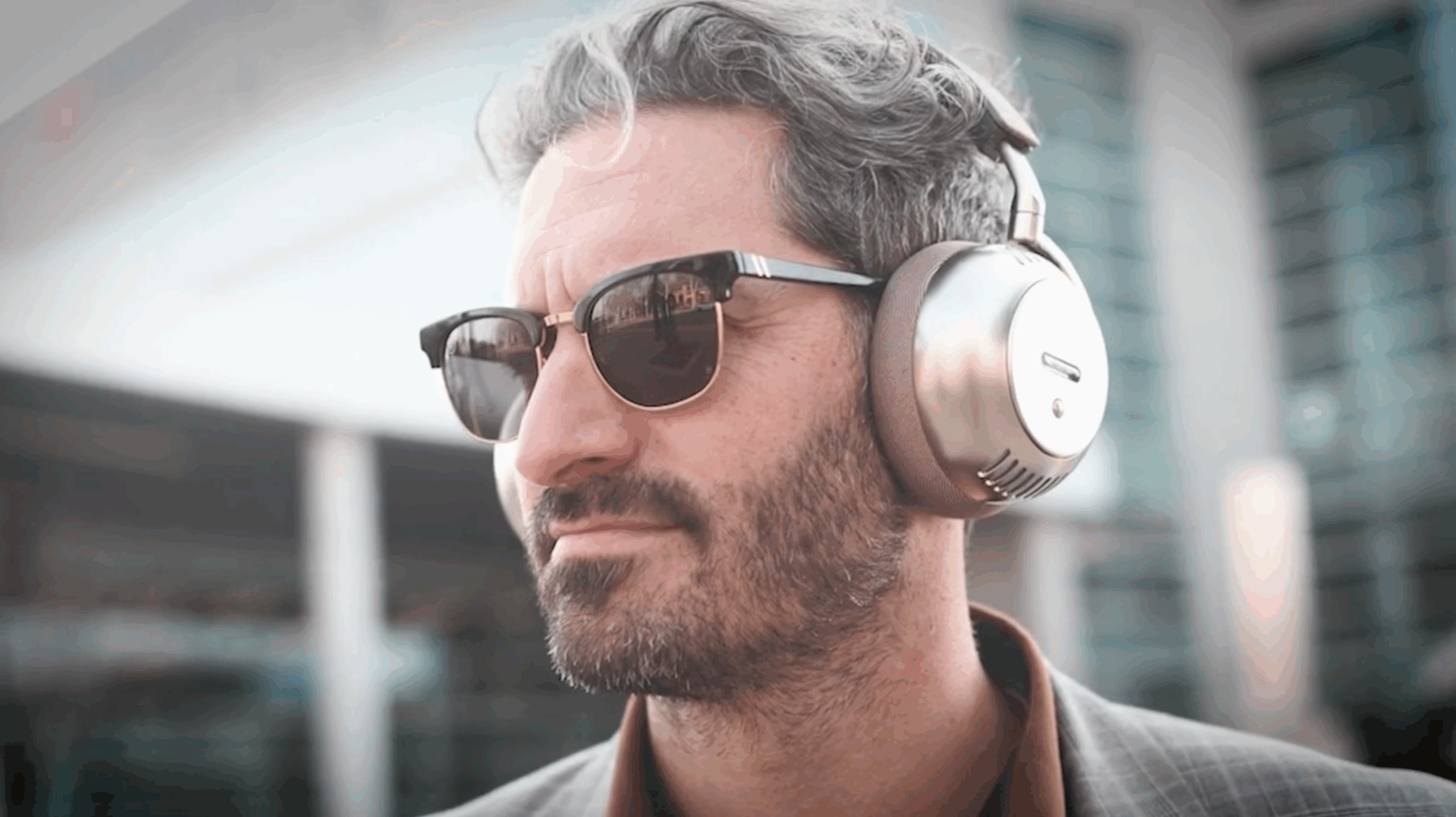
With the TH2, Écoute pushes even further an idea that shook the small audiophile‑headphone world in 2023: integrating a genuine tube preamp and dual‑mono amplification directly into a pair of headphones. The TH1 had proved that it was possible. The TH2 now promises to remove its limitations in order to get even closer to the experience of listening to a living‑room hi‑fi system, but in a portable form.
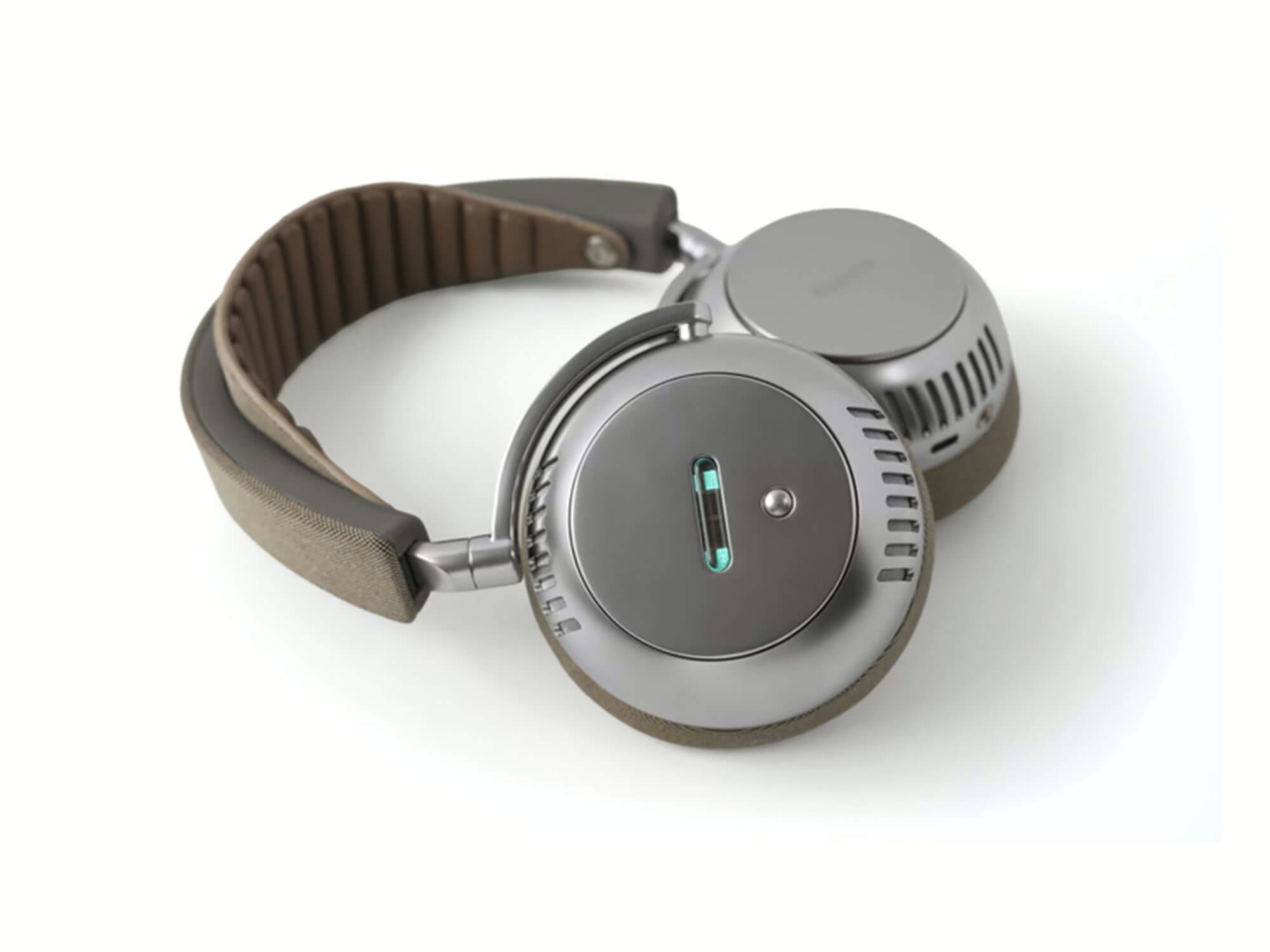
Who is the Écoute TH2 headphone really for?
The TH2 targets three audiences that “mainstream” Bluetooth headphones do not fully satisfy:
- Mobile audiophiles who already use portable DAC/amps (FiiO, iFi, Chord, etc.) and want to enjoy a very analogue, warm listening experience without lugging around a full stack of gear.
- Audio professionals (sound engineers, producers, demanding musicians) who want a “musical” rather than purely surgical control tool for critical listening, pre‑production or arrangement work, alongside neutral reference headphones such as the HD 600 or DT 1990.
- Tubed hi‑fi enthusiasts who are used to a stationary valve headphone amp (Feliks, Woo Audio, Cayin…) and refuse to listen on a simple noise‑cancelling headset when they leave their listening room.
The positioning of the TH2 is therefore very different from a Sony WH‑1000XM5 or a Bose QuietComfort Ultra: where these benchmarks focus on comfort, ANC and connected features, Écoute focuses on the quality of the internal analogue chain, with a gain stage handled by real, glowing triodes.
What the integrated tube amplification really changes
Écoute keeps the same philosophy as on the TH1: an on‑board tube preamp that provides voltage gain, followed by dual‑mono amplification. In concrete terms:
- The triodes handle the part of the circuit where the signal is most easily degraded: the gain stage. This is where micro‑dynamics, harmonic structure and stereo imaging can be preserved… or crushed.
- Dual‑mono (a separate amplification path for each ear) limits crosstalk and aims for better left/right separation than many headphones powered by a single stereo module.
On the market, this choice is almost unique. Some high‑end headphones rely on advanced DSP processing (Sennheiser Momentum, Apple AirPods Max) or spatialisation algorithms, but still use classic solid‑state amplification. The TH2 adopts a more “hi‑fi system” approach: a genuine analogue signal path using tubes for the sonic character, followed by amplification.
In practice, compared with listening via a neutral solid‑state headphone amp, you can expect:
- More expressive micro‑dynamics (small level differences better highlighted);
- Richer harmonics and a perception of warmth, typical of well‑designed tube stages;
- A “wider” or more airy soundstage, whereas some DSP‑heavy headphones tend to sound more frontal.
The real innovations of the TH2 compared with the TH1
On paper, Écoute insists: “it’s the same architecture, just refined for an even more musical and realistic experience”. In other words, no conceptual revolution, but a series of targeted improvements to the areas that limited the TH1.
Sound signature: more bass, more air, more resolution
One of the classic criticisms of early “portable” audiophile‑oriented headphones (including some tube or hybrid models) concerns bass control and high‑frequency extension. For the TH2, Écoute claims:
- Deeper bass, bringing it closer to stationary over‑ear models such as certain Audeze or Focal headphones for electronic music, hip‑hop or soundtracks heavy in sub‑bass;
- More extended treble, hence more detail in cymbals, reverbs and room ambience;
- Increased resolution across the spectrum, which likely indicates better distortion management and more precise control of the drivers.
We are still in the realm of manufacturer claims, but these improvement areas are consistent with a second‑generation product: the TH1 had already laid the technical foundations, and the TH2 aims to narrow the performance gap with stationary hi‑fi benchmarks.
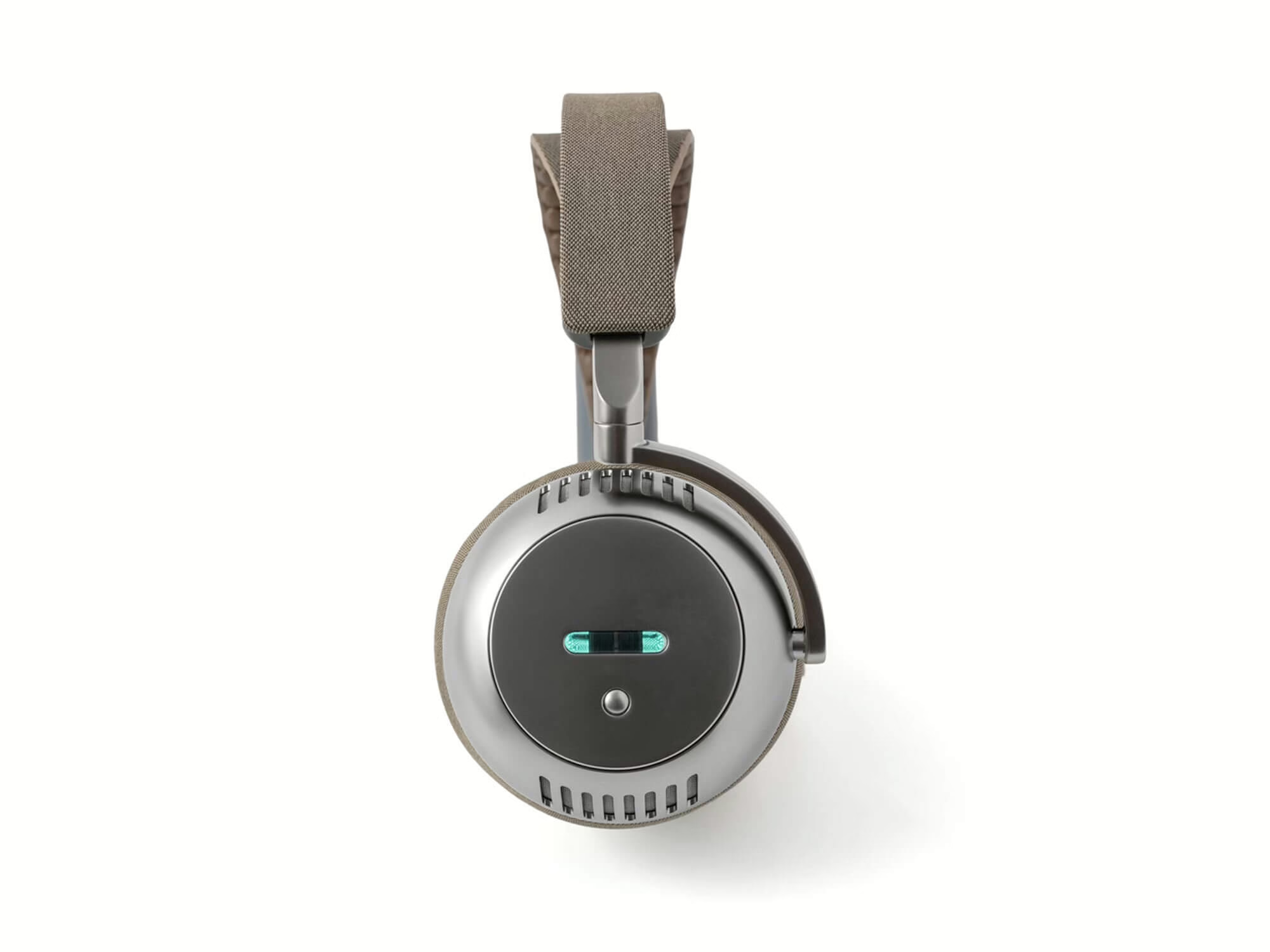
Chassis, comfort and durability: a real key point for everyday use
A tube headphone is, by nature, more complex than a simple Bluetooth model: extra components, heat dissipation to manage, weight. To be credible in day‑to‑day use, the TH2 had to make progress in terms of ergonomics. Écoute announces:
- A redesigned chassis and headband for better weight distribution, meaning fewer pressure points on the top of the head during long sessions;
- Enhanced durability, which is crucial for a product packed with sensitive analogue electronics;
- A modular design allowing easy replacement of ear pads and headband covers.
This last point is far from trivial: on a classic hi‑fi headphone, pads are consumables. On a headphone that integrates tubes, the intended lifespan is longer, as the core of the product is more expensive to replace. Modularity therefore fits into an eco‑conscious and economical approach: keep the electronic core, replace wear‑and‑tear parts.
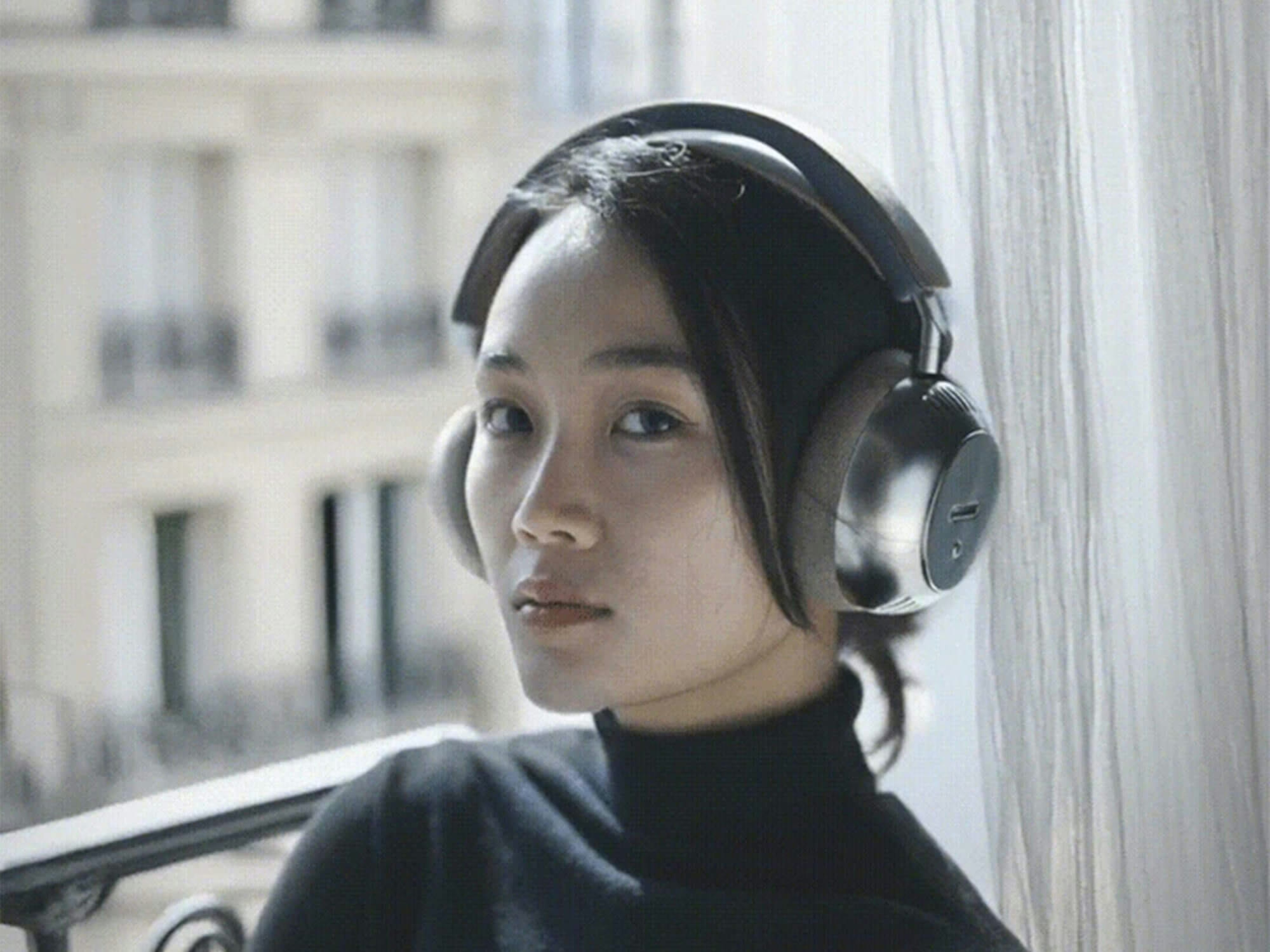
Noise reduction, transparency and isolation: a hi‑fi headphone… that also knows how to travel
Where the TH2 comes closer to modern portable‑headphone standards is in the management of ambient noise. Écoute claims:
- Lower background noise in ANC mode (active noise cancellation), meaning less hiss and colouring when cancellation is engaged;
- A more natural transparency mode, designed to let outside sounds through without making them artificial or harsh;
- Improved passive isolation, thanks to the design of the earcups and pads.
It is unrealistic to expect the TH2 to compete with the very best ANC‑focused mainstream headphones, but these improvements make it a far more believable travel companion than the TH1, which was mostly seen as an audiophile concept.
Sound personalisation: precision EQ rather than a simple “bass boost mode”
Écoute does not limit itself to a single sound signature: the TH2 includes an 8‑band equaliser with ± 12 dB per band. This is an unusual level of control for a tube headphone, closer to what some audiophile DAC/amps or dedicated software applications (Equalizer APO, Roon, etc.) offer.
For the user, this makes it possible to:
- Adapt the headphone to their music genre (for example, taming a slightly forward upper‑mid for long listening sessions, or slightly boosting the sub‑bass for electronic music);
- Correct the target curve to get closer to a more neutral response for semi‑professional use (pre‑mixing, sound editing);
- Compensate for any hearing quirks (slight high‑frequency loss, sensitivity to sibilance).
TH2 vs TH1: what do you actually gain?
The TH1, funded via Kickstarter and having raised over 200,000 dollars, demonstrated that a portable tube headphone genuinely interested the audiophile community. But it remained a first‑generation product, with everything that sometimes entails in terms of finish, comfort and tuning.
The TH2 clearly positions itself as a mature iteration:
- The same analogue architecture (tube preamp + dual‑mono);
- But with a reworked sound voicing (bass, treble, resolution);
- Improved comfort and robustness for more realistic everyday use;
- Better noise and transparency management, making it a more versatile headphone;
- Far more advanced sound customisation with the 8‑band EQ.
For TH1 owners, the question is therefore not so much “is the TH2 different?” as “does it address the limitations I encountered with the first model?”. Based on the information provided, the answer appears to be a down‑to‑earth yes: the same sonic philosophy, but better controlled and more usable beyond the listening room.
What’s the point for a studio or audio professional?
A tube headphone like the TH2 will not replace a neutral reference headphone such as an HD 650, DT 770/990 or a closed‑back studio monitoring model. However, it can fill several interesting roles:
- Musical validation tool: listening to mixes or masters on a deliberately musical system, close to a quality hi‑fi chain, to check how “desirable” the sound will be to a demanding end listener.
- Composition/arrangement headphone: the emphasis on micro‑dynamics and spatial information can help to sculpt more lively arrangements, particularly in acoustic music, jazz or soundtracks.
- Controlled‑pleasure headphone: alternating between coldly neutral monitoring and a more flattering TH2 can help avoid decision fatigue while keeping a coherent reference, especially if you use the 8‑band EQ to approach a known target curve.
Finally, for content creators, home‑studio musicians or engineers who travel a lot, the TH2 offers a rare compromise: a transportable tube hi‑fi ecosystem without needing to carry a separate amp, power supply and headphones.
A project still driven by the community
Like the TH1, the TH2 follows a crowdfunding model. The first version raised more than 200,000 dollars which, for a niche audio product, demonstrates real interest beyond mere technological curiosity.
With this second generation, Écoute seems intent on moving from proof of concept to reference product for tube‑headphone enthusiasts. What remains to be seen, in listening tests, is whether the promises of a wider soundstage, deeper bass and improved comfort are fulfilled, and whether the TH2 can compete not so much with mainstream Bluetooth headphones as with the pairings of headphones + separate tube amp that currently dominate high‑end home hi‑fi.
The manufacturer sums up the ambition as enabling listeners to “leave the listening room without leaving the sound they love”. It is precisely on this promise that the TH2 will need to be judged.
FAQ: understanding the Écoute TH2 headphone before buying
Can the TH2 replace a living‑room tube headphone amp and a good separate hi‑fi headphone?
For many uses, yes. The TH2 includes a genuine tube preamp and dual‑mono amplification, which makes it a complete system. However, a high‑end stationary amp + hi‑fi headphone combo will retain the upper hand in terms of sheer soundstage capability and power, especially for very hard‑to‑drive headphones. The TH2 is designed as a highly capable, portable alternative, not as a universal replacement for all home systems.
Does the presence of tubes make the TH2 fragile in everyday use?
Tubes remain sensitive components, but the TH2 is said to be more robustly designed than the TH1, with a reinforced chassis and better durability management. The headphone should not be treated like a basic £200 mainstream model: you will need to avoid hard knocks and extreme temperatures, but it is intended for sensible portable use, not just to sit on a stand in a listening room.
Is the TH2 suitable for professional mixing or mastering?
That is not its primary role. The TH2 favours a musical, analogue‑flavoured listening experience, which is ideal for composition, arrangement and “pleasure” checks of a mix or master. For purely technical decision‑making (precise balance, phase, surgical correction), a neutral monitoring headphone is still preferable. As a complement, the TH2 is extremely relevant for judging how a project will sound on a high‑end, pleasure‑oriented hi‑fi system.
What is the concrete difference compared with a typical Bluetooth noise‑cancelling headphone?
Mainstream Bluetooth headphones focus on noise reduction, comfort and connected features, with amplification and signal processing that are largely digital. The TH2 stands out thanks to an analogue signal path based on real tubes for the voltage‑gain stage and dual‑mono amplification, aiming for a sonic texture closer to that of a valve hi‑fi system. It also offers a much finer ± 12 dB 8‑band EQ than the preset sound profiles of most ANC headphones. In return, it is more specialised, more demanding and clearly targets an audiophile or professional audience.