Who is the Behringer Ring Stinger really for?
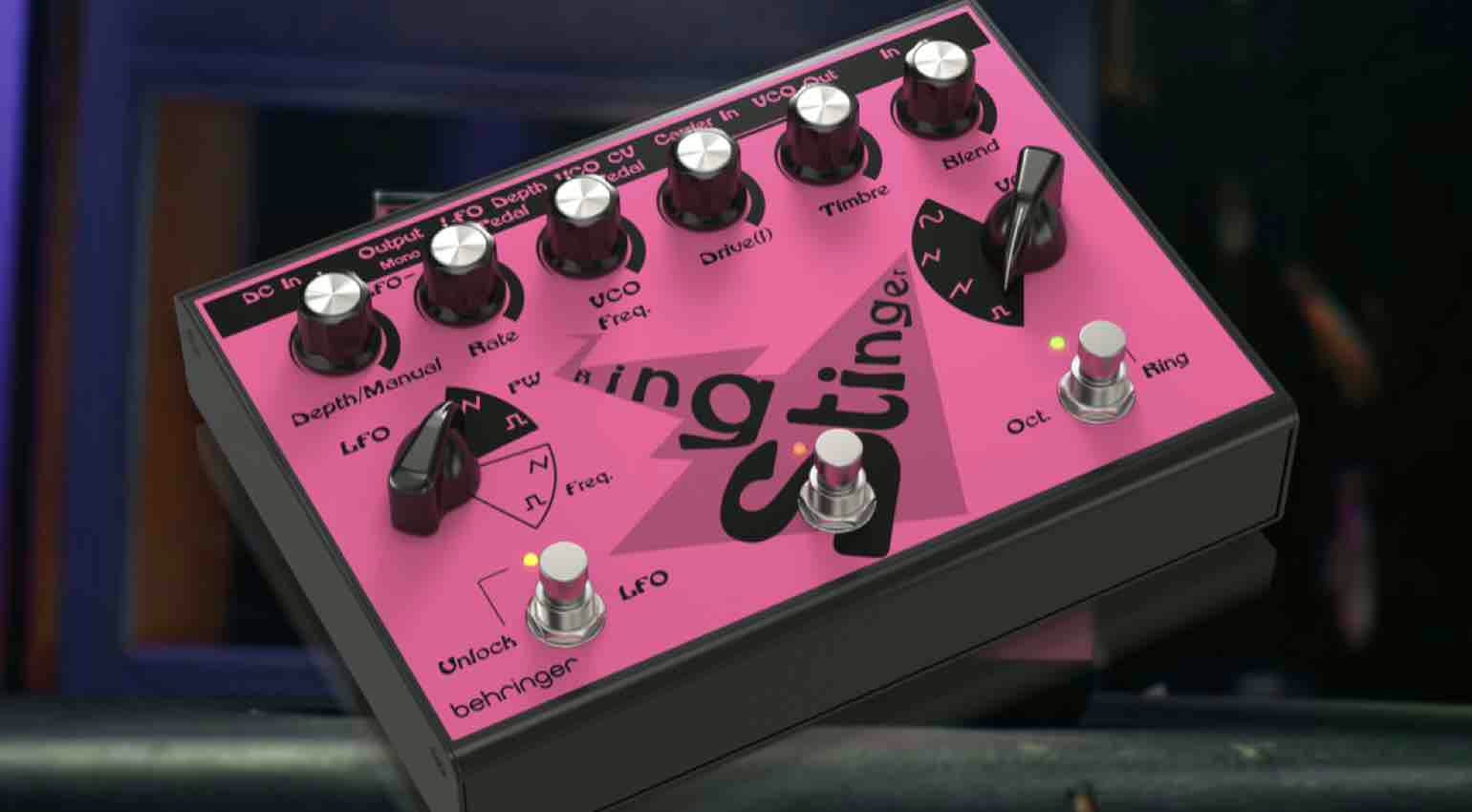
The Behringer Ring Stinger is neither a straightforward distortion nor a “one‑size‑fits‑all” overdrive. It is an unapologetic clone of the original Lovetone Ring Stinger, that chunky pink 90s box that became cult among fans of experimental tones, noise rock, electronic music and sound design. If you’re after a pedal to boost a blues solo, this isn’t it. If, on the other hand, you want to make a guitar scream, make a synth talk or obliterate a drum machine, it absolutely deserves your attention.
Positioned at $ 98.00, the Ring Stinger sits in a price bracket usually filled with far simpler fuzzes and ring mods, with no complex LFO, no onboard VCO and nowhere near as many controls. That’s exactly what makes it interesting: a budget gateway into a pedal architecture which, on the used market in its original Lovetone form, now goes for eye‑watering prices.
What the Ring Stinger actually does on a modern pedalboard
On a guitarist’s or bassist’s pedalboard, the Ring Stinger plays a very different role to a classic fuzz:
- Aggressive, metallic ring mod: it generates cold, robotic, often completely atonal textures, ideal for industrial, noise, post‑rock or soundtrack‑style parts.
- Octave fuzz: the footswitchable octave gives you thick, synthetic textures close to some extreme analogue octavers, but with the grainy character typical of Lovetone circuits.
- Rhythmic effects: thanks to the onboard LFO and VCO, you can turn a simple chord into a pulsing motif, a hysterical tremolo or almost synth‑like pitch sweeps.
In practice, it fills the same sort of “creative destruction” role you’d normally get from a combination of fuzz + ring mod + modulated tremolo pedals, but in a single box, with a control layout designed from the ground up to explore chaos rather than tame it.
Sound architecture: what Behringer’s clone brings compared to other pedals on the market
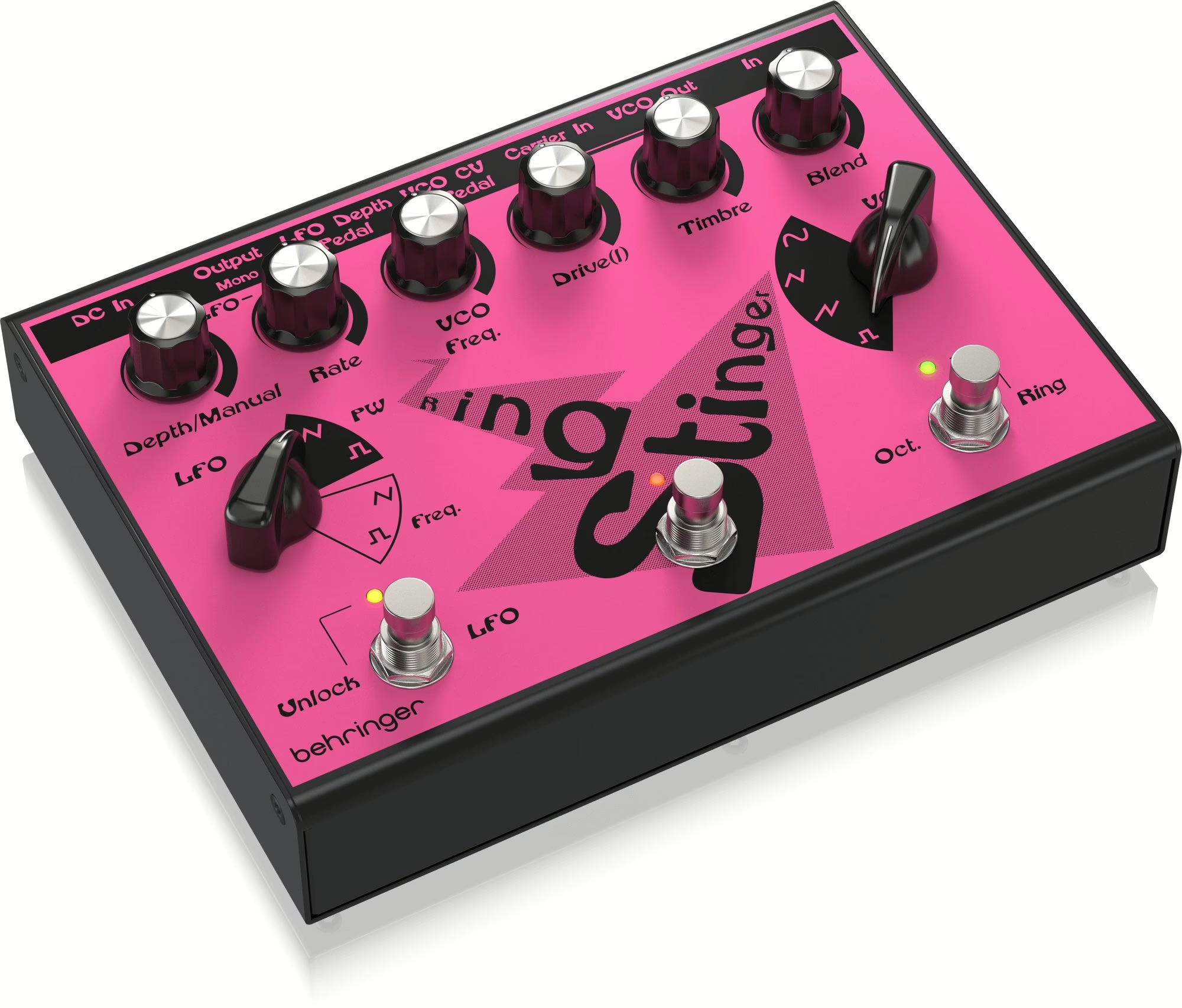
- Ring modulator: the heart of the pedal, it multiplies your signal with an internal oscillator or an external source, creating those famed metallic, inharmonic tones.
- Fuzz / Drive: a drive circuit adds extra harmonics before processing, massively thickening the result with tones close to a saturated monophonic synth.
- Footswitchable octave: an octave effect (typically a dirty, grainy octave down) that can be kicked in with your foot, letting you jump instantly from more slender textures to full‑on walls of crushed sound.
- Internal LFO: controllable via Rate, Depth and Waveform, it lets you vary parameters cyclically – from a gentle wobble to full‑blown audio stutter.
- Built‑in VCO: a controllable oscillator that gives you extremely wild pitch and timbre modulations, far beyond a simple “utility” ring mod.
On today’s market, most pedalboard ring modulators offer, at best, a mix control, a frequency knob and maybe a basic LFO. Here, you’re much closer to a little modular synth module trapped inside a stompbox, with real scope to explore the interactions between LFO / VCO / fuzz.
Controls: how to get the best from the Ring Stinger in a pro context
The strength of this pedal lies in the control it offers, making genuinely sculpted use possible, including in the studio:
- Rate, Depth, Waveform: these three controls govern the LFO. Rate sets the speed, Depth the modulation intensity, and Waveform lets you pick between different shapes (smooth or abrupt) which radically change the rhythmic feel.
- Timbre: this shapes the spectral content, letting you go from brighter, more metallic textures to darker, buzzing tones. It’s a key parameter if you want to stop the ring mod from becoming unusable in a mix.
- Drive: the drive section generates harmonics before processing, making the pedal very responsive to playing dynamics. In the studio you can dial in aggression via input level, much like you would with a characterful preamp.
- Blend: the wet/dry mix control is essential for musical use. It lets you add “just enough” chaos to the original signal – very handy for producers and engineers who want to add texture to a part without making it unrecognisable.
Add to that a foot‑switchable octave function and you get a pedal that can, on stage or in the studio, jump from subtle processing to total carnage with a single stomp.
Expression, external VCO and integration in studio or live electronic rigs
The Ring Stinger is not confined to the guitar world. It becomes particularly interesting as soon as you drop it into a hybrid guitar / synth / drum machine setup:
- Expression pedal inputs for LFO depth and VCO frequency: this lets you “play” the pedal like an instrument, controlling modulation intensity and oscillator pitch in real time. Perfect for dramatic sweeps or noise build‑ups live.
- External carrier input: you can feed an external signal as the carrier (for example a synth, a noise track or a sequence) to modulate your instrument. That’s a rare feature at this price, and it’s what brings it closest to more sophisticated studio techniques (complex AM/RM, cross‑modulation between sources).
In an electronic‑leaning or post‑production setup, the Ring Stinger can therefore act as a radical effects processor for:
- mangling vocals or dialogue;
- processing drum stems for glitch / industrial textures;
- adding a layer of “analogue madness” on top of synths already programmed in the DAW.
Build, footprint and on‑stage ergonomics
Behringer has reused the format of its recent Meatball clone: a heavy metal enclosure, dense, with a layout very close to the original Lovetone. Anyone who has handled the Meatball will know this is a long way from a compact stompbox: we’re in “pedalboard mainframe” territory, which has two consequences:
- Solid and stable: the weight and metal chassis inspire confidence for intensive stage use.
- Bulky: it will need a proper chunk of space on your board. For a minimalist guitarist it won’t be the most logical choice. For a noise artist or tinkerer building a pedalboard around a few characterful boxes, it makes perfect sense.
The pedal features true bypass, which guarantees your signal stays intact when it’s off – an important point for demanding players who switch between ultra‑clean sounds and completely wrecked textures.
Design, sonic identity and comparison with the original Lovetone
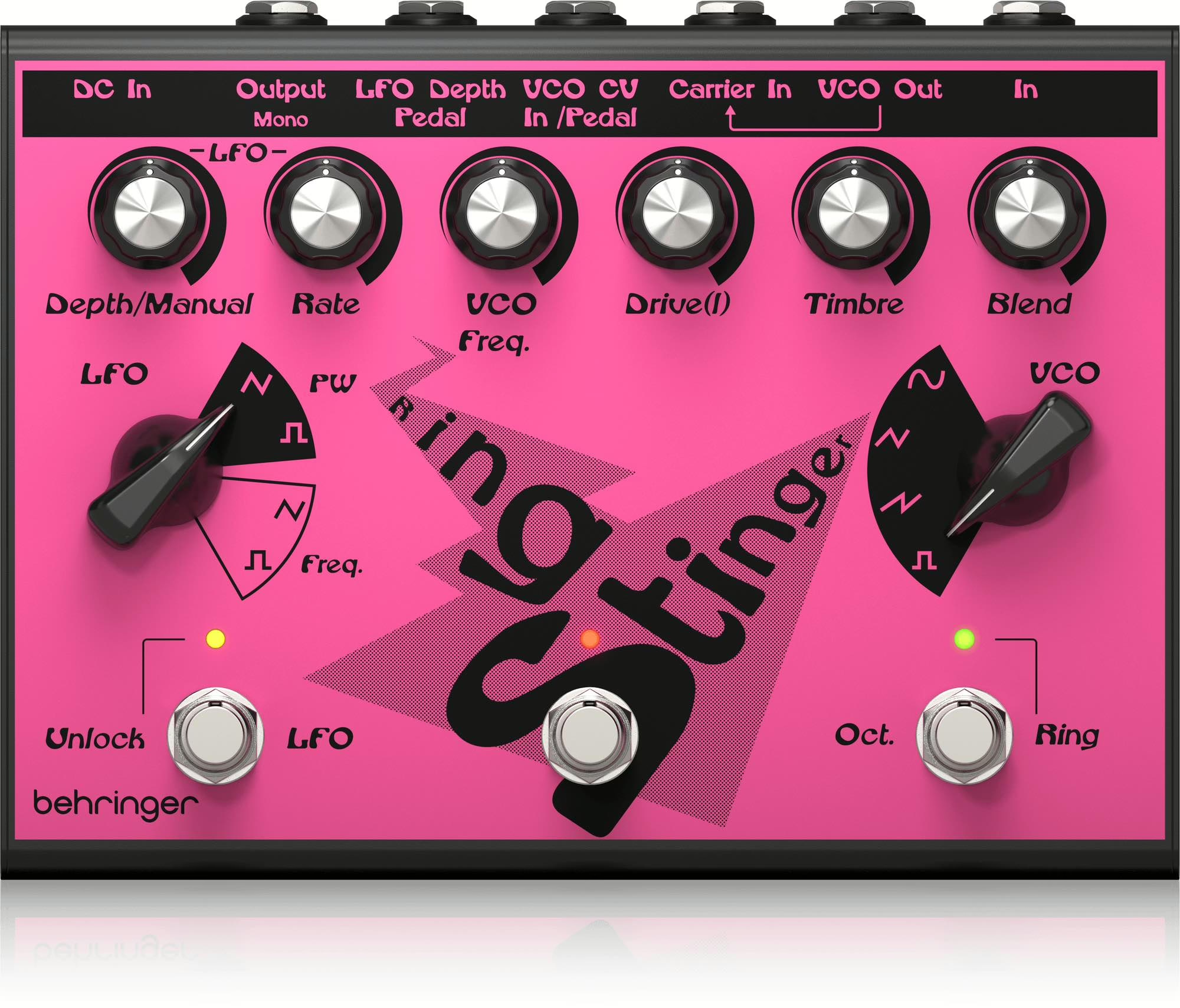
Visually, the Ring Stinger fully embraces the Lovetone heritage: bright pink, retro graphics, busy typography. On a pedalboard it’s impossible to miss – which fits its role perfectly: you always know exactly where “the chaos box” is.
Sonically, Behringer’s goal is clear: to offer the DNA of “90s boutique madness” at an accessible price. Where the original Lovetone has become a hard‑to‑find collectable, the Behringer Ring Stinger targets musicians who want the overall behaviour and sonic approach of this cult pedal without committing collector‑level money.
There are, however, a few things to bear in mind:
- It’s still a complex pedal, deliberately disorientating: you won’t get to the bottom of it in five minutes.
- It’s more of an experimentation machine than a “plug and play” tool: ideal for those who enjoy hunting for sweet spots, less suitable if you want an instantly usable sound on every setting.
To grasp how far it can go, your best bet is to listen to in‑depth demos and read up on the original Lovetone Ring Stinger, because its potential goes way beyond what a basic spec sheet suggests.
Pricing and availability: a low‑cost ticket to a myth
The Behringer Ring Stinger is listed at €98.00, a very aggressive price for a pedal that combines ring mod, fuzz, octave, full LFO, VCO and expression inputs. Back in the Lovetone days, this kind of pedal was firmly positioned as a high‑end boutique product. Today, Behringer is putting it in the same price range as a mid‑market fuzz or a simple modulation pedal.
It is currently available to pre‑order, with a lead time of a few months announced. For players who’ve long dreamed of a Lovetone‑style clone without blowing their budget, it might be worth getting in early, especially if demand follows the same curve as the Meatball.
FAQ: choosing and using the Behringer Ring Stinger
Is the Ring Stinger suitable for “standard” rock or pop use?
Not really. It can occasionally be used to colour a section or an intro, but its natural playground is experimental music, noise, industrial, post‑rock or sound design. For classic rock/pop duties, a more conventional fuzz or overdrive will be much easier to fit into a mix.
Is it only suited to guitar?
No. It works very well with synths, drum machines, basses, electric violins and even already recorded tracks if you run it through an amp’s effects loop or an interface. The expression inputs and the option to use an external carrier make it a compelling tool for producers and sound designers.
Is the pedal hard to get to grips with?
Yes, it’s a demanding pedal. Between the ring mod, fuzz, octave, LFO, VCO and expression controls, there are lots of interactions. You have to accept a learning and experimentation phase. In return, it offers a far broader sonic palette than the vast majority of pedals at this price point.
At this price, is it worth it compared to other ring modulators?
If you’re after a simple, subtle ring mod, other more minimal options will do the job. If what you want is a complete creative machine (ring mod + fuzz + octave + advanced modulation) inspired by a cult boutique pedal, then for under £90 the Ring Stinger is hard to beat. The feature‑to‑price ratio is very much in its favour.