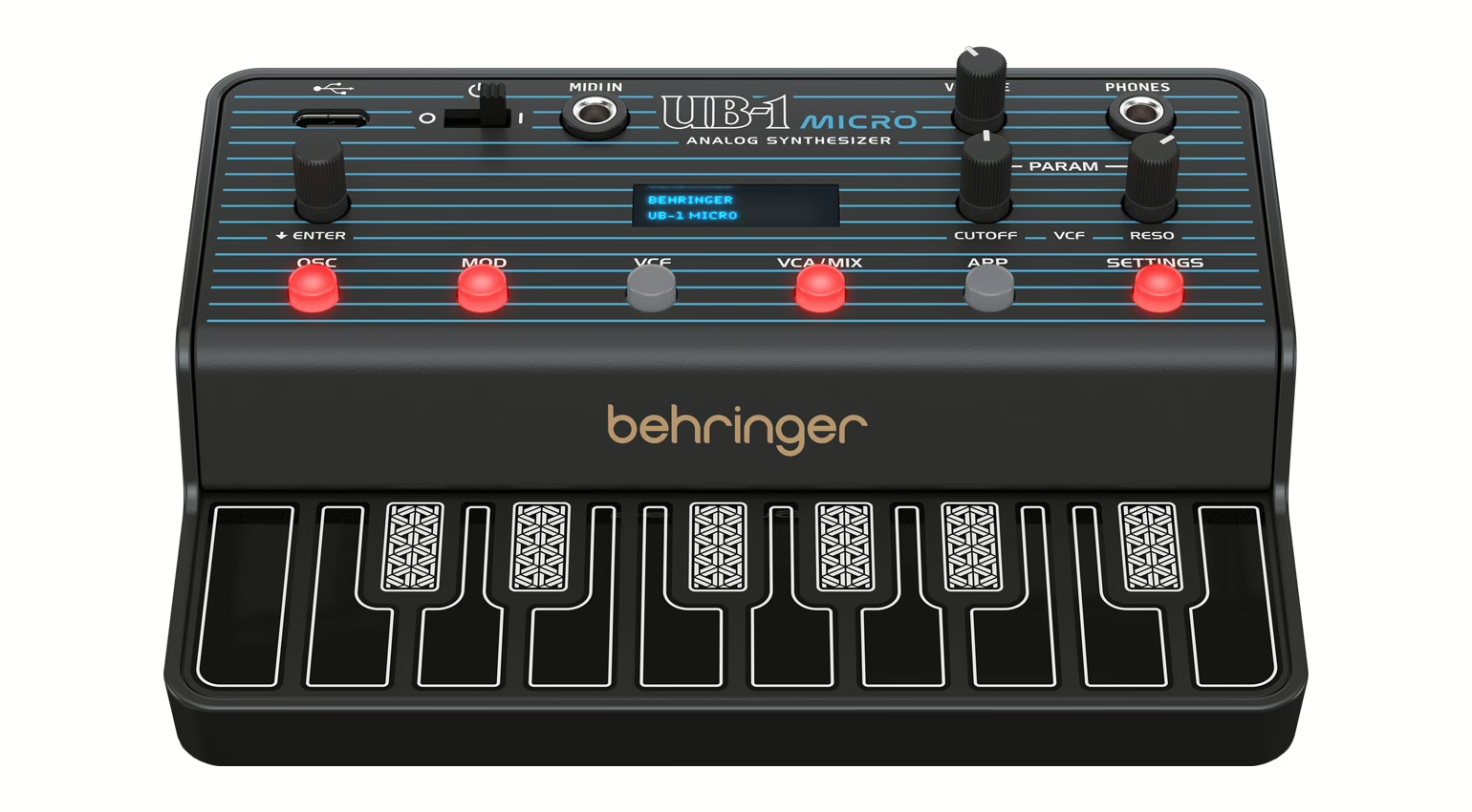
With the Behringer UB-1 Micro, we are no longer just talking about a “cheap vintage clone”, but a real concentrate of Oberheim Matrix sound for under €60. For producers, live performers and sound designers, the question is no longer whether it sounds “like the original”, but what you can actually do in the studio and on stage with this tiny analogue synth.
Who is the Behringer UB-1 Micro really for?
The UB-1 Micro targets three main profiles:
- Producers and beatmakers who want genuine Oberheim analogue character in a setup already saturated with plug-ins.
- Live musicians and electronic performers who need an ultra-compact module for basslines, leads and arpeggiated sequences.
- Synth enthusiasts who want to rediscover the character of the Oberheim Matrix 6/1000 without investing in fragile and expensive vintage gear.
The positioning is clear: it is probably the most affordable entry point into an Oberheim Matrix-inspired sound today, far cheaper than a UB-Xa or even a basic paid plug-in, while still remaining analogue on the oscillator and filter side.
A “baby Oberheim” for the studio: what it changes in a modern production
On the market, the Behringer UB-1 Micro sits alongside solutions like the Volca range (Korg), NTS-1 / DIY mini-synth modules or soft-synth plug-ins. Its difference: it offers an analogue signal path inspired by the Matrix 6/1000, based on the famous 3396/3397 circuits.
In concrete terms, for a producer focused on pop, synthwave, melodic techno or soundtracks:
- Matrix-style pads and leads have that roundness and slight harmonic “smear” that is hard to recreate with a simple VST.
- The 24 dB analogue filter allows very musical frequency sweeps for transitions, sweeps and builds.
- The fact that the DCOs are analogue but digitally controlled ensures stable tuning, meaning less time spent correcting drift in long sessions.
It is not a replacement for a big Oberheim poly, but rather a character module that you can easily integrate into a recording chain: USB-C for quick connection to the DAW, MIDI CC for automation of all parameters, and editing of 32 presets via SynthTribe to build a palette of usable sounds from project to project.
Sound character: what the Oberheim Matrix-inspired architecture promises
Sonically, the Behringer UB-1 Micro does not try to be a miniature OB-Xa, despite its pinstripe look. Its DNA comes from the 3396 and 3397 circuits of the Oberheim Matrix 6 and Matrix 1000, synths known for their rich tones, sometimes more “hi-fi” and complex than the early VCO-based Oberheims.
The basic architecture:
- 2 analogue DCOs (digitally controlled oscillators) for stability
- Sub-oscillator to thicken the bass
- Noise generator for synthetic percussion, effects and textures
- 24 dB analogue low-pass filter (4-pole), a classic signature of 80s polysynths
Combined with:
- 2 envelopes dedicated to VCF and VCA
- 2 LFOs to modulate oscillators and filter
This configuration brings the UB-1 Micro closer to a pocket-sized monophonic/paraphonic Matrix 1000 than to a simple toy. For arpeggiated basslines, expressive leads or simple pads doubled in audio, it already covers a very wide spectrum at this price.
On stage: backup module or the heart of a mini-setup?
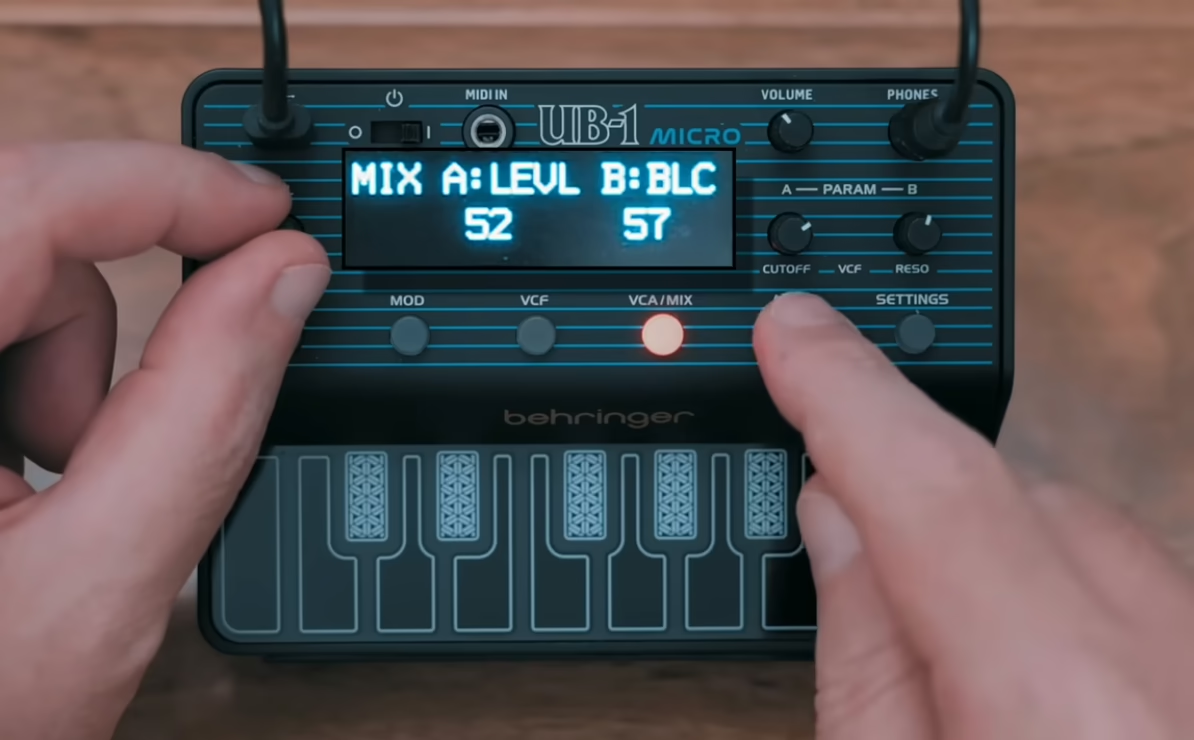
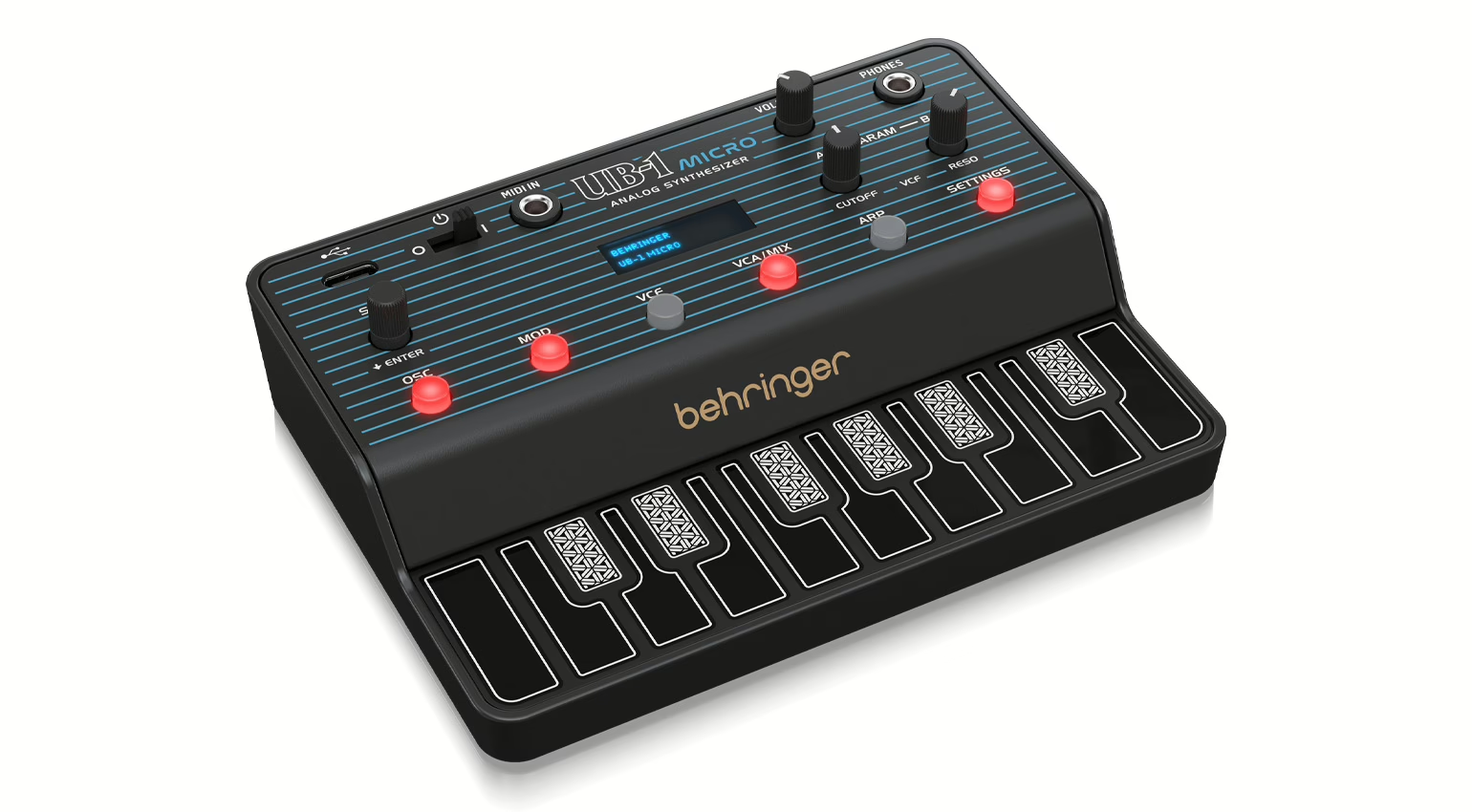
The UB-1 Micro has the same format as the JT-4000M Micro: ultra-compact, with 16 touch-sensitive keys. For serious live playing, you will obviously control it:
- via a MIDI master keyboard
- or from a hardware sequencer / groovebox
Behringer has learned the lesson from the JT-4000 Micro: in addition to USB-C, there is now a TRS MIDI input, far more practical for integrating it into a live rig without always having to go through a computer.
The built-in arpeggiator (3 patterns with Hold function) is enough to create:
- repetitive techno / EBM-style basslines
- syncopated motifs in an ambient or IDM set
- rhythmic pads that you filter in real time
In a keyboardist’s pedalboard or a fly-rig style case, the UB-1 Micro becomes a dedicated Oberheim block you can rely on for an immediately recognisable sound colour without overloading yourself in weight or cabling.
Minimalist interface, maximum control: the reality of the ergonomics
As with all these micro-synths, the trade-off is obvious: small format, reduced interface. The 16 touch keys will not replace a real keyboard, and access to all parameters is via a limited number of buttons and the SynthTribe editor.
However, for an advanced user, there are strong points:
- Full MIDI CC control of all parameters: ideal for mapping everything to a fader/knob controller or automating from a DAW.
- 32 presets that can be saved and edited via SynthTribe: not a huge amount, but enough for a specialised synth role (basses, leads, FX).
- The USB-C connection simplifies power and computer integration, while also serving as a MIDI port.
Compared with a soft plug-in, the UB-1 Micro requires more discipline in programming, but in return it offers a real “instrument” relationship that many producers are seeking again: you prepare a few focused presets, record them in audio, then move on.
Positioning on the market: where does the UB-1 Micro sit?
Purely in terms of price, the Behringer UB-1 Micro is listed at €59.00 (58 $ / 50 £). At this price point, it is generally compared to:
- Entry- to mid-range soft-synth plug-ins
- Mini digital synths (Pocket Operator, NTS-1, etc.)
- Small analogue boxes that are often more limited in connectivity or memory
What sets it apart:
- An analogue audio path inspired by a family of legendary synths (Matrix 6/1000).
- An almost “impulse buy” price for a genuine module dedicated to Oberheim sound.
- Modern integration (USB-C, TRS MIDI, full CC control) that you do not get on the vintage machines it aims to replace in a typical setup.
On the other hand, it remains a monotimbral and compact instrument, far from the versatility of a big modern polysynth. The smart strategy is therefore to see it as a specific colour block within a broader arsenal, rather than as “the studio’s only synth”.
Back to its origins: from UB-1 Spirit to the Micro version
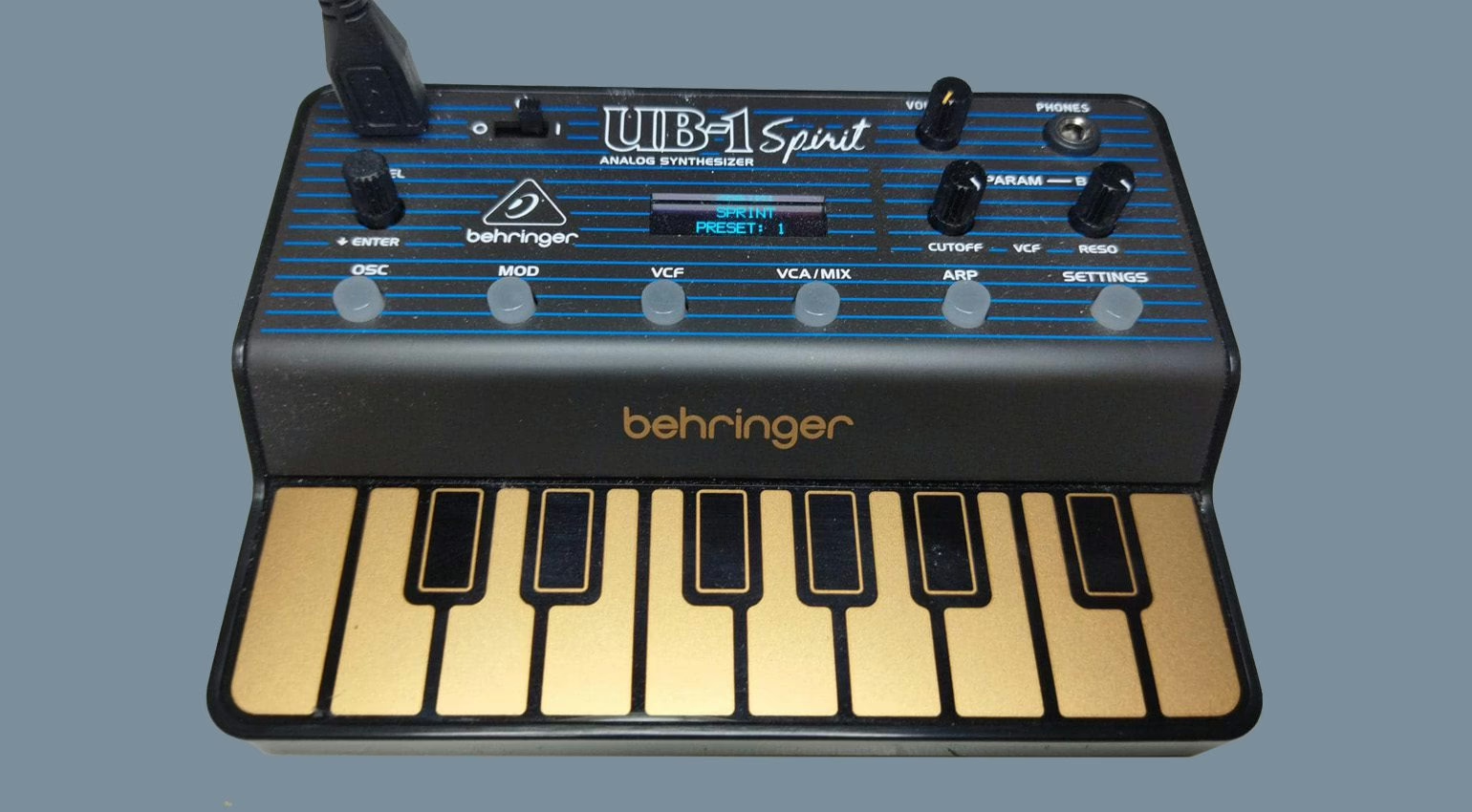
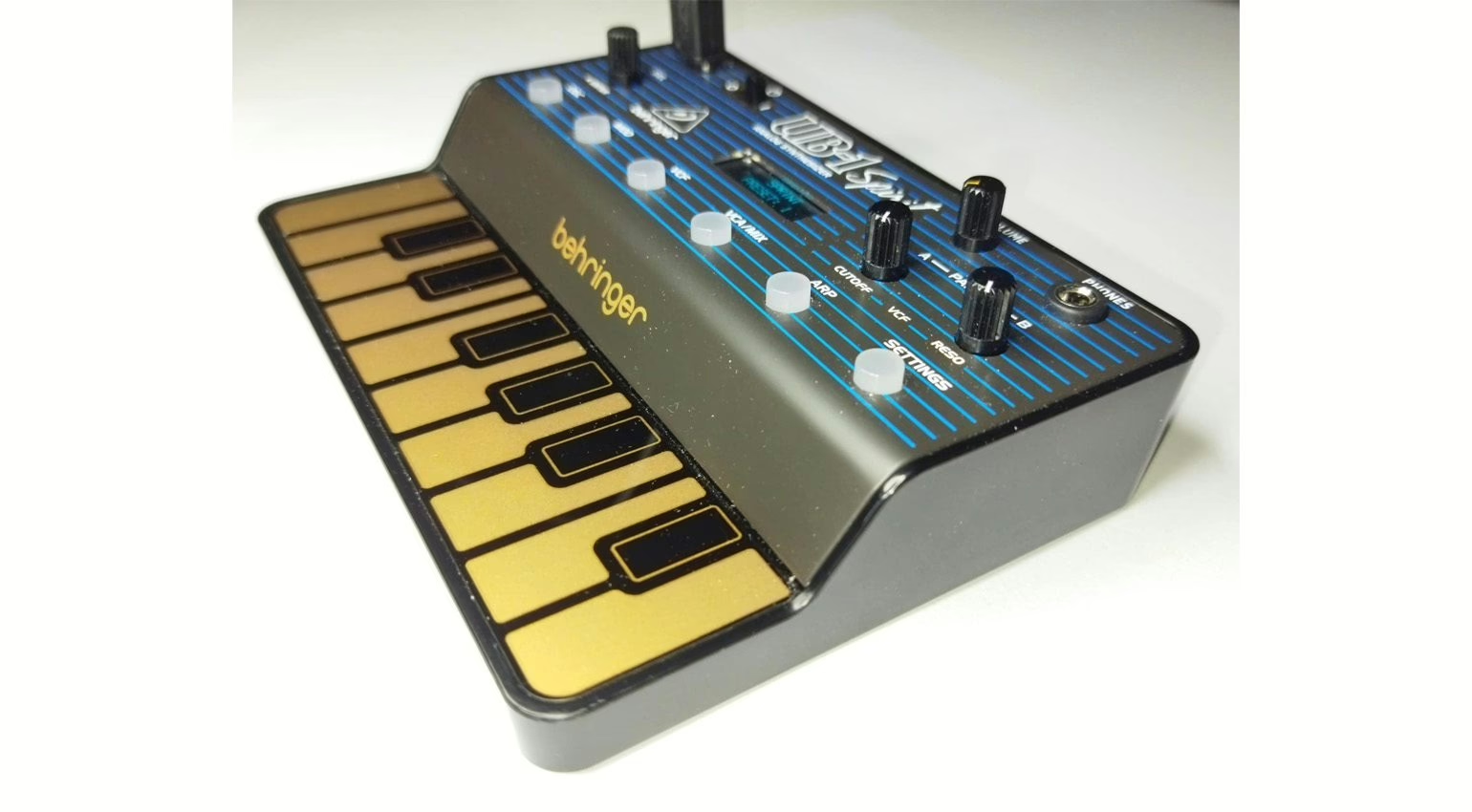
The UB-1 project goes back almost four years. Initially announced under the name UB-1 Spirit, it appeared as a small appetiser while waiting for the big UB-Xa. Things then became more complicated: the UB-Xa was released, the UB-1 was delayed, then recently reappeared in this ultra-compact UB-1 Micro form, following in the footsteps of the UB-Xa Mini.
This evolution sheds light on Behringer’s current strategy:
- on one side, large “tribute” keyboards (UB-Xa, Pro-800, etc.)
- on the other, a galaxy of mini-modules (JT-4000M Micro, UB-1 Micro, etc.) intended to be multiplied within the same setup.
We also see the same ideas that appeared when the UB-1 was presented in 2022: some are already imagining an audio/MIDI/power hub similar to the Volca Mix, designed specifically for this series of mini-synths, or even a larger machine incorporating several sound engines from these micros in a single chassis.
Price and availability: a module to keep in every gig bag?
The Behringer UB-1 Micro is announced for pre-order at 58 $ | 50 £ / €59.00. At this price, it is no longer a strategic investment, but a purchase many musicians will easily justify in order to:
- try the Oberheim DNA in an already well-equipped setup
- have a dedicated analogue module for basses or leads
- build a small collection of specialised mini-synths around a central sequencer
This ultra-aggressive positioning suggests that the UB-1 Micro will be easy to find in stock at general retailers and online, often alongside other mini-instruments from the brand and competitors such as the Pocket Operators.
FAQ: choosing and using the Behringer UB-1 Micro wisely
Can the Behringer UB-1 Micro replace a big Oberheim (OB-Xa, Matrix 6, etc.)?
No. The UB-1 Micro is based on the Matrix 3396/3397 circuit architecture, but in an ultra-compact mono/paraphonic version with 32 presets. It is excellent as a characterful complement in an existing setup, not as a single all-round synth or as a functional replacement for a true Oberheim poly.
Is it genuinely usable live, or is it just a gimmick?
Used on its own with its 16 touch keys, it remains limited for expressive playing. However, once connected to a MIDI master keyboard or to a hardware sequencer via TRS MIDI or USB, it becomes a genuine stage-ready analogue module with arpeggiator, full modulation and preset editing. It is not a gimmick, provided it is integrated into a wider system.
Should I choose a software plug-in rather than the UB-1 Micro?
If you only care about maximum flexibility, instant project recall and hundreds of presets, a plug-in will be more convenient. The UB-1 Micro is aimed at those who want:
- a real analogue audio path with Oberheim Matrix character
- the interaction of a physical instrument
- a standalone module for live use or hardware-only setups
In practice, many producers combine both: UB-1 for the tone, plug-ins for everything else.
How long does it take to really integrate it into a professional workflow?
As a mini-synth with a reduced interface, it does require a short familiarisation period, especially if you use the SynthTribe editor to organise your 32 presets. Once a working sound bank is prepared (basses, leads, FX, some textures), integration becomes very smooth: you treat it as a dedicated “analogue rack”, record it quickly as audio into the DAW, then archive it. Expect a few sessions to really get the most out of it.