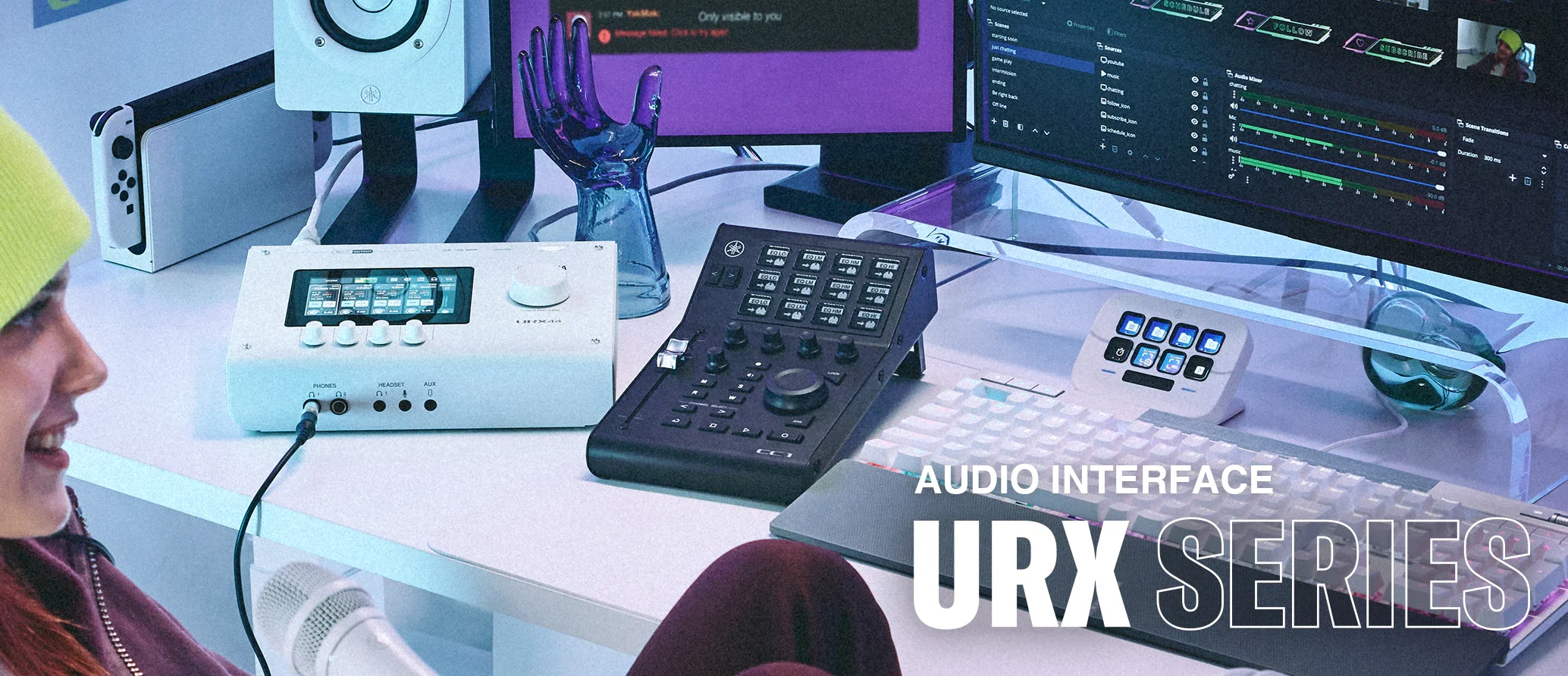
For audio and video creators, interfaces and controllers are turning into genuine command centres. With the URX series and the CC1 controller, Yamaha is offering an ecosystem designed for recording, streaming and editing, all from a compact home studio desk in the UK.
On the menu: three 32-bit / 192 kHz audio interfaces with built-in DSP, modern USB-C connectivity, compatibility with the most widely used creative tools, plus a compact controller dedicated to driving your digital audio workstation.
A URX series designed for recording and streaming
The URX range comes in three desktop audio interface models. All operate at 32-bit / 192 kHz, feature two USB-C ports and rely on touch-screen control, which greatly simplifies managing settings directly from the interface.
All three models share a signal-processing engine that lets you apply effects without leaving your workflow: compression, EQ, amp simulation, voice transformation, delays, reverbs, multiband dynamics and other built-in effects. This allows you to shape a ready-to-use sound for podcasts, streaming or post-production, without stacking plug-ins on your computer.
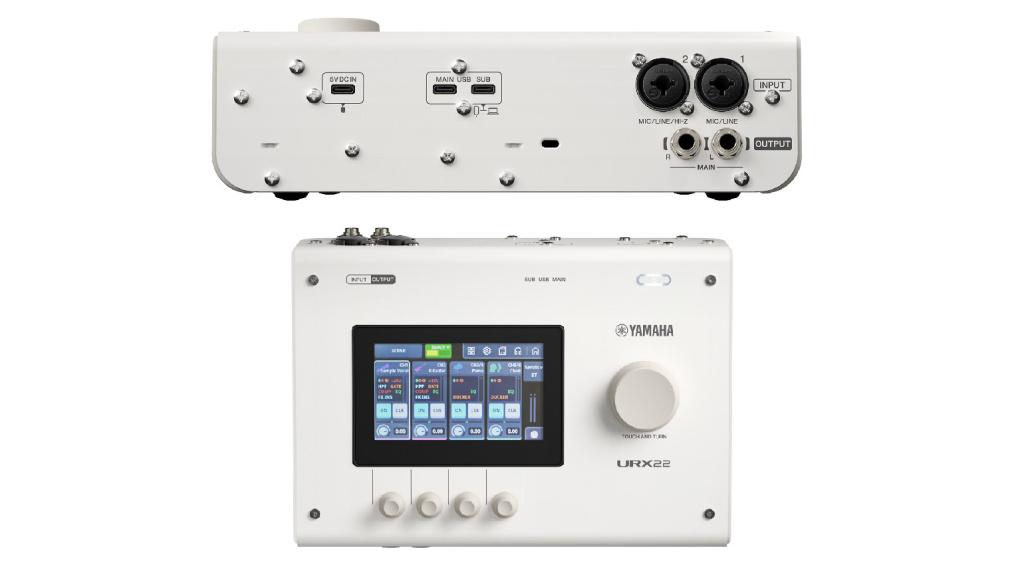
URX22: the versatile entry-level option for creators
The URX22 opens the series with a 2-in / 2-out interface. Despite its entry-level positioning, it can record up to 16 tracks simultaneously. It also includes an extra USB port, handy for connecting a mobile device.
The URX22 is designed to slot into a broadcast-focused creative setup: it works with OBS Studio and can be controlled in combination with Stream Deck-type controllers. For a UK content creator looking to build a compact setup for Twitch, YouTube or podcasting, this model provides a complete audio foundation.
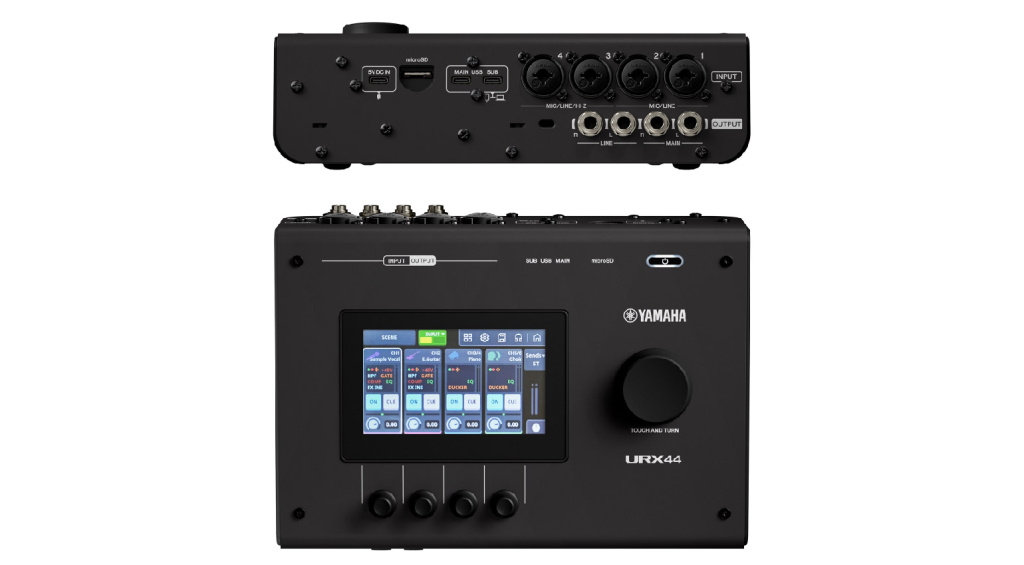
URX44: more inputs and microSD recording
One step up, the URX44 follows the same design philosophy while doubling the inputs and outputs compared with the URX22. USB recording increases to 18 tracks, opening the door to more complex projects, whether for music, post-production or talk formats with several guests.
The interface is not limited to your computer: it can also capture up to 16 tracks onto a microSD card. This option will particularly appeal to users who want to record without powering up their main machine, or keep a direct backup of their sessions.
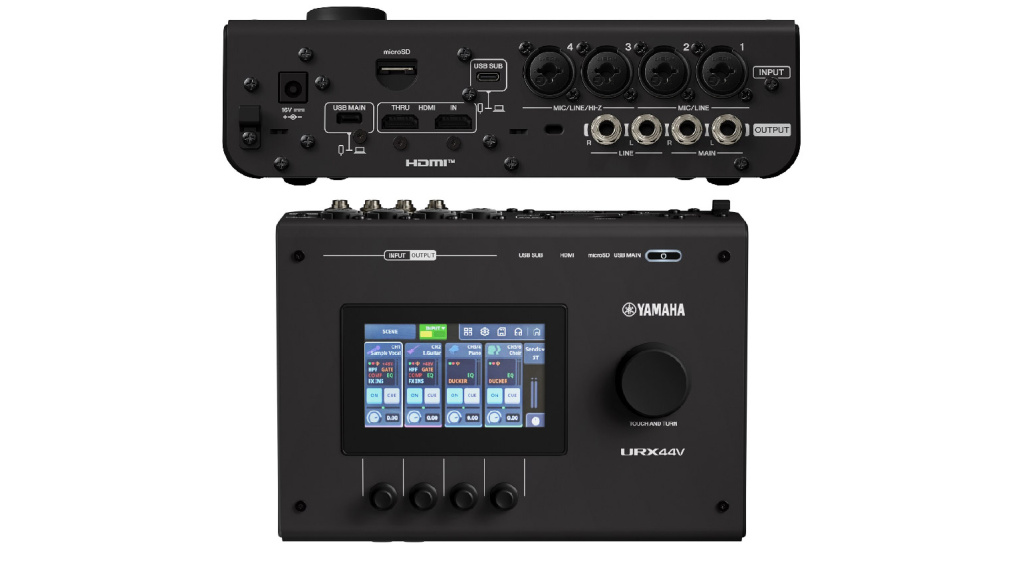
URX44V: HDMI capture for a video-focused setup
The most fully featured version, the URX44V, takes everything from the URX44 and adds a major plus for video: an HDMI-to-USB input for audio/video capture, along with HDMI passthrough. In practice, this lets you grab the signal from a camera or a PC dedicated to streaming while sending it on to another device.
This positioning makes it a suitable solution for video content creators who want to centralise both sound and vision in a single box, whether for live streaming or recording sessions to be edited later in a workstation.
CC1: a compact controller for your digital audio workstation
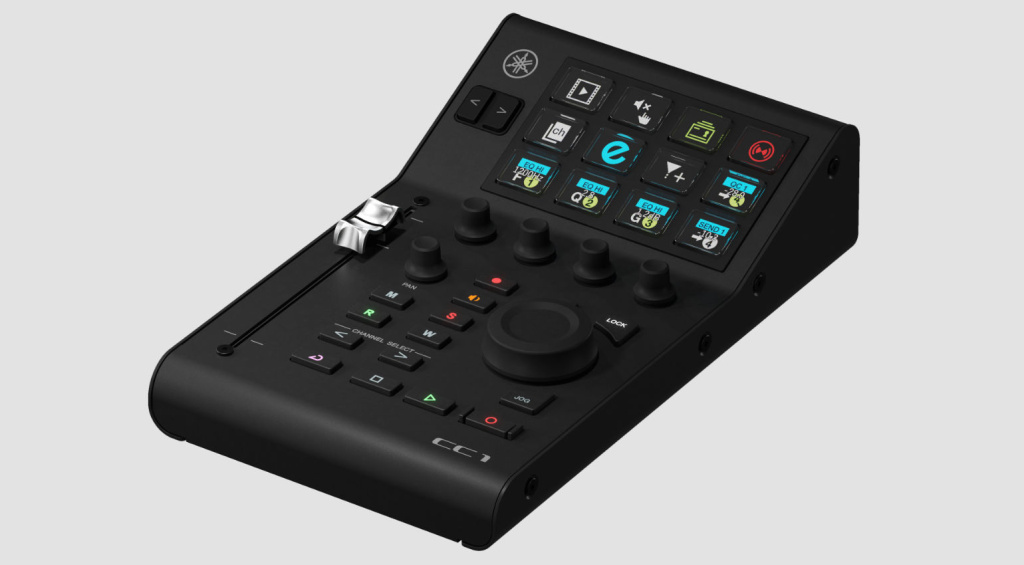
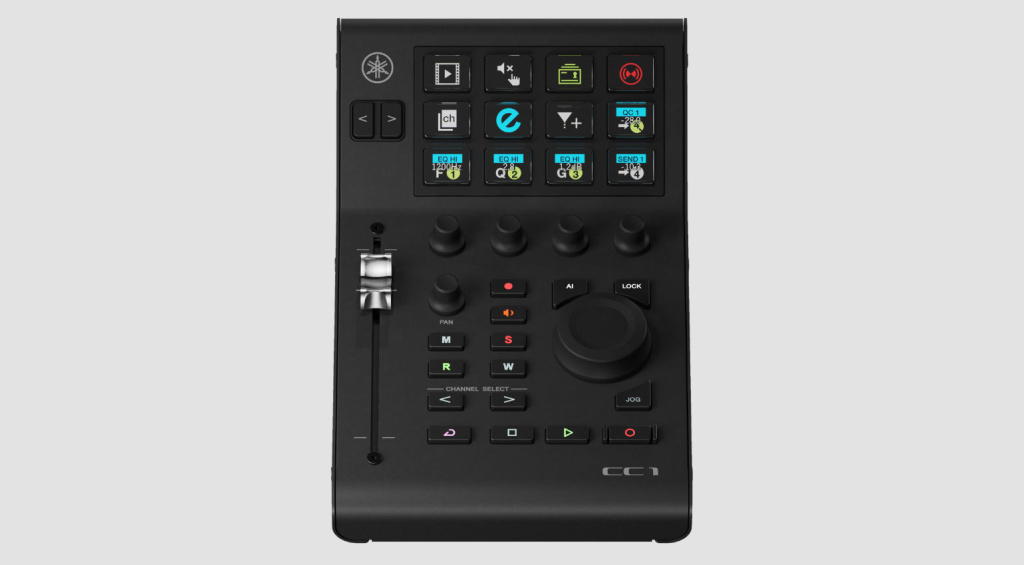
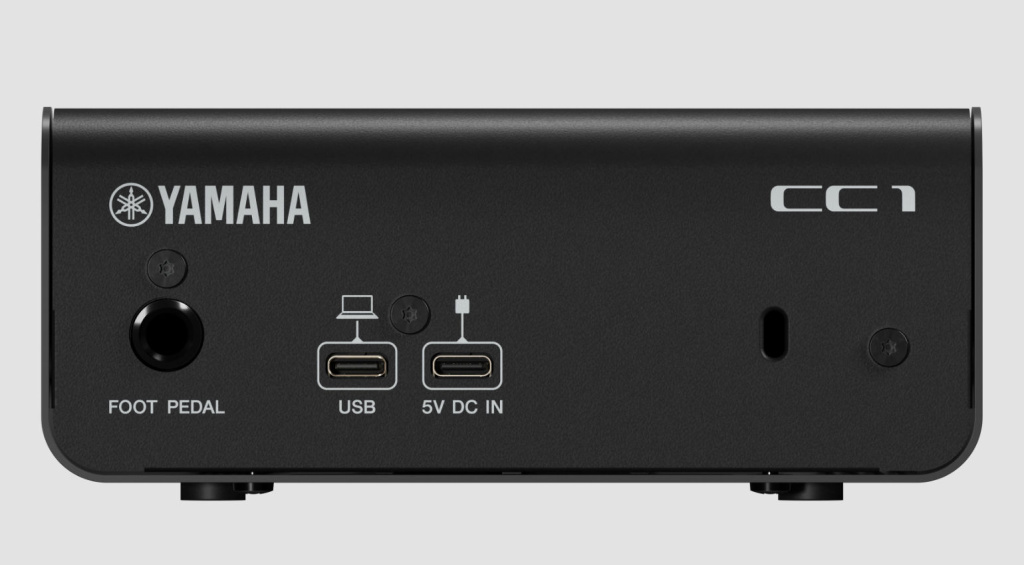
To complement the URX interfaces, Yamaha offers the CC1, a USB control surface designed to drive the main digital audio workstations. The idea is to replace some of your mouse clicks with physical controls, while keeping a compact footprint that fits easily on a home studio desk.
At the centre of the CC1 is a 100 mm touch-sensitive motorised fader, ideal for writing precise automation. Twelve assignable LCD keys let you quickly recall key workstation functions, while four multifunction encoders handle settings such as level, pan or EQ.
The controller thus provides direct access to transport, channel control and the EQ section, easing the transition between the software world and hands-on mixing on a real controller.
Availability in 2026
The URX series audio interfaces and the CC1 controller are now available to pre-order, with the first units scheduled to ship in March. The range covers several budgets, with the URX22, URX44, URX44V and the CC1 controller, each offered in different finishes depending on the model.
Within this series you will find in particular:
- URX22 in black or white,
- URX44 in black or white,
- URX44V in black or white,
- CC1 controller.
Find out more about Yamaha products
Yamaha rounds out the URX series and the CC1 controller with other ranges dedicated to audio production, such as the MGX mixers. The URX units and the CC1 are part of a broader aim to offer a complete signal chain, from capture through to mixing and broadcast.
Users can find more information on the official pages for the URX series and the CC1 controller, or explore other Yamaha products dedicated to music production and sound for picture.
FAQ
Who are the Yamaha URX interfaces mainly aimed at?
The URX range targets content creators, home-studio musicians and users focused on streaming or post-production. With their built-in effects and compatibility with broadcast tools, they suit podcasters and filmmakers alike.
What is the main difference between URX22, URX44 and URX44V?
The URX22 is a 2 x 2 interface with recording of up to 16 tracks and integration with streaming solutions. The URX44 doubles the number of inputs/outputs, allows up to 18 tracks via USB and 16 tracks to microSD. The URX44V offers the same features and adds HDMI-to-USB capture plus HDMI passthrough for video.
In which situations is the CC1 controller most useful?
The CC1 really comes into its own for mixing and post-production in a digital audio workstation. Its motorised fader, assignable LCD keys and four encoders make it easier to control transport, channels and EQ without relying solely on a mouse.
When will the URX and CC1 products be available?
The URX series audio interfaces and the CC1 controller are available to pre-order, with shipping scheduled for March 2026 according to the launch information provided.