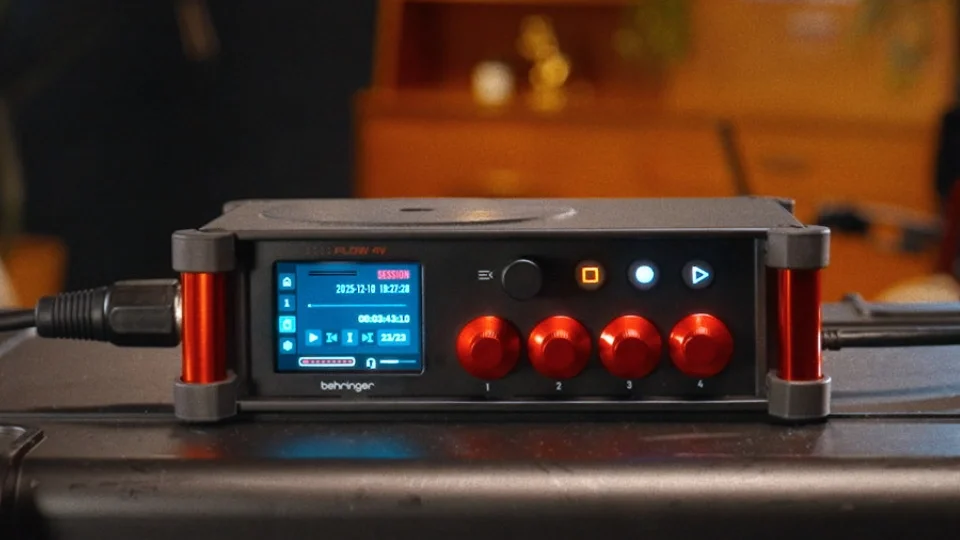
The Behringer FLOW 4V is a portable 32‑bit field recorder/mixer designed by the team behind the X32 and WING. Priced around €269 and with the FLOW 4VIO expansion module, it goes head‑to‑head with Zoom, Tascam and even Sound Devices for smaller shoots.
Who is the Behringer FLOW 4V really aimed at?
On paper, the FLOW 4V ticks almost every box for a modern field recorder: 32‑bit float, 4 mic preamps, 8 mix channels, multitrack recording to SD card and a USB audio interface. In practice though, it does not target all user profiles in the same way.
- Solo videographers / content creators: YouTube, light documentary, corporate shoots. They mainly benefit from the pre‑record buffer, 32‑bit safety and remote control via the app.
- Entry‑level production sound mixers or tight budgets: web series, institutional work, events. The FLOW 4VIO extension brings the total to 8 mic preamps, putting the configuration close to a Zoom F8n Pro… for much less money.
- Multi‑guest podcasters / live streaming: the FLOW 4V acts as mixer, SD recorder and 32‑bit USB interface, with two extra headphone outputs via the 4VIO.
- Demanding users / broadcast: they’ll be attracted by the internal timecode and multichannel audio transport via StageConnect, but will remain cautious about long‑term robustness and the ecosystem compared with a Sound Devices MixPre or a Zoom F‑series.
Audio architecture: what 32‑bit / 138 dB actually promises
The Behringer FLOW 4V includes an 8‑channel mixer with four combo XLR mic preamps and dual A/D conversion claiming a dynamic range of 138 dB. It records up to 10 channels to SD card, and the unit can also operate as a 32‑bit USB audio interface.
In practical terms, this places it in the same usage family as:
- Zoom F6 / F8n Pro (32‑bit field recorders aimed at video/film)
- Sound Devices MixPre II (pro 32‑bit reference, but at a much higher price)
32‑bit float, combined with this very wide dynamic range, has a direct impact in the field:
- Less stress about levels: you can leave more headroom without losing too much detail, and recover a shouting actor or a loud round of applause in post‑production.
- Fewer ruined takes: for solo creators without a dedicated boom op, it’s a genuine safety net.
- Post‑production compatibility: 32‑bit float is now well supported by major audio and video editing and mixing software.
However, as with competitors, 32‑bit does not replace proper management of analogue gain. The preamps, internal architecture and overload protection are still critical for the theory to translate into real‑world results.
Mixing controls: a mini production mixer in your pocket
Each channel of the FLOW 4V provides dedicated controls for:
- Level
- Pan
- Tone / EQ
- Dynamics (compression / peak management)
- High‑pass and low‑pass filters (low cut / high cut)
For field use, this allows you to:
- Clean up handling and footstep noise via the low cut.
- Avoid overly harsh or sibilant voices with EQ.
- Prepare a stereo “broadcast‑ready” mix directly on the outputs, while still recording isolated tracks to the SD card.
You’re essentially getting a small on‑set console, which makes it interesting for event capture, live podcasting or live streaming.
Recording safety: pre‑roll and automatic USB backup
Alongside 32‑bit recording, the FLOW 4V relies on two important safety nets for location sound:
- Pre‑record buffer: the unit continuously captures a few seconds before you hit REC. Ideal for not missing the start of a line or an announcement.
- Automatic backup to USB stick: as soon as SD recording stops, the card’s data is automatically backed up to a connected USB flash drive. This greatly reduces the risk of losing a day’s shoot if a card fails.
In this price bracket, few recorders combine 32‑bit float, pre‑roll and automatic copying to a second medium. That’s a strong selling point for lightweight shoots with small crews.
FLOW 4VIO expansion and StageConnect: towards more ambitious rigs
The FLOW 4V supports the StageConnect format, an uncompressed multichannel, low‑latency audio link over XLR/DMX cable. This technology is used here to power and connect the FLOW 4VIO expansion module.
FLOW 4V
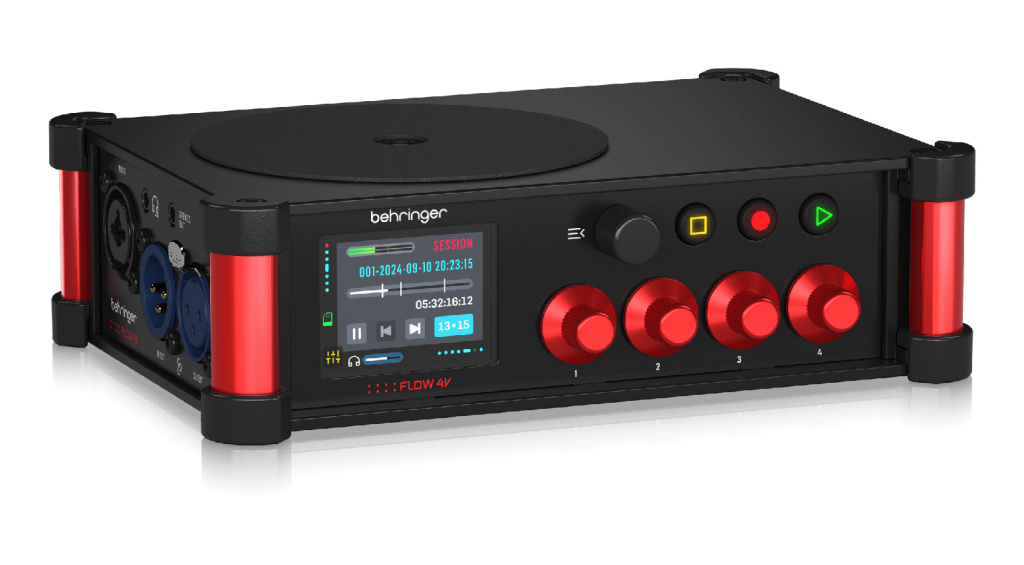
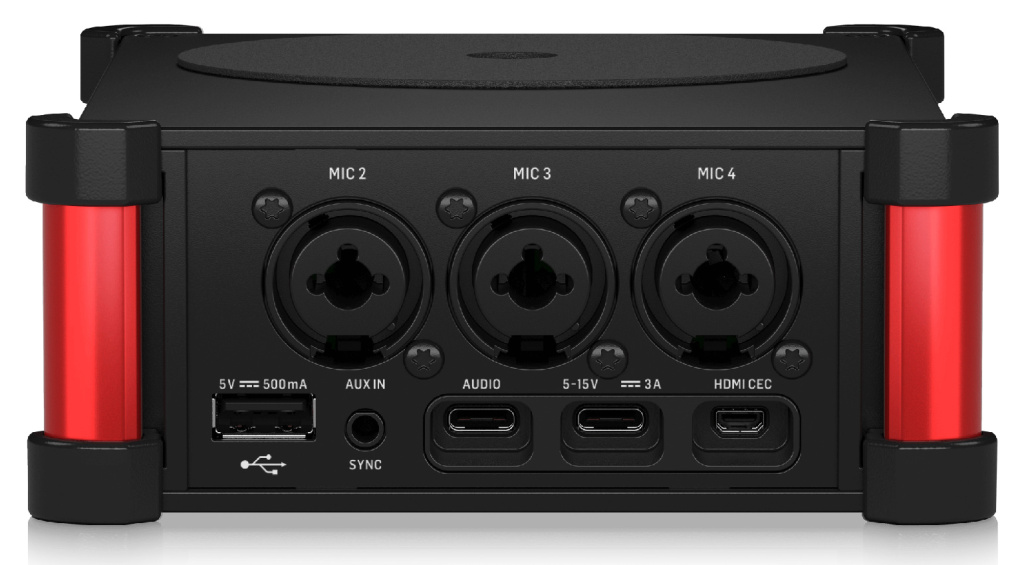
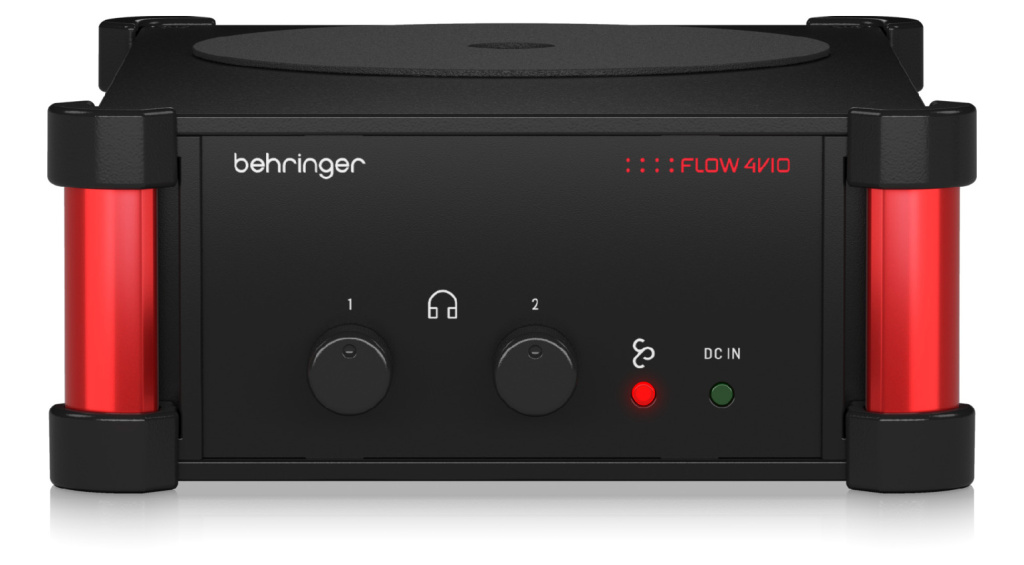
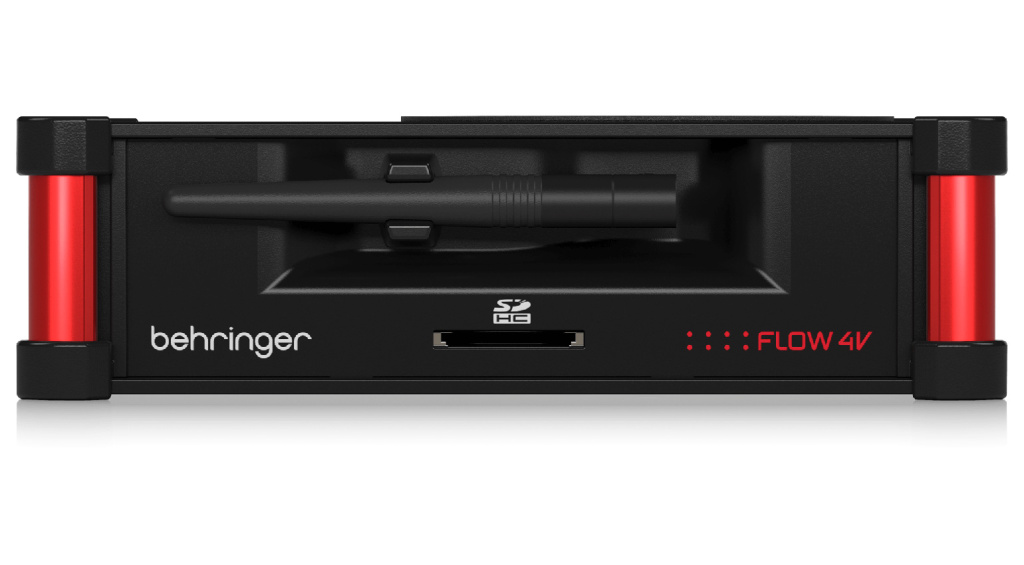
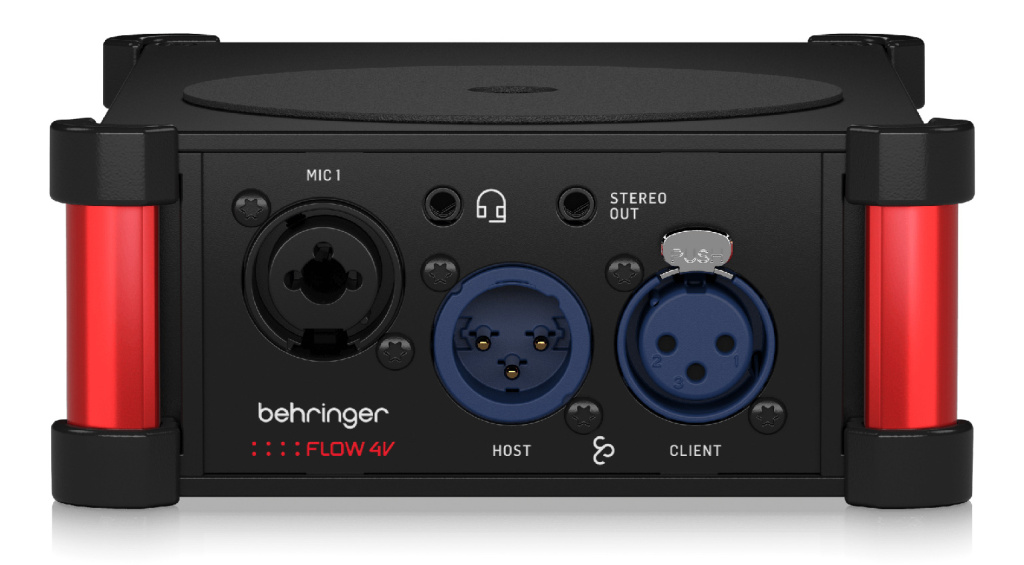
 StageConnect I/O
FLOW 4VIO
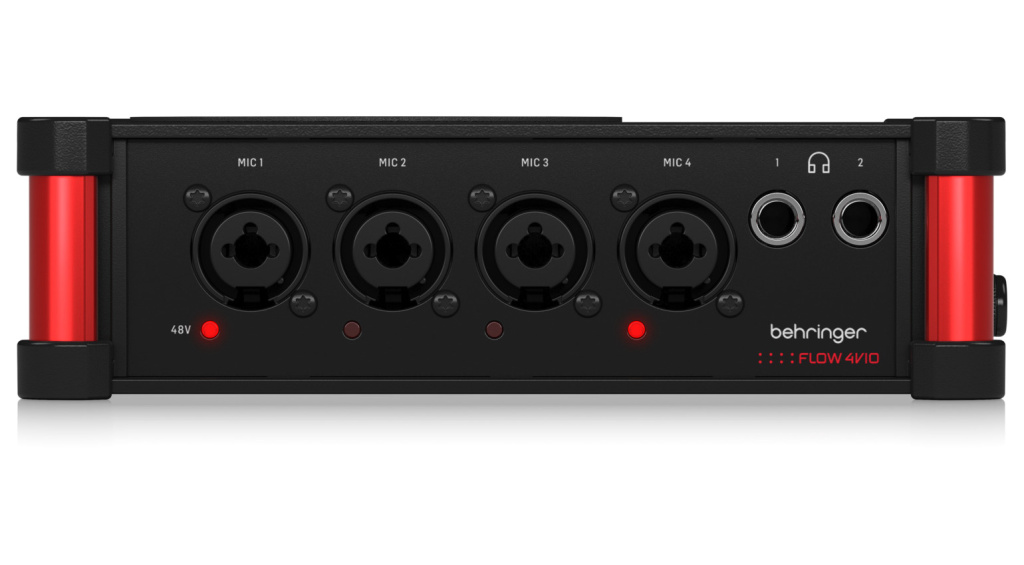
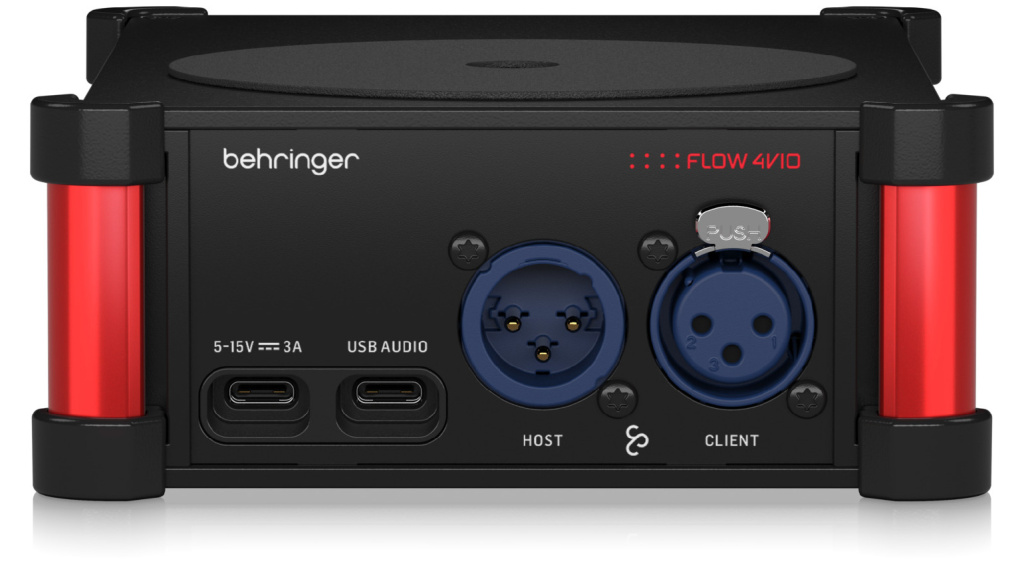
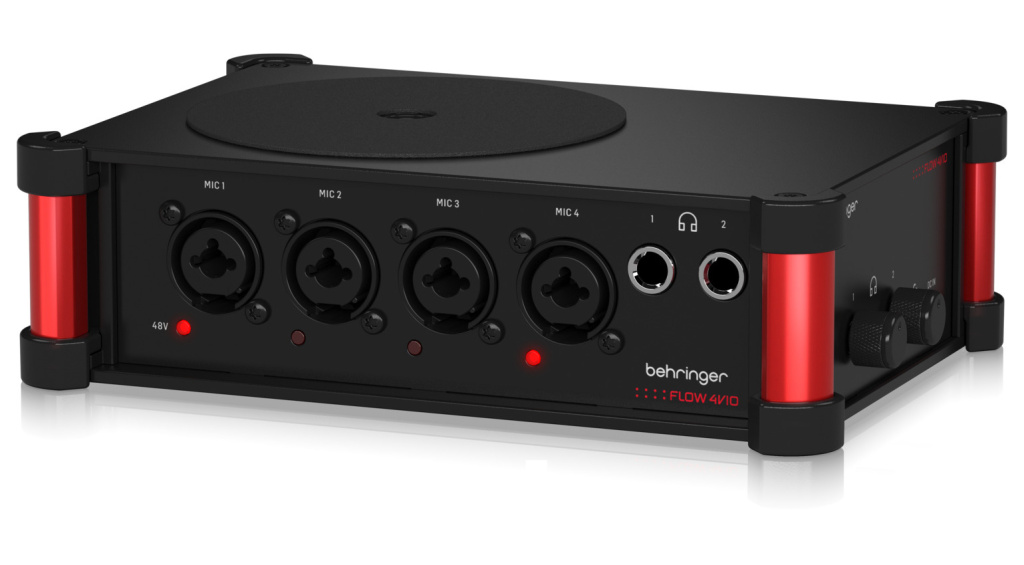
The FLOW 4VIO adds:
- 4 additional mic preamps
- 2 extra headphone outputs
This FLOW 4V + FLOW 4VIO pair clearly targets small film crews or live capture setups that need more microphones without moving to a full‑blown control room. The appeal of StageConnect here is to simplify the link between the two units while ensuring very low latency.
Compared with proprietary systems like Dante or AVB used in high‑end broadcast environments, StageConnect is simpler and more affordable, but also more locked into the Behringer ecosystem. That’s something to consider for the long‑term viability of your gear setup.
Timecode and camera sync: a step towards pro workflows
The FLOW 4V includes an internal timecode generator, with the ability to:
- Act as master to synchronise other devices on set; or
- Receive a SMPTE clock from a camera.
Alongside this, the FLOW 4V can trigger recording from the camera’s HDMI CEC signal. In practice, as soon as you press REC on a compatible camera, the recorder follows.
These are typical features of higher‑end solutions (Sound Devices, Zoom F‑series with external timecode generators, or Tentacle boxes), but are very rare at this price point. For documentary or light drama where post‑production wants to reduce manual resync work, it’s a real asset.
Remote control and power: mobility first
The Behringer FLOW 4V can also be controlled via the FLOW 4V MIX mobile app, which offers remote control of mix parameters, gains, headphone levels, etc. This approach is reminiscent of what you find on recorders like the Zoom F8n Pro or small digital consoles such as the X‑Air/X32 series.
On the power side, several options are provided:
- Via StageConnect (from another compatible device)
- Via USB‑C (power bank, mains adapter, etc.)
This dual power mode is useful for redundancy and for adapting to highly mobile setups (gimbal + mirrorless body + audio backpack, for example).
SD recording and USB interface: a direct bridge to post‑production
In addition to recording up to 10 channels to SD card, the FLOW 4V works as a 32‑bit USB audio interface. For the user, this opens several scenarios:
- Lightweight studio podcasting: capture to SD for safety while sending the mix or separate tracks to a computer via USB.
- Streaming / live: mix several mics and sources, then send directly to OBS, conferencing software or a streaming platform.
- Fast post‑production: immediate access to tracks in a DAW without manually pulling the SD card.
Compared with a typical studio‑only interface, the FLOW 4V brings SD recording redundancy and, conversely, compared with a classic field recorder, it offers a direct, modern link to the computer.
Pricing: aggressive but coherent
At launch, the listed prices are:
- Behringer FLOW 4V: $264.00 / £231.00 / €269.00
- Behringer FLOW 4VIO: $205.00 / £179.00 / €209.00
Both products are available for pre‑order with delivery in the coming months.
A quick comparison:
- Zoom F6: more expensive, but established in the pro market, also 32‑bit float, more audio‑focused than “console‑style” mixing.
- Zoom F8n Pro: significantly more expensive, advanced capabilities for drama and heavy‑duty documentary work.
- Sound Devices MixPre II: high‑end benchmark, superior in perceived quality and robustness, but out of reach of this budget for most freelancers.
The FLOW 4V therefore positions itself as a very aggressive gateway into workflows usually reserved for more expensive machines. The trade‑offs to watch will be mechanical durability, software stability and the real‑world quality of the preamps compared with established players.
Provisional verdict: a “pro” field recorder under €300?
At this stage, the Behringer FLOW 4V checks several boxes expected of a field recorder for professional use:
- 32‑bit float recording with wide dynamic range (138 dB claimed)
- 4 combo XLR mic preamps, expandable to 8 with the FLOW 4VIO
- Internal timecode and SMPTE camera sync
- Pre‑roll and automatic backup to USB stick
- Advanced mixing features (EQ, dynamics, filters, pan)
- Remote control via app and built‑in 32‑bit USB interface
One essential question remains for professionals: reliability in the field, day after day, in varied conditions. That is exactly what underpins the reputation – and the price – of long‑standing field recording manufacturers.
On paper, however, the FLOW 4V represents a very serious alternative for videographers and sound engineers who are starting out or who want a second setup. It could become a particularly interesting tool for documentary work, event capture, advanced content creation and multi‑guest podcasting, provided that early tests confirm the advertised performance.
FAQ: choosing the Behringer FLOW 4V wisely
Is the Behringer FLOW 4V enough for a “serious” narrative shoot?
For light drama or an independent short film, yes, on paper: 4 preamps expandable to 8, timecode, 32‑bit float and pre‑roll already cover a lot of needs. For heavier productions with major reliability constraints, harness/bag ergonomics requirements and integration into an existing kit, dedicated solutions like the Zoom F8n Pro or Sound Devices remain the safer bet.
Do the FLOW 4V preamps rival those of the big names?
The specs (138 dB of dynamic range, dual digital conversion) are very ambitious, but we’ll have to wait for field tests to judge actual noise floor, transparency and performance at extreme levels. Historically, Behringer offers a very strong features‑to‑price ratio, but does not quite aim for the same sonic refinement as Sound Devices. For web, corporate, podcasting or events, it will likely be more than good enough.
Is it a good choice for a multi‑guest podcast setup?
Yes, it’s actually one of its strongest use cases. With 4 mic inputs (8 with the FLOW 4VIO), per‑channel dynamics and EQ, a 32‑bit USB interface and SD + USB backup, the FLOW 4V is a compelling replacement for a “analogue mixer + interface” pair. It will suit a podcast studio that wants to remain mobile or keep the number of devices down.
FLOW 4V or standard audio interface for the home studio?
If your main use is recording in a fixed studio (voice, instruments) with no need for standalone recording, a good standard USB audio interface will often be simpler and sometimes better integrated with your software. The FLOW 4V becomes interesting as soon as you have a hybrid use: both field and studio work, a need for SD backup, standalone mixing, or redundancy for safety. In that case, it can replace several devices on its own.