En 2025, a large share of professional headphone mixing happens in home studios or in lightly treated spaces, often at moderate levels. The outcome can be frustrating: a mix that sounds signed off on headphones doesn’t always translate as expected to studio monitors, a television or a smartphone.
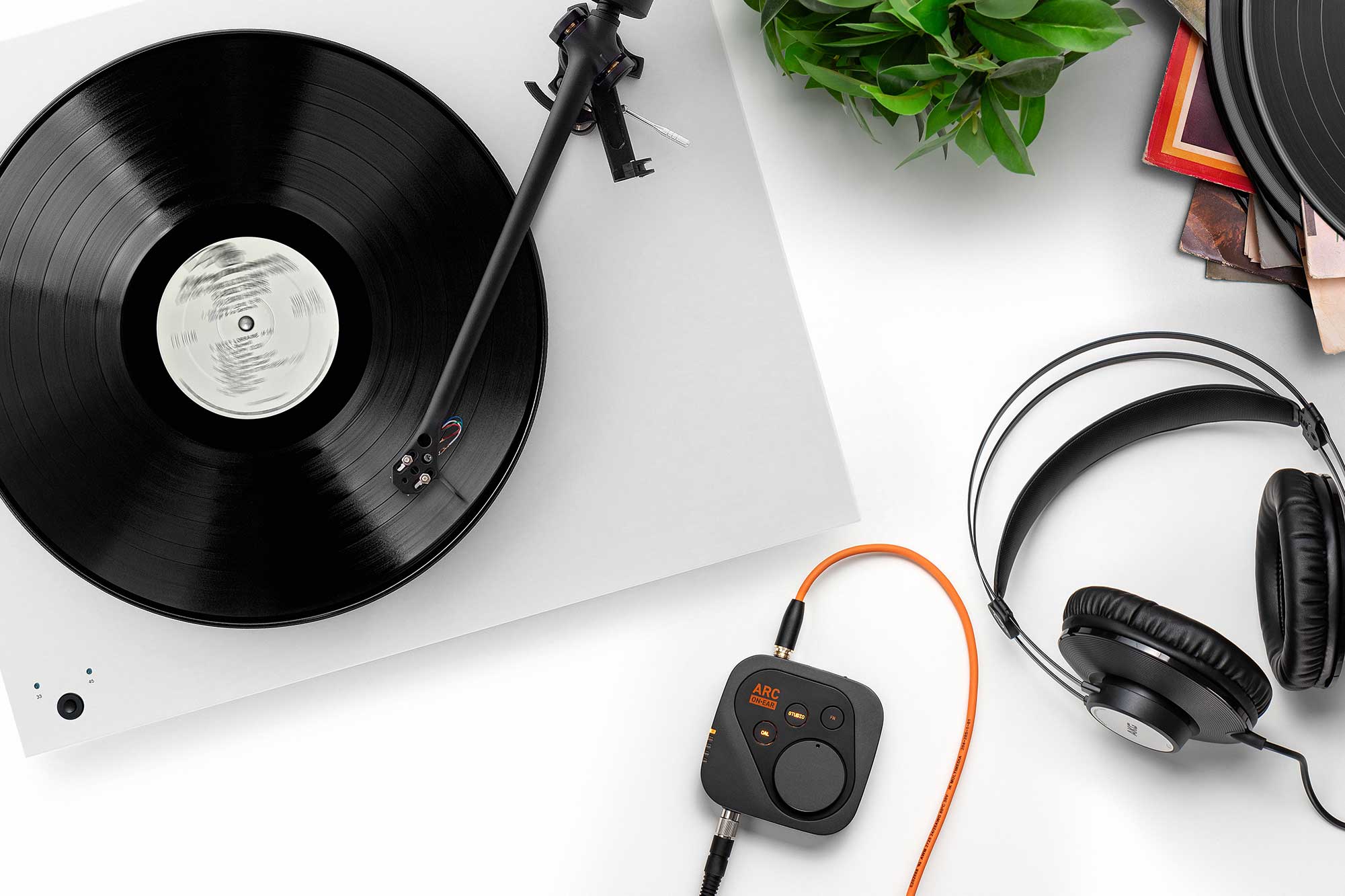
With ARC ON·EAR, announced on 16 October 2025 and already available from several retailers, IK Multimedia offers a self‑contained box that combines a 32‑bit audio DAC, a headphone amplifier and a correction system dedicated to monitoring. The stated aim is clear: correct your headphones’ response, recreate the experience of professional studio monitors and provide a consistent headphone monitoring solution for both home‑studio work and working on the move.
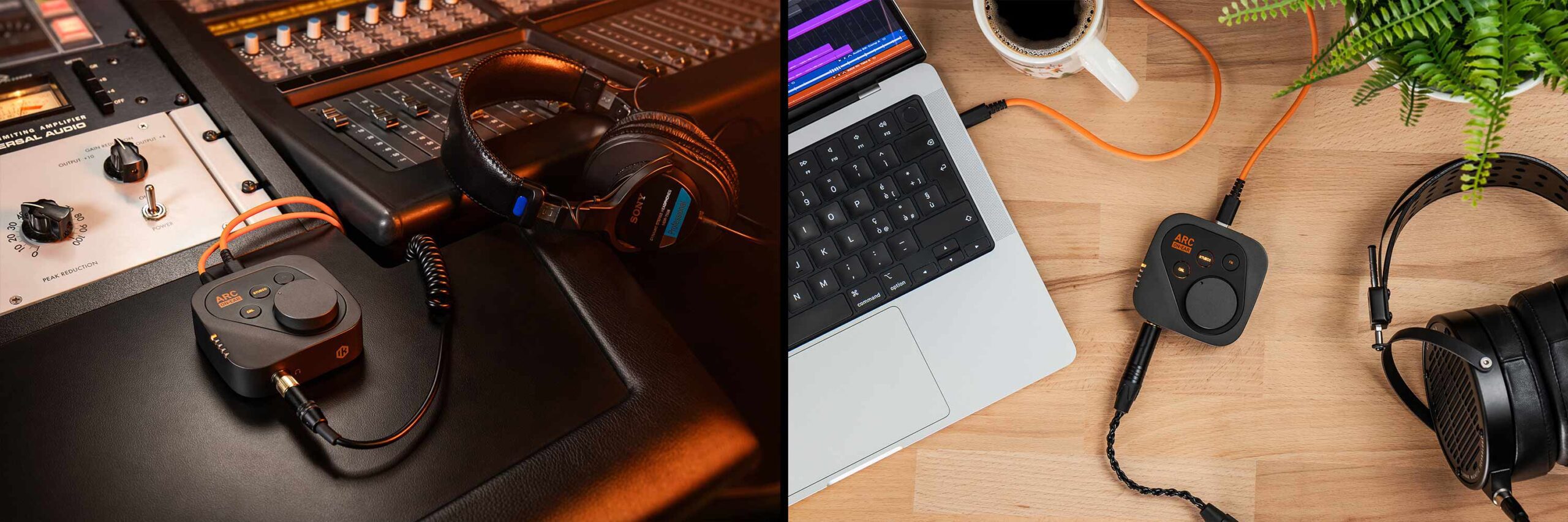
ARC ON·EAR: quick look at the box
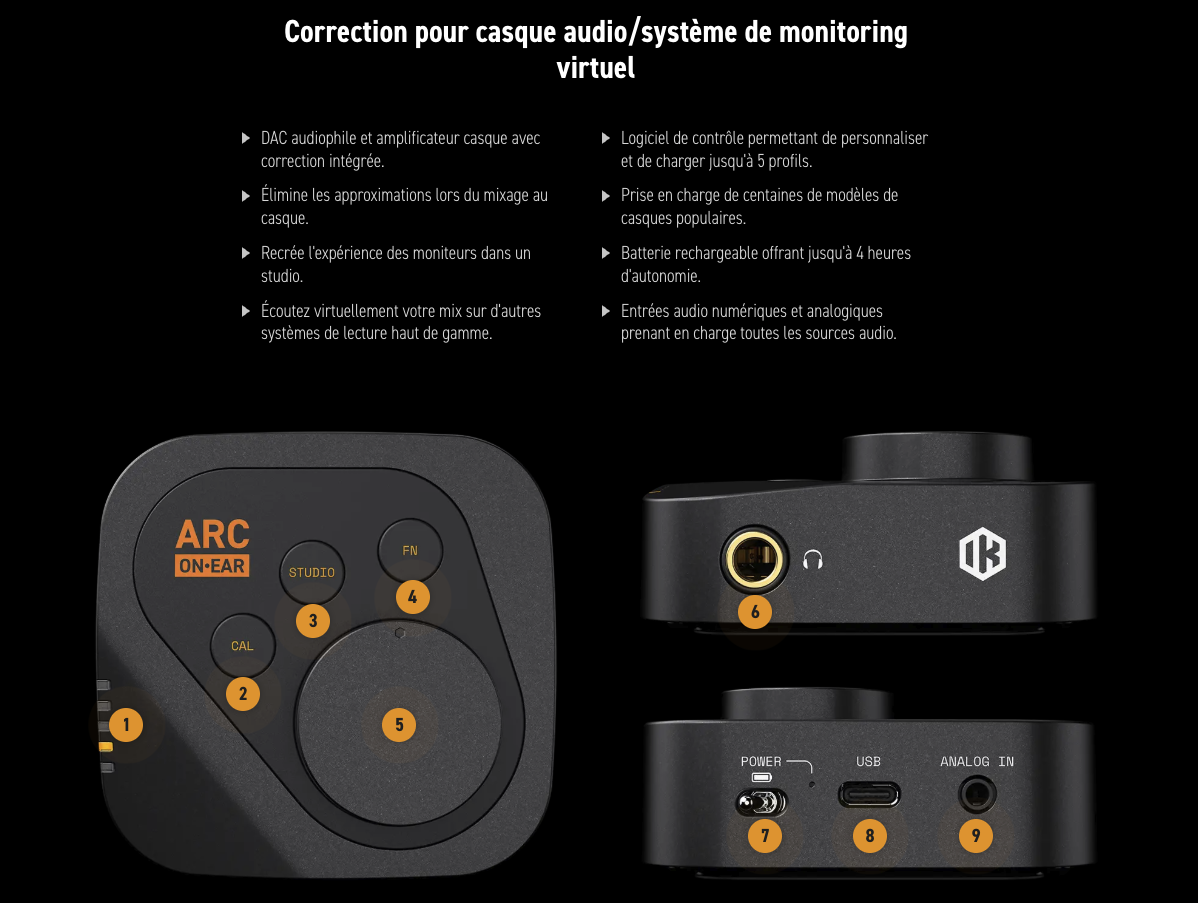
ARC ON·EAR comes as a compact standalone aluminium processor (about 79 x 77 x 35 mm for 170 g) that sits between your audio source and your headphones. It houses a 32‑bit ESS SABRE® DAC, a studio‑grade headphone amplifier and a DSP that applies correction curves for more than 250 headphone models, while also simulating different listening environments.
IK Multimedia pitches the unit as “a reference you can trust”. The system aims to make headphone mixing more reliable, whether you’re in a home studio, a B‑room or working within a 2025 mobile studio workflow.

On pricing, IK Multimedia is announcing an RRP of €299.99 including VAT. Major European retailers such as Thomann already list the IK Multimedia ARC ON·EAR at around €289, with immediate availability from late October 2025 and official listing since October.
Context: why mixing on headphones is still a compromise
IK Multimedia highlights a point many sound engineers run into every day: even so‑called “reference” headphones don’t reflect the full picture. Their frequency response is never perfectly flat, and the very wide stereo image can skew your perception of balance, tone and depth. These characteristics often lead to constant switching between different playback systems, increased listening fatigue and mixes that don’t do the source justice once you move over to real speakers.
In an untreated home studio, where it’s difficult to install large monitors or work at higher levels, headphones are often the default solution. The downside is a lack of stable reference points from one system to another. ARC ON·EAR is designed squarely around this issue of translating a headphone mix to speakers, by offering systematic, repeatable headphone calibration for monitoring.
A hardware‑based approach to headphone calibration
Rather than simply releasing a correction plug‑in, IK Multimedia chooses to move the brains into hardware. ARC ON·EAR is a complete system made up of:
- a standalone hardware processor (the ARC ON·EAR box);
- dedicated control software (ARC ON·EAR Control Software) that lets you select the headphone model, tweak tonal balance and manage presets;
- a physical modelling engine that simulates studio monitors and multimedia systems in an ideal room, without relying on impulse responses or artificial reverbs.
The headphone calibration profiles are measured using the very same amplifier circuit that’s built into the device. The idea is to remove a major variable in headphone monitoring: the impact of the amplifier on frequency response, which can be noticeable depending on the output impedance of your audio interface or laptop.
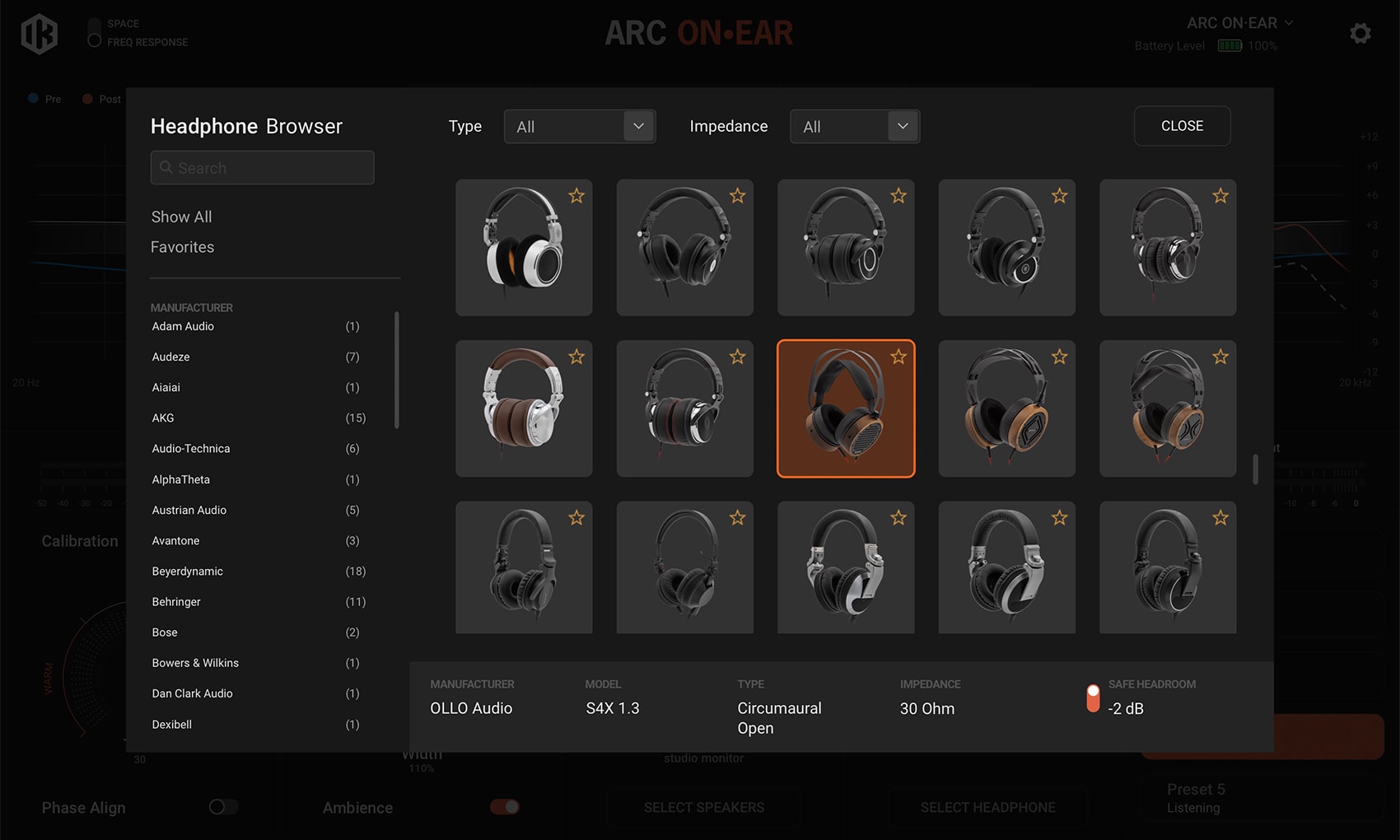
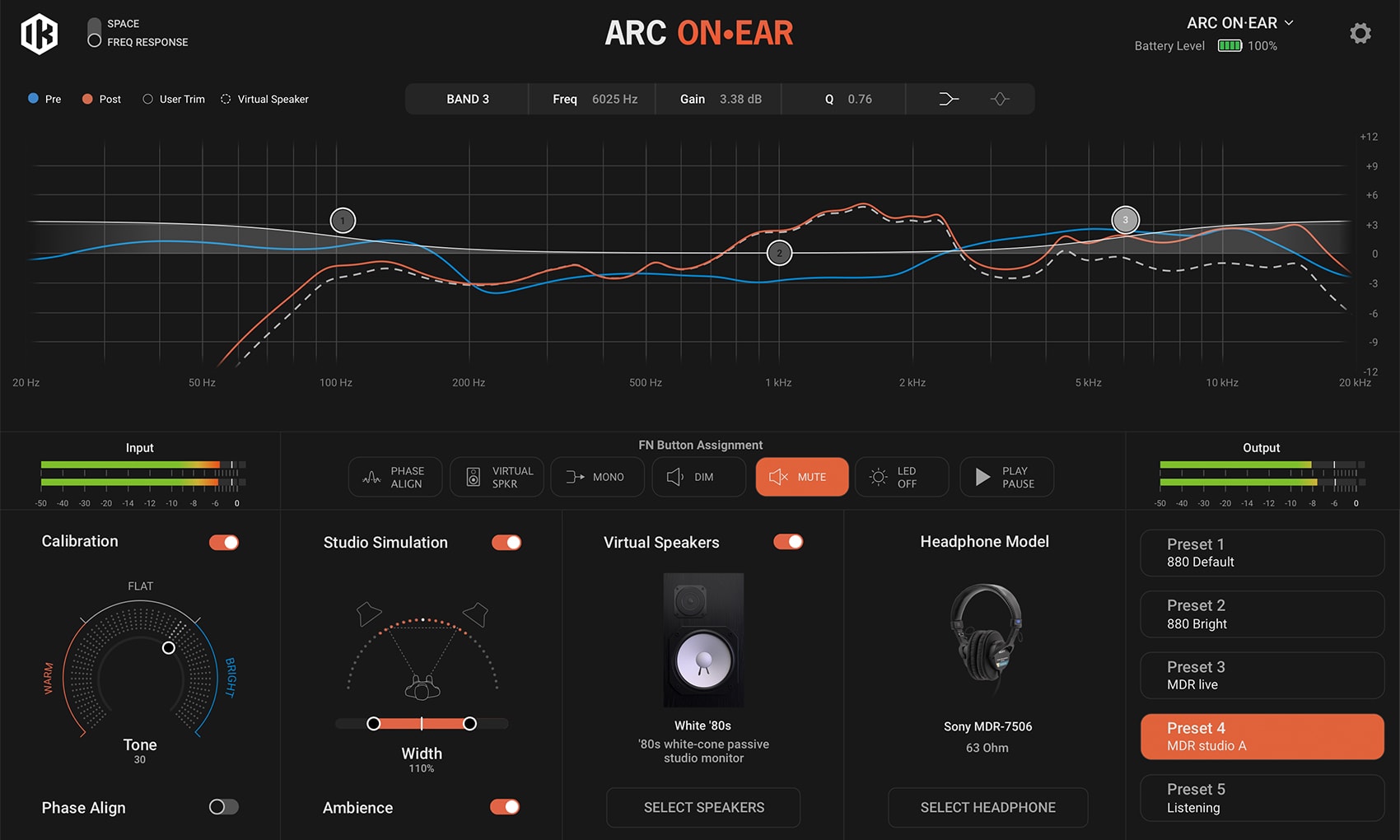
Suggested visual: screenshot of the ARC ON·EAR Control Software showing headphone selection and different listening presets.
Operation and detailed technical specifications
The basic workflow is built around three steps highlighted by the manufacturer:
- Connect the box to your computer via USB‑C or to an analogue source via the 3.5 mm mini‑jack input, then plug your headphones into the 6.35 mm output.
- Configure ARC ON·EAR using the dedicated software: select your headphone model from the database, adjust the tonality, choose monitor and virtual system simulations, and save presets.
- Create using the device as a standalone reference point, either as the main DAC over USB or as a correction stage added to the output of an existing audio interface.
On the technical side, ARC ON·EAR stands out with the following elements:
- a 32‑bit ESS SABRE® converter capable of handling audio signals up to 192 kHz;
- a wide frequency response, quoted as 10 Hz to 80 kHz (-1 dB);
- a dynamic range above 100 dB, with figures exceeding 110 dB depending on headphone impedance;
- an analogue volume stage with digital control, designed to preserve resolution even at low levels;
- very low latency, with ARC ON·EAR running with no plug‑in or CPU load, especially via the analogue input.
The unit also includes a user button (FN) that can be freely assigned to various functions such as mute, dim, or A/B switching between two listening profiles. This is handy for quickly comparing a corrected headphone mix with the raw headphone response, or for switching from a studio monitor simulation to a TV‑style listening setup.
Use cases: home studio, freelance and mobile workflows
ARC ON·EAR is clearly aimed at sound engineers, producers and content creators who spend a lot of time working on headphones, whether by choice or necessity. Several use cases emerge from the feature set:
- Home studio without a treated room: the box can turn a compatible studio headphone into a more neutral reference point, with a stereo image closer to that of control‑room monitors. It’s a direct answer to the challenge of headphone calibration for monitoring in the context of professional headphone mixing.
- Production and post‑production on the move: thanks to the built‑in battery (up to 4 hours) and compatibility with macOS and Windows, ARC ON·EAR can travel with a laptop or mobile rig for editing, sound design or mixing while you’re away from the studio.
- Secondary control room or additional listening point: the 5‑preset storage allows you to set up several headphones (for example a closed‑back model for recording and an open‑back pair for mixing) and switch between them without recalibration.
For a freelancer or hybrid studio, the unit drops neatly into a 2025 mobile studio workflow: it can serve as the main USB‑C headphone DAC, or as a correction stage added to the output of an audio interface or console bus, with no need for correction plug‑ins in the DAW.
Monitor simulation and testing on virtual systems
Beyond headphone calibration, ARC ON·EAR offers a Studio Simulation function that uses a crossfeed algorithm to recreate a more realistic stereo image, closer to what you perceive between two loudspeakers in a control room. The aim is to make decisions about width, depth and stereo balance more reliable than on uncorrected headphones.
The Virtual Speakers system lets you audition a mix virtually on different reference speakers. The information provided mentions a library of more than 20 studio monitor models and around 15 multimedia systems (TVs, soundbars, smart speakers, smartphones). This function addresses a classic need in modern mixing: quickly checking how a mix translates across several systems, without taking your headphones off.
Strengths and limitations of a headphone‑based monitoring solution
Key advantages
- Built‑in headphone calibration: correction profiles measured for more than 250 popular headphones (AKG, Audio‑Technica, Sennheiser, beyerdynamic, Sony, Neumann, Focal, HIFIMAN, Rode, Superlux, etc.) make it possible to compensate for each model’s colouration and achieve a more neutral response.
- Realistic virtual monitoring: physical modelling of studio monitors in an ideal control room, without artificial reverb or extra tonal colouration, is designed to recreate a more trustworthy control‑room environment for mixing and mastering on headphones.
- Standalone solution: ARC ON·EAR runs without plug‑ins, without specific drivers and without being tied to any proprietary software inside your DAW session. It can be dropped into any audio chain (computer, smartphone, analogue output of an interface, etc.).
- Session‑to‑session consistency: because the same amplification circuit is used both for correction measurements and for listening, the response stays stable whatever the environment (fixed studio, home studio, laptop on the road).
- Audio quality: the combination of a 32‑bit DAC, very low distortion and an analogue volume stage with digital control is designed to minimise loss of resolution, even at low listening levels.
Points to keep in mind
- Still a headphone‑based compromise: even with extensive correction, ARC ON·EAR cannot exactly reproduce the physical feel of a loudspeaker system in a larger room. Early feedback confirms that it brings the headphone mix closer to a control‑room experience, without completely replacing it.
- Cost compared with software‑only options: compared with headphone correction or studio simulation software sold for around a hundred euros, ARC ON·EAR sits at a higher price point. In return, it includes the hardware (DAC, amp, DSP) and remains usable with any application, including outside a DAW.
- Dependence on headphone profiles: to get the full benefit of calibration, it’s best to use a headphone model that’s already profiled in the database. The profiles cover a wide range of studio headphones, but it is worth checking compatibility before buying.

Integration into a modern studio and hybrid workflows
In a fixed studio, ARC ON·EAR can take on several roles:
- Main headphone DAC: connected via USB‑C to the computer, it becomes the system’s primary headphone output, with correction and simulations always active.
- End‑of‑chain correction stage: hooked up to the stereo output of an audio interface or console bus via the 3.5 mm mini‑jack input, it corrects the headphones while leaving the existing infrastructure untouched.
- Secondary listening point: stored presets allow you to switch from a tracking headphone to a mixing headphone or to specific speaker simulations for quick translation checks.
In a more mobile production setup, ARC ON·EAR addresses familiar headphone monitoring issues: achieving reliable reference points in a hotel room, shared office or at home at low volume. The compact form factor, built‑in battery and compatibility with numerous sources make it well suited to freelancers, podcasters, content creators or engineers moving between studio and remote work.
Comparison table: speakers mix vs headphone mix with ARC ON·EAR
| Aspect | Studio monitors in a treated room | Headphones without correction | Headphones with IK Multimedia ARC ON·EAR |
|---|---|---|---|
| Frequency response | Can be well balanced in a properly tuned control room, but still depends on the room acoustics. | Never perfectly flat: each headphone model colours the spectrum in its own way. | Curve corrected via calibration profiles specific to each headphone, aiming for a more neutral response. |
| Stereo image | Natural perspective between two speakers, close to “real‑world” listening. | Often exaggerated image, with hard left/right extremes that don’t reflect a loudspeaker system. | Studio Simulation function with crossfeed to bring the stereo field closer to that of a control room. |
| Checking on other systems | Requires several sets of physical speakers or external checks (car, TV, smartphone). | You need to switch devices to test translation (TV, Bluetooth speaker, etc.). | Library of virtual monitors and systems (monitors, TVs, smartphones, smart speakers) available directly on headphones. |
Early feedback and things to watch
Coverage of the product shows clear interest within the audio community, as reflected in early user reviews posted with specialist retailers. Comments highlight the build quality, a sound perceived as more balanced, and increased confidence when mixing and mastering on headphones after calibration.
Some reviews report a marked transformation of the listening experience once the headphones are corrected, with better detail clarity and tighter low‑end management. Other comments point out that the difference between bypass and ARC ON·EAR processing can be more subtle depending on the headphones, the type of project and listening habits. That underlines that this is a precision tool that requires an adjustment period.
Over the coming months, the following points will be worth keeping an eye on:
- how the already extensive supported headphone database continues to evolve;
- feedback from in‑depth tests in real‑world mixing and mastering situations;
- stability of the RRP and any promotional offers around this pro studio hardware launched in October 2025.
Conclusion: key pro studio hardware for headphone mixing in 2025
With ARC ON·EAR, IK Multimedia offers a comprehensive hardware answer to a well‑known challenge: achieving a professional headphone mix that translates properly to speakers and everyday playback systems, without access to a large, acoustically treated control room. The box combines DAC, amplifier, headphone correction and monitor simulation in a compact format, designed for both the home studio and production on the move.
If you mainly work on headphones, don’t have a dedicated room, or are looking to shore up a 2025 mobile studio workflow, ARC ON·EAR looks like an option well worth serious consideration. It doesn’t replace an optimised mix room, but it brings headphone monitoring much closer to that experience, particularly for sound engineers, producers and content creators who need stable reference points.
In the coming weeks, it will be interesting to track UK and wider European availability, detailed test reports and how the supported headphone database develops. It’s arguably one of the most strategic pieces of pro studio hardware of October 2025 for anyone relying on headphones as their main monitoring tool.
FAQ: IK Multimedia ARC ON·EAR
What is IK Multimedia ARC ON·EAR?
IK Multimedia ARC ON·EAR is a standalone DAC and headphone amplifier that incorporates a correction system for more than 250 headphone models plus a studio monitor simulation engine. It’s designed to give headphone mixes a more neutral response and a soundstage closer to that of a studio control room, without resorting to plug‑ins.
How do the headphone calibration and studio simulation work?
The device applies measured calibration profiles for each compatible headphone to correct its frequency response. In parallel, the Studio Simulation function uses a crossfeed algorithm and physical modelling of studio monitors in an ideal room. Everything is configured via the ARC ON·EAR Control Software, which also lets you store up to 5 presets.
Which headphones are compatible with ARC ON·EAR?
The supported headphone database covers several hundred popular models, including designs from brands such as AKG, Audio‑Technica, Sennheiser, beyerdynamic, Sony, Neumann, Focal, HIFIMAN, Rode, Superlux and other well‑known manufacturers. The full list is available on the IK Multimedia website and includes open‑back and closed‑back headphones with a range of impedances.
Does ARC ON·EAR replace a pair of studio monitors in a treated room?
ARC ON·EAR clearly brings headphone listening closer to the experience of monitors in a well‑tuned control room, but it doesn’t completely replace a treated room and physical speakers. The unit is intended to significantly narrow the gap between headphone and speaker mixes, particularly for home studios and situations where using monitors just isn’t practical.
How do you integrate ARC ON·EAR into a home‑studio or mobile setup?
In a home studio, ARC ON·EAR can be used as the main headphone DAC connected via USB‑C to your computer, or as a correction processor placed after an audio interface via the 3.5 mm mini‑jack input. On the move, the compact size, built‑in battery and compatibility with numerous sources make it a headphone monitoring solution well suited to mixing, editing or mastering away from the studio.