Presented ahead of the 2025 NAMM Show and highlighted by retailers such as Thomann, Vintage King or SonoVente, the Antelope Audio A4-1B is among the 2025 tube opto compressors aimed at professional hardware studios and high-end home studios. This unit is designed to recreate the behaviour of a famous Scandinavian tube optical compressor, combining a 100% analogue signal path with advanced digital control via plug-in.
With street prices for the Complete Edition sitting at around €2,299 (incl. VAT) at some European retailers, and more extensive bundles offered directly by Antelope Audio, the A4-1B targets professional studios and independent producers who want to integrate a high-end tube-opto compressor into a hybrid chain, bridging analogue outboard and DAW-based control.
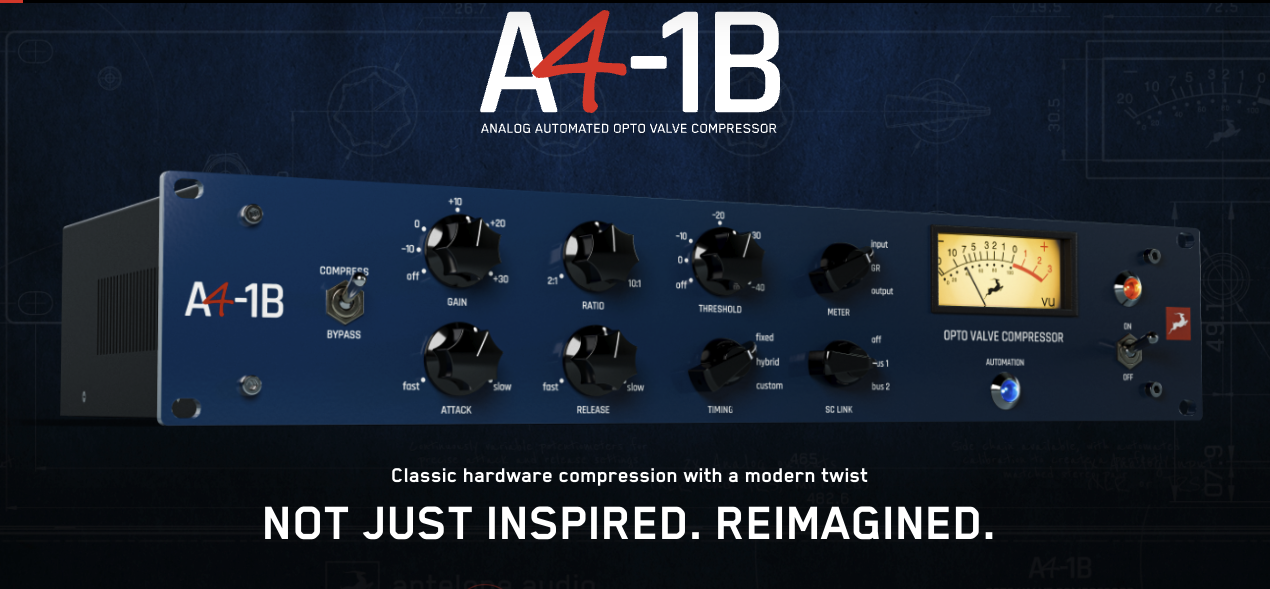
An analogue, valve-based optical compressor with full automation
Antelope Audio presents the A4-1B as a “tube-optical compressor” with a fully analogue signal path, designed to retain the smoothness and musicality of vintage opto-tube units. The compressor is voiced to remain transparent even under heavy gain reduction, so it can be used on sources such as vocals, bass, keyboards or percussion without stripping away their character.

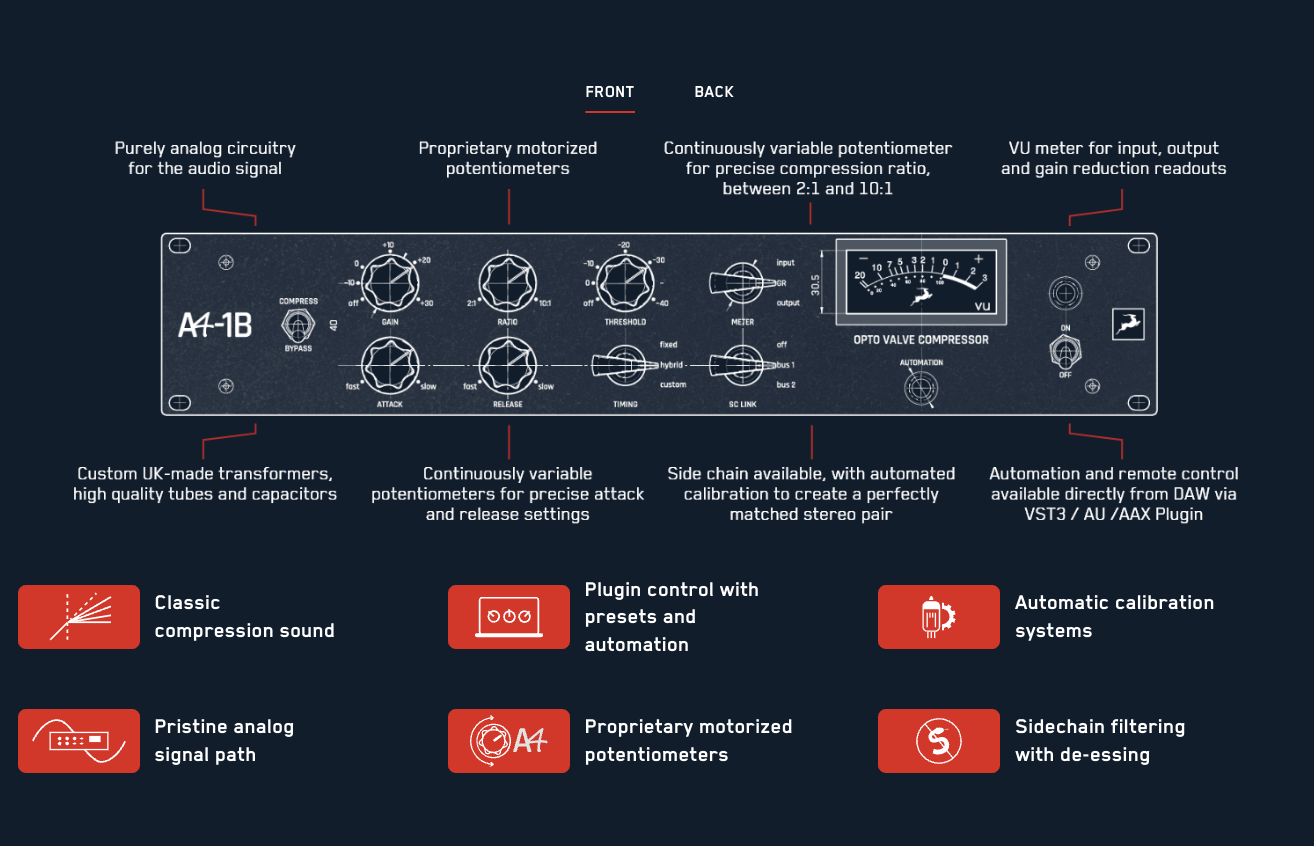
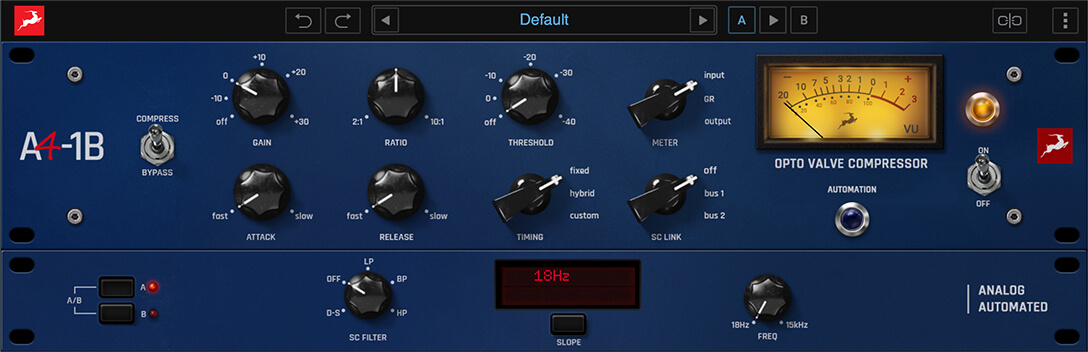
The distinctive feature of the unit lies in its proprietary motorised potentiometers. These are genuine continuous analogue pots whose position is controlled digitally. Settings can be stored, recalled and automated via a dedicated A4-1B plug-in (VST3, AU and AAX). Any change in the DAW is immediately reflected on the hardware, with the knobs physically turning, and every manual movement is sent back to the plug-in. The goal is to keep the hands-on feel of analogue outboard while adding the instant recall and automation you’d expect from software plug-ins.
Tube-opto architecture and premium components
Under the bonnet, the Antelope Audio A4-1B adopts the architecture of a well-regarded Danish opto-tube design, built around carefully engineered analogue electronics. Antelope Audio highlights an all-valve push-pull amplifier, combined with selected components to ensure consistent performance across the full audio bandwidth.
The manufacturer emphasises several key design points:
- a 100% analogue audio path dedicated to sonic quality;
- input and output transformers designed in the UK, intended to deliver tight low-end and detailed highs, with added harmonic content but no loss of clarity;
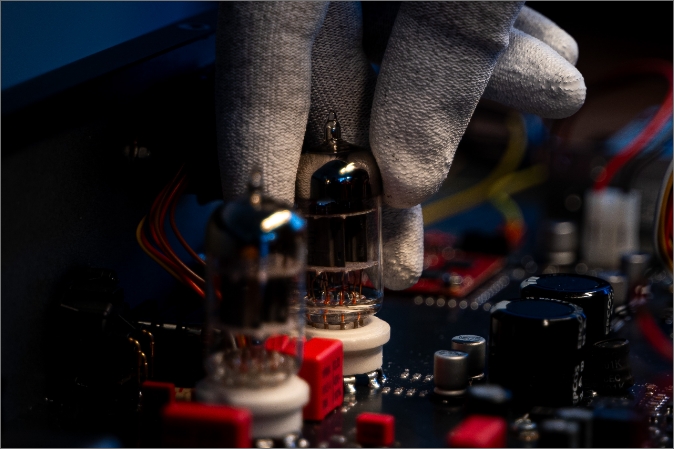
- hand-selected premium valves that provide the sought-after “analogue warmth” while still maintaining precision and definition;
- a pre-selected optical cell to guarantee consistent, accurate compression behaviour over time.
The stated frequency response is 20 to 20,000 Hz with a tolerance of ±1 dB. Noise level is specified at less than –80 dBu, with maximum input and output levels of +24 dBu. The valve-based push-pull output stage is described as rich in harmonics, with controlled distortion and faithful signal reproduction.
Antelope Audio also notes that particular attention has been paid to the power supply, using a modern switch-mode PSU with automatic mains voltage adaptation (95–245 V, 50–60 Hz) and DC heater supplies for the valves. This approach is intended to reduce hum, stabilise operation and extend tube life.
Technical specifications for studio use
In terms of controls, the Antelope Audio A4-1B offers a full range of analogue parameters, with values documented by Antelope Audio and in retailer spec sheets:
- Ratio: from 2:1 to 10:1 (continuously variable);
- Threshold: from Off (around +20 dBu) down to –40 dBu;
- Attack: from 0.5 ms to 300 ms;
- Release: from 50 ms to 10 s;
- Output gain: from Off to +30 dB.
Three timing modes are available (Fixed, Manual and Hybrid), allowing you to move between a behaviour reminiscent of classic opto compression and more user-driven responses. On the front panel, a backlit analogue VU meter can be switched to display input level, gain reduction (GR) or output level. Several reference levels can be selected in the calibration menu (–10 dBu, 0 dBu, +4 dBu, +20 dBu) so the display can be aligned with the rest of your signal chain.
The connectivity is designed for straightforward integration into a studio or high-end home studio setup:
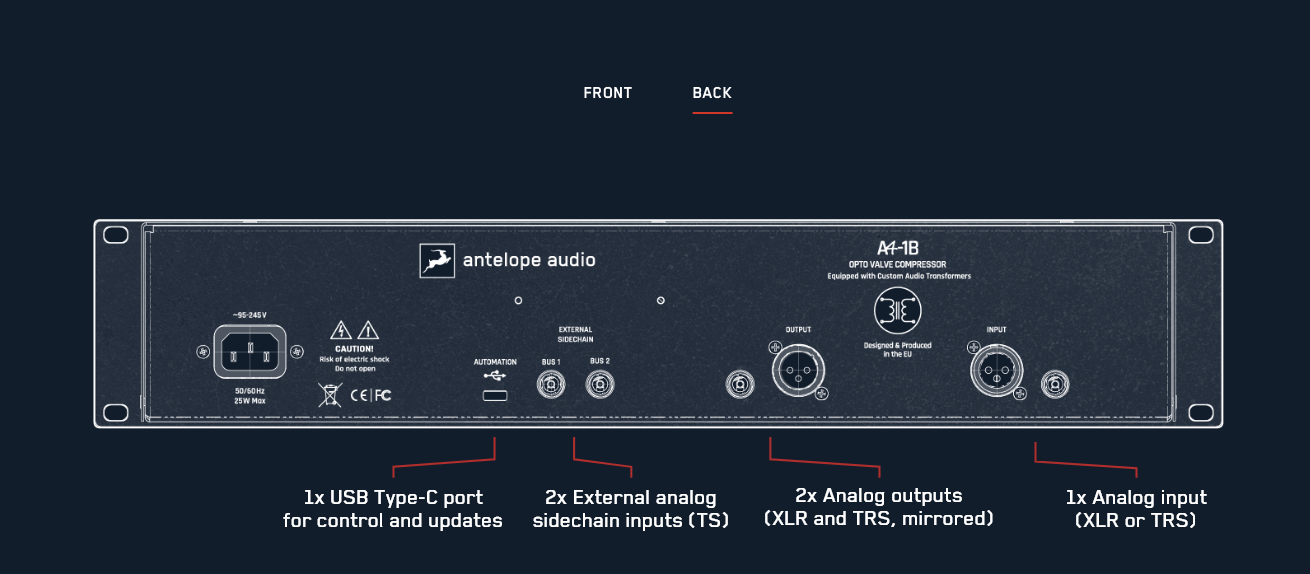
- a balanced audio input on XLR / 6.35 mm jack combo;
- two mirrored balanced audio outputs on XLR and 6.35 mm jack;
- two sidechain bus inputs on 6.35 mm jack for feeding external control signals or chaining multiple units;
- a USB-C port for computer connection and plug-in control;
- a 10 kΩ differential input impedance and a output impedance below 60 Ω.
Physically, the unit takes up 2U of rack space (around 88 mm in height), with a standard 19″ width (483 mm), a depth of 252 mm and a weight of around 4.4 kg. These dimensions and this format clearly position it for rackmount installation in a fixed studio, with adequate ventilation for the heat generated by the valves.
Plug-in control, automation and extended sidechain
The other major distinctive feature of the Antelope Audio A4-1B is its software integration. A dedicated A4-1B plug-in is supplied in VST3, AU and AAX formats for macOS and Windows. This plug-in allows, in particular:
- remote control of the main parameters (threshold, ratio, attack, release, gain);
- full automation of these parameters within the DAW;
- instant recall of stored presets, including many years later, thanks to the built-in calibration systems;
- quick A/B comparisons between different settings;
- an extended sidechain filter section with high-pass, low-pass and band-pass filters, plus a de-esser mode based on a narrow band-pass filter.
The motorised potentiometers physically respond to commands sent from the plug-in: when a parameter is adjusted in the software window, the corresponding front-panel knob on the A4-1B turns. Conversely, when a setting is tweaked by hand on the unit, the change is sent back to the plug-in. This bidirectional sync lets you work as if you were using a native plug-in, while still benefiting from a real analogue valve circuit.
Antelope has also implemented an automatic opto cell calibration system (Opto-Cell Test System), designed to compensate for changes in behaviour over time and to allow two units to be precisely matched when used in stereo link. This calibration system also contributes to consistent preset recall, maintaining equivalent gain reduction even after many years of use.
Editions, software bundle and observed pricing
On the Antelope Audio website and via various retailers, the A4-1B is offered in several editions that combine the hardware, the plug-in and access to the Synergy Core Native software bundle.
- A4-1B Member’s Edition: analogue A4-1B compressor, one year’s access to the A4-1B plug-in and one year’s access to Synergy Core Native (over 70 effects, including compressors, equalisers, reverbs, delays and pitch correction tools).
- A4-1B Complete Edition: analogue A4-1B compressor, perpetual licence for the A4-1B plug-in and two years’ access to Synergy Core Native. Thomann has been listing this version since April 2025, at a price of €2,299 incl. VAT, with B-Stock units offered at a lower price.
- A4-1B Ultimate Edition: analogue A4-1B compressor, perpetual licence for the A4-1B plug-in and five years’ access to Synergy Core Native.
Vintage King also mentions a bundle including the A4-1B, a perpetual licence for the A4-1B plug-in and extended access to Synergy Core Native, at a price listed in its US dollar price grid. Some European retailers such as Music Store or Star’s Music show prices close to those indicated by Thomann, with variations depending on availability and any promotional discounts.
The A4-1B’s analogue processing remains available without activation or a computer connection. However, online activation is required to validate the warranty, link the licences to an Antelope account and an iLok account, install the Antelope Launcher, and then access the A4-1B plug-in and the Synergy Core Native bundle, as detailed in the “Get Started” guide published by the manufacturer.
Positioning compared with other recent hardware compressors
In Thomann’s comparison section, the Antelope Audio A4-1B appears alongside other recent analogue hardware compressors such as the Empirical Labs EL8X Distressor, SSL BUS+, Elysia XMAX, Heritage Audio Tubesessor, Tube-Tech CL 1B, Tegeler Creme and WES Audio ngBusComp. These devices cover various topologies (FET, VCA, valve, stereo bus comp) but share a high-end positioning for professional dynamic processing.
Within this list, the A4-1B stands out through its combination of a fully analogue audio path and a system of motorised potentiometers synchronised with a plug-in. It is therefore aimed at studios that want a tube-opto compressor meeting the criteria of modern analogue outboard, with full recall of settings and seamless integration into complex DAW projects.
Typical studio use and target user profiles
Documentation supplied by Antelope Audio and retailer product pages put particular emphasis on how the A4-1B behaves in real-world scenarios, especially on vocals. A commonly suggested starting configuration is to set the ratio around 3:1, with an attack of about 10 ms and a release time of roughly 100 ms, in order to smooth a vocal take by taming peaks while preserving the natural tone.
There is also mention of using it in series with another FET or VCA-style compressor. In this type of setup, a first, very fast compressor takes care of the sharpest peaks, while the A4-1B applies more gradual and transparent compression, typically with 3 to 7 dB of gain reduction. This approach is suggested for both vocals and electric bass to reinforce presence and signal consistency.
Official sources and product pages describe the A4-1B as a unit designed for professional studios and demanding users who want to combine analogue sound quality with full recall of settings in a modern production environment. In that context, it can find its place both in a dedicated mix room and in a high-end home studio that already has audio interfaces, preamps and other rackmount processors.
Key points to consider before adding the A4-1B to your setup
Several factors are worth considering for a studio or home studio thinking about investing in the Antelope Audio A4-1B.
- Valve-based design: like any valve outboard, the A4-1B runs hot in use and relies on tubes that wear out over time. The switch-mode power supply with DC heaters and automatic voltage adaptation is, however, designed to minimise hum and improve component longevity.
- Reliance on software for certain advanced functions: the audio path is entirely analogue and can be used without a computer, but remote control, automation, advanced sidechain filtering and preset management all require installing the Antelope Launcher, creating an Antelope Audio account, linking it to an iLok account and activating the licences online.
- Synergy Core Native-centric model: the various editions include access to the Synergy Core Native plug-in bundle for differing lengths of time. On Audiofanzine, some reader comments raise concerns about a software subscription being tied to a hardware device in this price range, which is worth factoring into any purchase decision.
- Overall budget: with a stated price of €2,299 incl. VAT for the Complete Edition at several European retailers in 2025, and more extensive bundles directly from Antelope Audio, the A4-1B clearly sits in the high-end professional compressor segment. The investment needs to be weighed against the studio’s actual requirements and the role already played by other analogue compressors or plug-ins in the workflow.
Verdict: a tube-opto compressor built for hybrid workflows
The Antelope Audio A4-1B positions itself as a tube-opto compressor for the modern studio, combining a carefully engineered analogue audio path with an advanced digital control layer. With UK-designed transformers, a valve push-pull output stage, a pre-selected optical cell and an optimised power supply, the unit follows the conventions of high-end analogue outboard built for professional use.
At the same time, the integration of the A4-1B plug-in, motorised potentiometers, automatic opto-cell calibration and extended sidechain filtering addresses the day-to-day realities of studios working in DAW-based environments. For users looking for a 2025 tube-opto compressor to slot into a professional hardware studio rack, with full recall of settings and the ability to automate outboard like a plug-in, the A4-1B holds a distinctive place on the market.
Within the wider category of modern analogue outboard, including units typically used on mix buses or in analogue mastering chains, its exact positioning will depend on the rest of the rack and each studio’s budget. Based on the specifications published by Antelope Audio and detailed product pages from retailers such as Thomann, Vintage King or Audiofanzine, the A4-1B delivers a specific blend of analogue warmth and software flexibility that is still relatively rare in this type of compressor.
FAQ: Antelope Audio A4-1B
What is the Antelope Audio A4-1B?
The Antelope Audio A4-1B is a single-channel, valve-based optical compressor with a 100% analogue signal path, inspired by a respected Danish opto-tube design. It combines an analogue circuit built around input and output transformers, a valve push-pull amplifier and a pre-selected optical cell with motorised potentiometers that can be controlled via a dedicated A4-1B plug-in, available in VST3, AU and AAX formats.
What are the main technical specifications of the A4-1B?
The A4-1B offers a continuously variable ratio from 2:1 to 10:1, a threshold ranging from Off (around +20 dBu) down to –40 dBu, attack times from 0.5 to 300 ms and release times from 50 ms to 10 s. Output gain can be pushed up to +30 dB. The stated frequency response is 20 Hz to 20 kHz with a tolerance of ±1 dB, with a noise level below –80 dBu and maximum input and output levels of +24 dBu. The unit features a balanced input on XLR / 6.35 mm jack combo, two mirrored outputs on XLR and 6.35 mm jack, two sidechain inputs and a USB-C port.
How do plug-in control and automation work on the A4-1B?
The A4-1B plug-in, supplied in VST3, AU and AAX formats, lets you remotely control the compression parameters (threshold, ratio, attack, release, gain), automate them within your DAW and recall stored presets. The front-panel motorised pots physically follow changes sent from the plug-in and, in turn, send their own movements back to the software interface. The plug-in also adds a sidechain filter section (high-pass, low-pass, band-pass) and a de-esser mode based on a narrow band-pass filter.
What do the different Antelope Audio A4-1B editions include?
According to information published by Antelope Audio, the A4-1B comes in several editions. The Member’s Edition couples the analogue compressor with one year’s access to the A4-1B plug-in and one year’s access to Synergy Core Native. The Complete Edition adds a perpetual plug-in licence and extends Synergy Core Native access to two years. The Ultimate Edition also includes a perpetual plug-in licence, but with five years’ access to Synergy Core Native. Retailers list the corresponding prices depending on the chosen edition.
Can the A4-1B be used without a computer or subscription?
The Antelope Audio A4-1B’s analogue audio processing is fully functional without a computer: the compressor can be inserted into a recording or mixing chain like any other valve hardware processor. However, access to the A4-1B plug-in, remote control, automation, extended sidechain filtering and the Synergy Core Native plug-in bundle requires creating an Antelope Audio account, linking it to an iLok account, installing the Antelope Launcher and activating the unit and licences online.