Universal Audio Volt 876: an interface designed as the heart of your studio
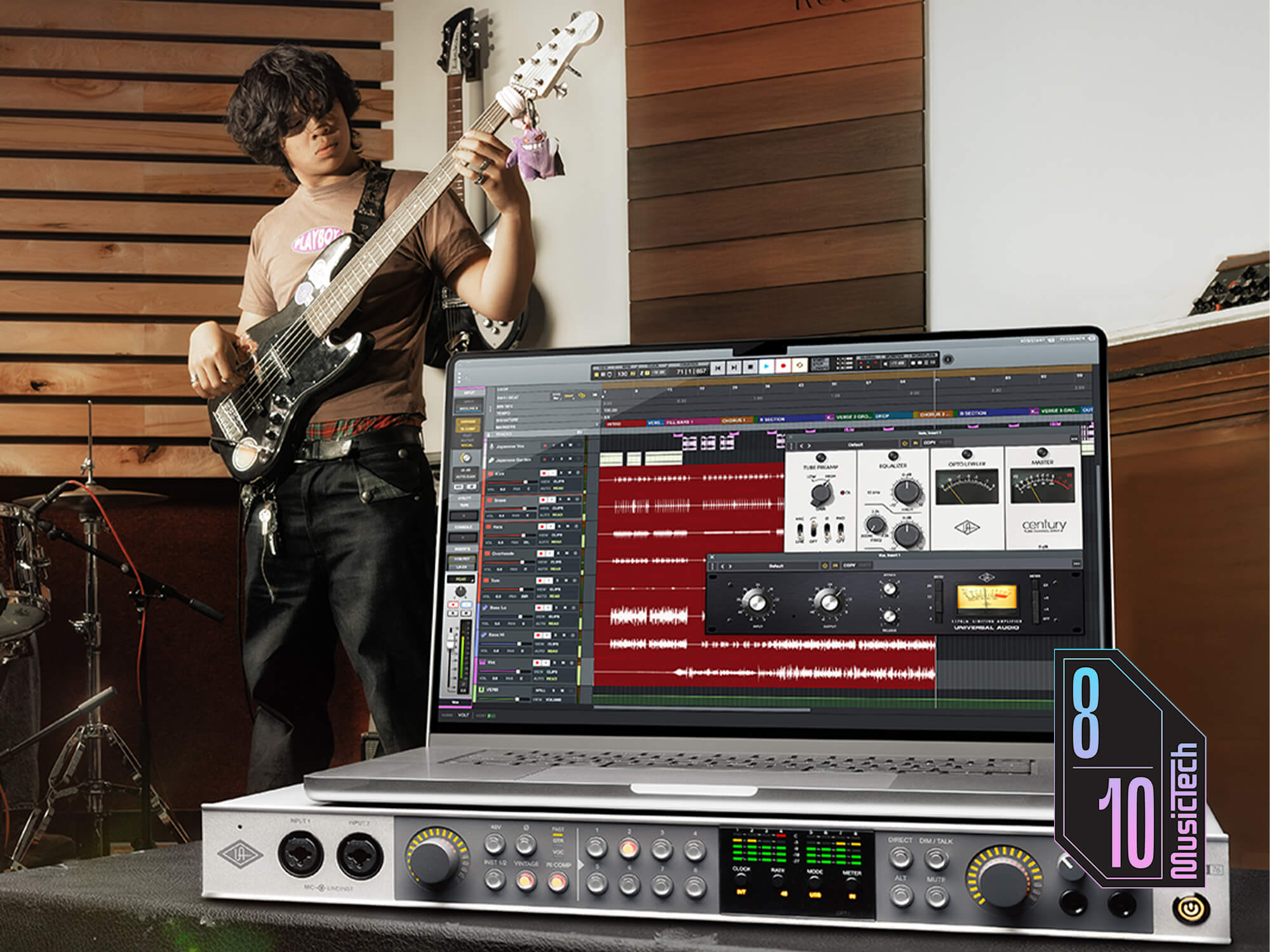
Universal Audio is no longer limited to its famous Apollo range. With the Volt series, the brand offers more affordable audio interfaces that rely less on onboard DSP processing and more on integrated analogue colour. The Volt 876 is the flagship of this family: a 1U rackmount unit with 24 inputs and 28 outputs, designed to become the nerve centre of a serious, but still compact, studio.
Unlike the Apollos, which can run UAD plugins with near-zero latency thanks to their DSP, the Volt 876 does without this built-in processing power. Instead, it leans on analogue circuits – “vintage” preamps and a compressor inspired by the brand’s classic hardware – to give recordings character right at the tracking stage.
Connectivity, recording and bundled software
The Volt 876 connects to the computer via USB‑C, but requires a mains power supply. Once you’ve unboxed the hardware, you need to register the product online and install the UA Connect app, which centralises the management of UAD hardware and software licences. This application provides access to both the included plugins and paid add‑ons, although the interface could be clearer in terms of separating bundled content from what’s available to buy.
UA Connect is compatible with computers as well as iPad and iPhone. Using it with an iPhone will probably be a niche case for a rackmount interface, whereas DAWs like Cubasis or Logic Pro for iPad make the Volt 876 far more relevant on a tablet. There is, however, no iOS version of the Console application.
A software bundle geared towards production
Purchasing the Volt 876 gives you access to several software downloads, starting with LUNA, Universal Audio’s digital audio workstation (DAW). LUNA includes features specific to this interface, such as Assistive Auto Gain, which listens to your source and automatically adjusts the input level, as well as full session recall linked to the Console application, which lets you control the interface from your computer.
The bundle also includes the UAD Producer Suite, a collection of 12 mixing plugins, among them the Teletronix LA‑2A compressor, the 1176 Classic FET Compressor, the Pultec passive EQ collection and the PolyMAX synth. These processors run natively on the computer, which makes them easy to use even when you’re away from the interface, and turns them into everyday tools for mixing.
Volt 876 connectivity and configuration
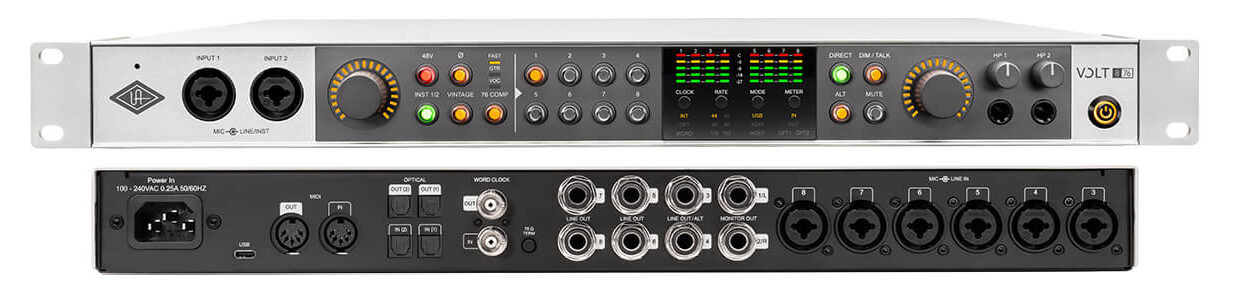
The front and rear panels reveal an interface designed to cover a wide range of studio scenarios.
- 8 combo XLR/jack inputs for mic and line sources, 2 on the front panel for instant access and 6 on the rear.
- 6 line outputs on the rear.
- A pair of stereo monitor outputs allowing you to connect two speaker systems (main and alternate monitoring).
- Word Clock input and output for synchronisation with other digital equipment.
- Full 5‑pin DIN MIDI connectivity (in and out).
- Two ADAT optical ports for input and output, adding up to 16 digital audio channels and allowing you to daisy‑chain up to three Volt 876 units, or add their preamps to another interface via standalone ADAT mode.
The internal converters operate at 32‑bit / 192 kHz, with sample rate selectable both from the front panel and via the Console application. The choice of inputs/outputs clearly aims to cover the typical needs of an advanced home or project studio: multitrack recording, dual monitoring, digital expansion and MIDI integration.
Front‑panel controls and everyday ergonomics
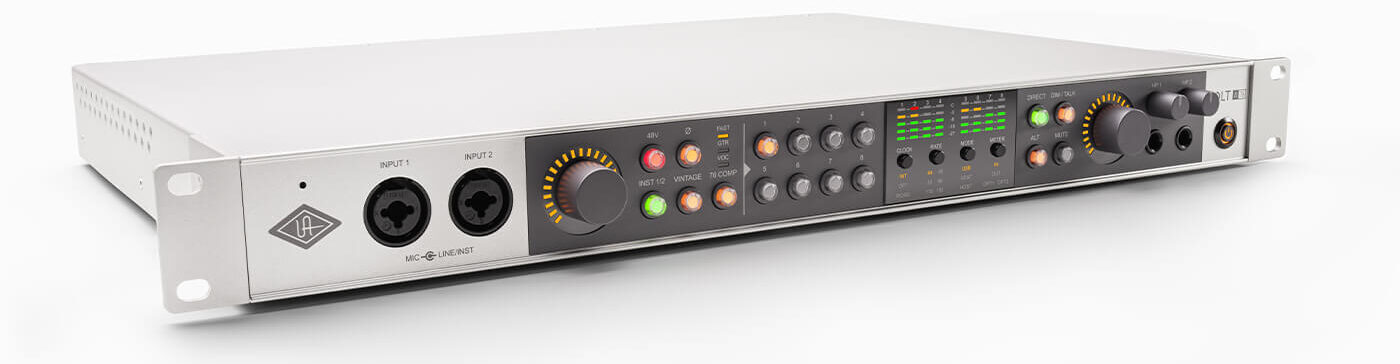
On the front, eight channel‑select buttons let you quickly choose which channel to adjust. For each selected channel, you can:
- switch on phantom power for condenser microphones;
- set the gain;
- invert polarity to help with phase alignment in multi‑mic recordings;
- activate high‑impedance instrument mode;
- engage the analogue compressor.
On the right‑hand side of the front panel, other essential functions are grouped together:
- direct, latency‑free monitoring for the two independent headphone outputs;
- talkback activation via the built‑in microphone;
- selection between the two speaker pairs (main and alternate);
- clock source selection;
- level monitoring via the VU meters.
Overall, everything remains clear and intuitive: most settings are available both in hardware and via the software panel, leaving you free to work very much “hands‑on” with the front panel, or more statically from behind the screen. Getting to grips with it is quick enough, as long as you spend a bit of time exploring the UAD ecosystem.
Vintage preamps and 76 compressor: the sonic signature
The name Volt 876 is no accident: the number 8 refers to the eight analogue input channels, each benefitting from a “vintage” preamp and a compressor modelled on Universal Audio’s historic units.
Vintage mode applies a valve preamp emulation inspired by the 610 console. When engaged, it adds a subtle richness to the signal, whether it’s vocals, guitars or other sources. The 76 compressor, for its part, is based on the 1176 FET limiter design and offers three dedicated modes: Vocals, Guitar and Fast. These modes, with a ratio of around 6:1 and a fixed threshold, differ in their attack and release times, each providing a response tailored to the type of source.
Being able to apply these processes at the recording stage effectively “prints” them into the take, much like a traditional hardware‑based workflow. We’re not talking about over‑the‑top effects here, but about controlled coloration that strengthens the overall cohesion and warmth of your recordings. Untreated takes remain clean and transparent, but the Vintage and 76 modes quickly become hard to give up, such is the extra depth and presence they bring to the sound.
User experience with LUNA and Console
Once you’ve got to grips with the UAD system, the workflow becomes smooth. Depending on your studio setup, it’s just as easy to adjust the interface from the front panel as it is from the Console software. LUNA, supplied with the Volt 876, forms a coherent pairing with the hardware and includes features designed specifically for the brand’s interfaces. When used alongside another DAW, Console still retains strong points such as assistive auto gain.
All in all, despite the wealth of features, Universal Audio manages to keep the interface logical and the learning curve manageable. The Volt 876 is clearly intended for a fixed studio environment; other models in the Volt range place more emphasis on portability.
Volt 876 versus the competition and ideal use cases
Priced at £860, the Volt 876 sits above interfaces such as the Focusrite Scarlett 18i20, which comes in at around £649 with slightly fewer inputs and outputs. In return, the Volt 876 highlights its vintage preamps, its per‑channel analogue compressor and the bundled UAD plugins.
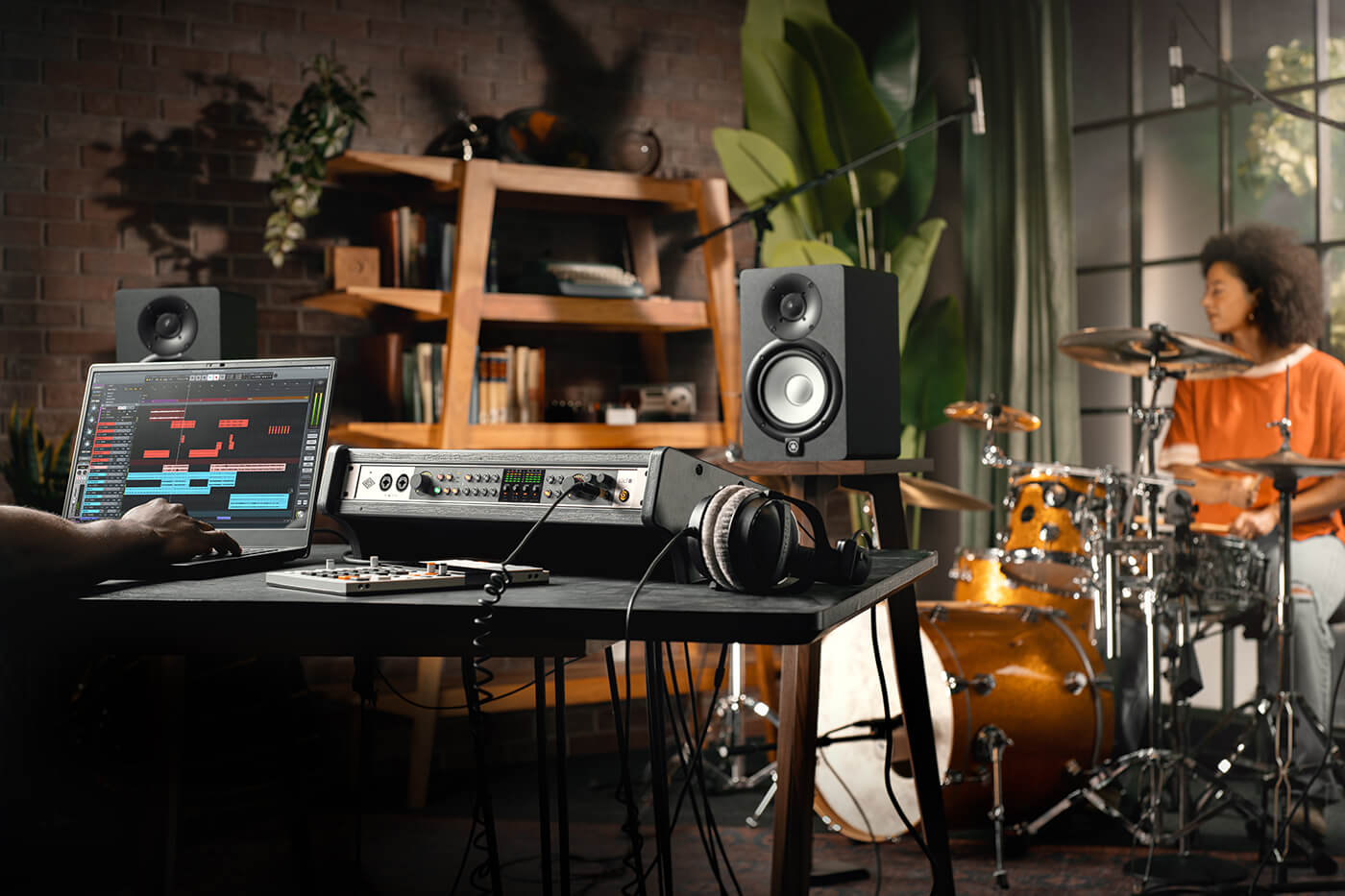
Its architecture makes it particularly well‑suited to recording bands and acoustic or amplified instruments, areas where the built‑in preamp and compression stages genuinely make a difference. It remains versatile enough, however, to accommodate other sources such as synths and various external devices, thanks to its comprehensive connectivity and ADAT expansion options.
Set up as the studio’s control centre, it offers:
- a channel count suited to small‑ and medium‑scale recording situations;
- digital expansion via the two ADAT ports;
- Word Clock synchronisation;
- two headphone outputs and two pairs of speaker outputs for flexible monitoring;
- overall control from the front panel or from the computer.
All this without including DSP like the Apollos, which helps keep the price far more reasonable for a unit of this scale.
Verdict: who is the Universal Audio Volt 876 for?
The Volt 876 is aimed at producers, engineers and home‑studio owners who need a fully‑featured interface to centralise their recordings without moving into full‑blown Apollo budgets. Its key strengths lie in:
- its 8 preamps with Vintage mode and analogue 76 compressor on every channel;
- its 32‑bit / 192 kHz converters;
- its expansion and daisy‑chain options via the dual ADAT ports;
- its dual headphone outputs and two pairs of monitor outputs;
- the software bundle including LUNA and the UAD Producer Suite.
By offering built‑in analogue colour, a well‑thought‑out workflow and mature software integration, the Universal Audio Volt 876 positions itself as an interface capable of covering, for many producers, the full range of needs of a serious studio without blowing the budget.
Main features
- 24‑in / 28‑out USB audio interface
- 8 mic/line inputs (with instrument option on inputs 1‑2)
- 8 line outputs
- 2 stereo headphone amps
- 32‑bit / 192 kHz conversion
- Vintage 610 mic preamp mode on every channel
- UA 76 FET analogue compressor on every channel
- Digitally controlled mic preamps with Assistive Auto‑Gain
- Dual ADAT I/O ports for digital expansion or daisy‑chaining up to three Volt 876 interfaces
- Built‑in talkback microphone
- Latency‑free direct monitoring
- UAD Producer Suite software bundle
FAQ
Does the Volt 876 have DSP like the Apollo interfaces?
No, the Volt 876 does not have onboard DSP to run UAD plugins at near‑zero latency. Instead, it relies on integrated analogue circuits (vintage preamps and the 76 compressor) to colour the sound at source, while the included UAD plugins run on the computer.
Can you use the Volt 876 with an iPad or iPhone?
The UAD system works with iPad and iPhone via the UA Connect app, and there are fully fledged DAWs available on iPad. However, the Console application is not available on iOS, which limits some control options compared with computer use.
How many extra channels can be added to the Volt 876 via ADAT?
The two pairs of ADAT inputs/outputs let you add up to 16 digital audio channels, and to daisy‑chain up to three Volt 876 units together or use the 876’s preamp channels with another interface in standalone ADAT mode.
How does the Volt 876 differ from an interface like the Focusrite Scarlett 18i20?
The Scarlett 18i20 is sold at a lower price point and offers slightly fewer inputs and outputs. The Volt 876, by contrast, stands out with its vintage preamps, per‑channel analogue compressor, UAD plugin bundle and tight integration with LUNA and the Console app, making it particularly attractive for studios focused on recording vocals and instruments.