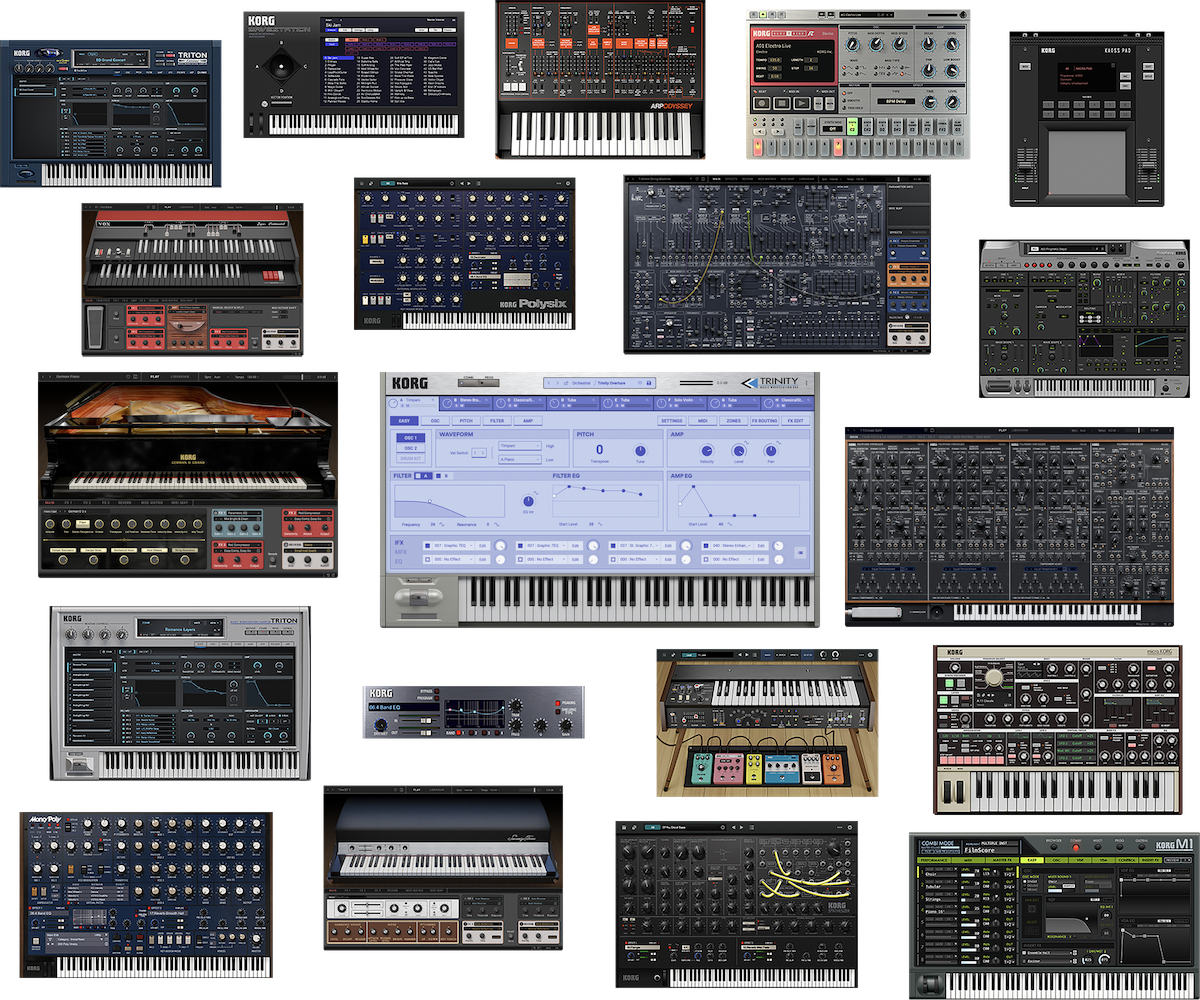
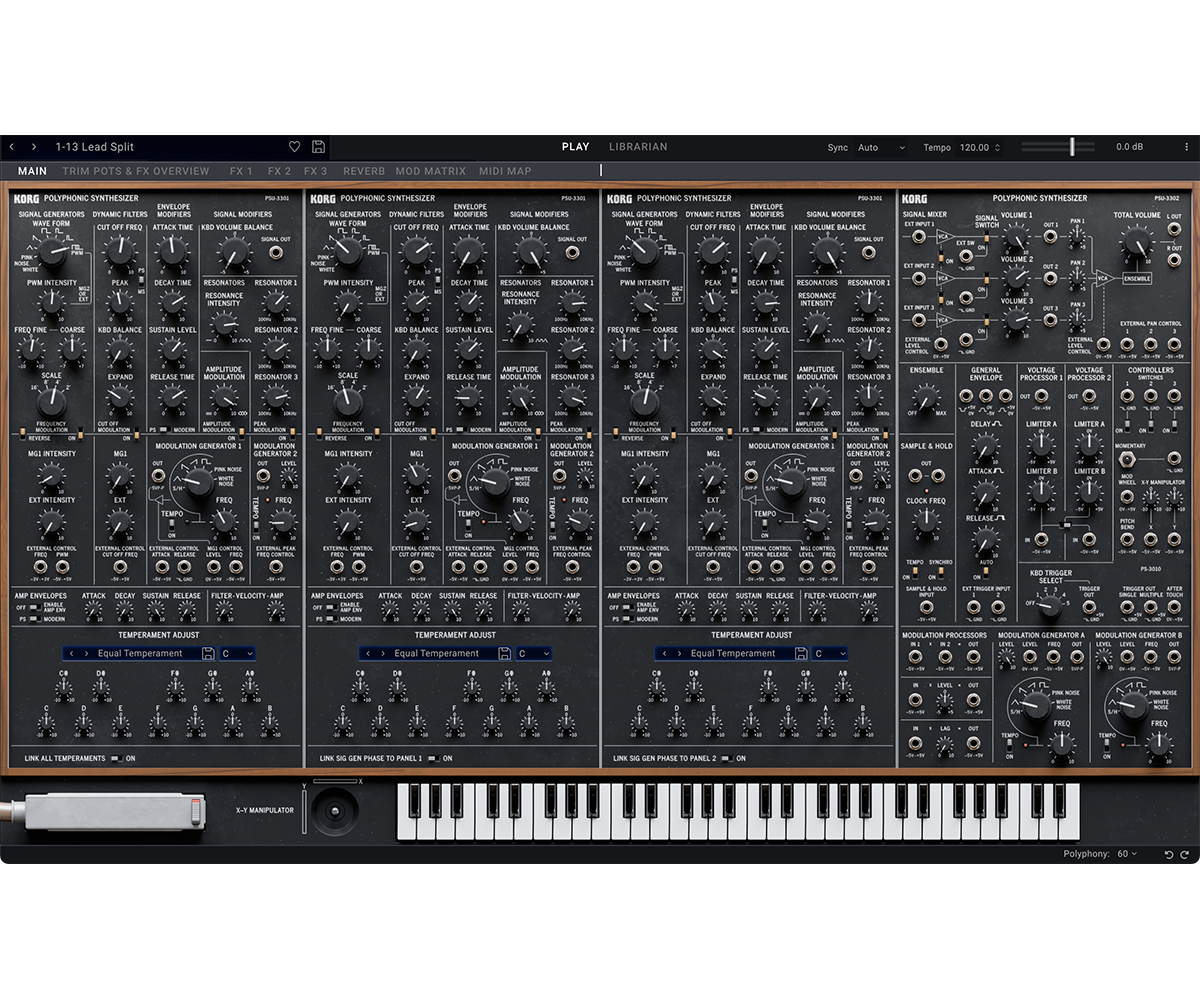
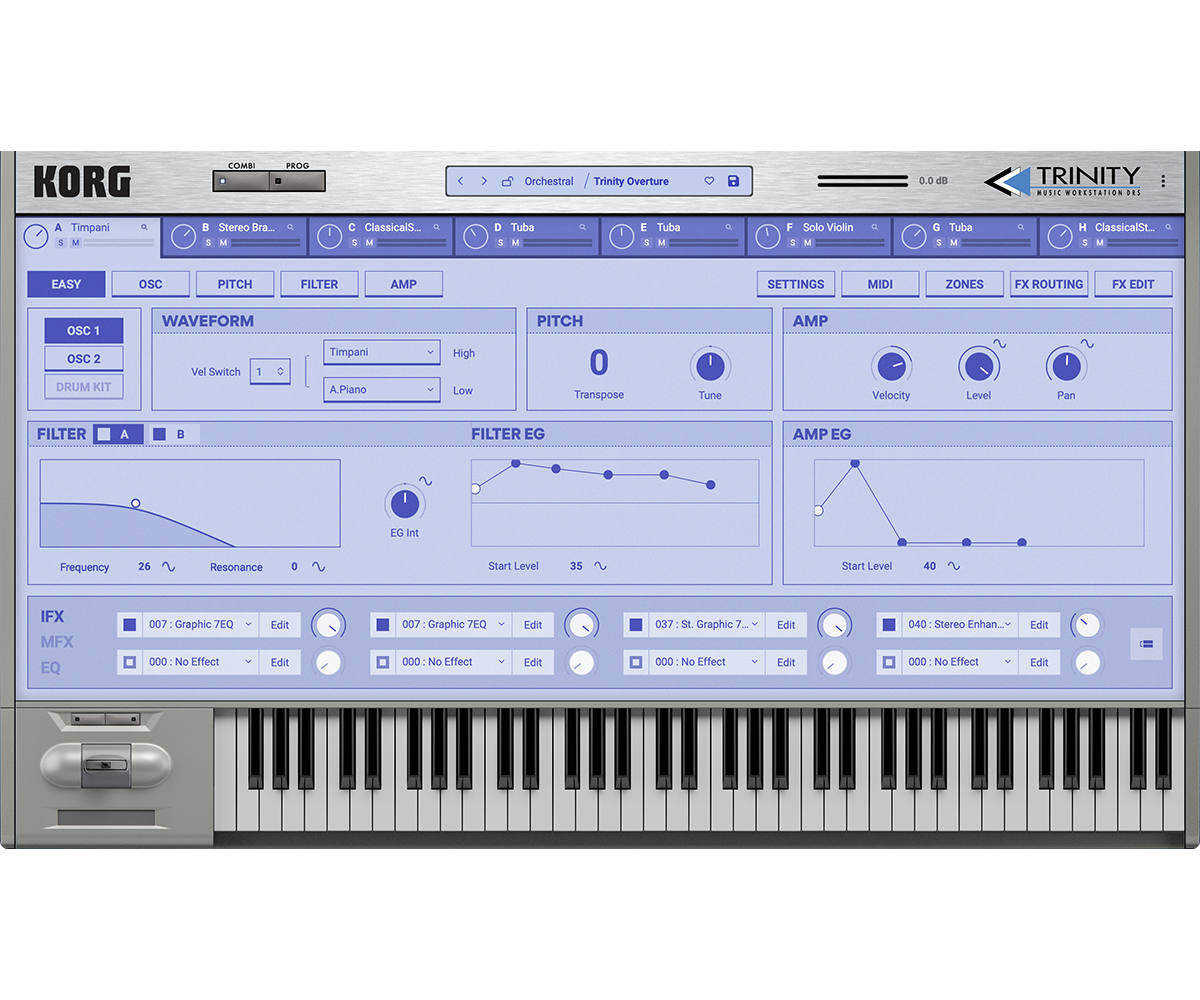
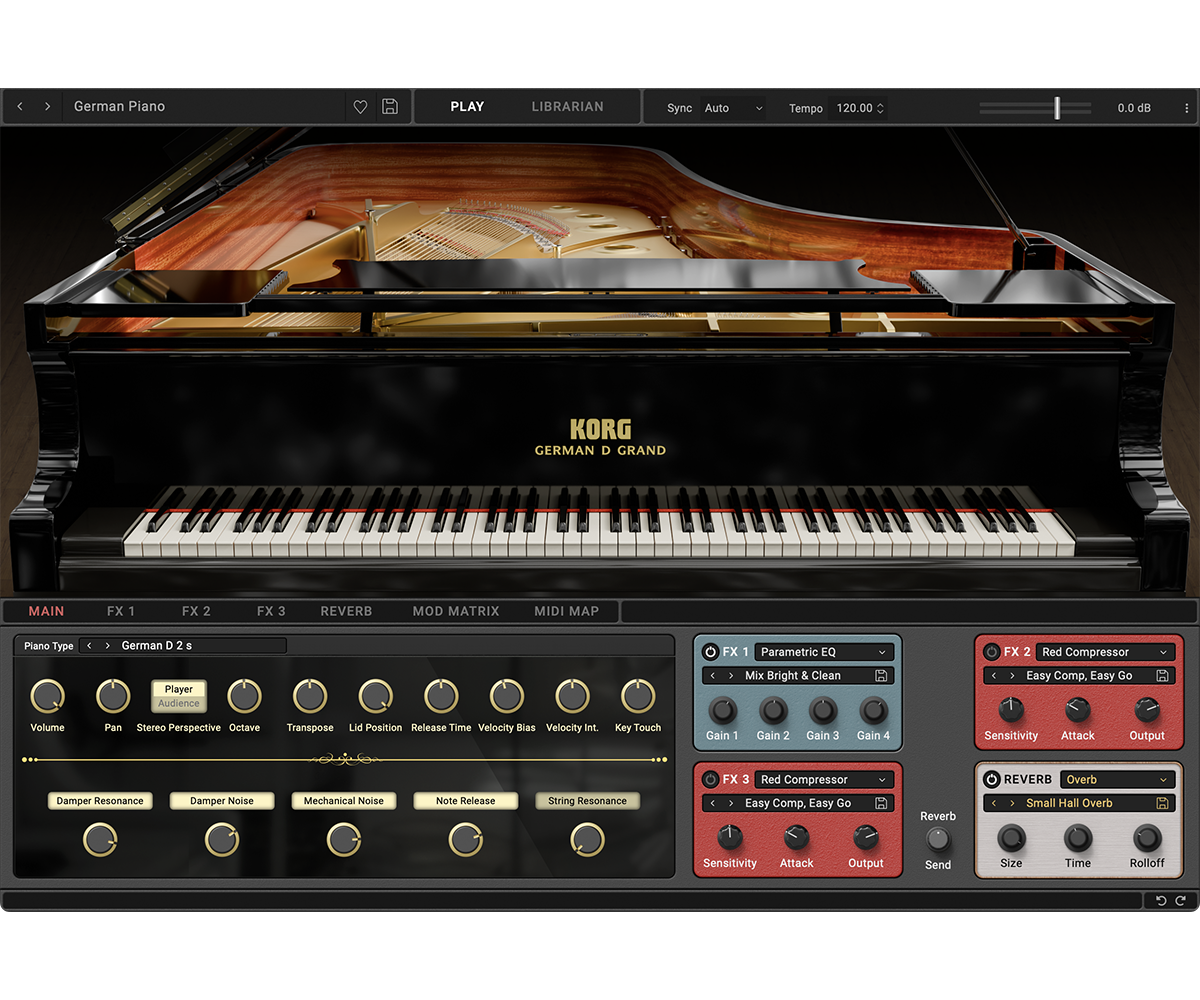
With Korg Collection 6, the Japanese developer bundles around twenty software instruments and effects into a single package, adding three new heavy hitters to its virtual arsenal: an emulation of the semi‑modular PS-3300, TRINITY in multitimbral workstation form, and the SGX-2 piano software. Together they form a sound palette spanning several decades, designed as much for music production as for scoring to picture or game audio.
Installation and first steps: a suite that’s easy to roll out
Installing Korg Collection 6 is surprisingly straightforward. You can pick exactly which instruments you want to install, without being forced to download everything in one go. Activation then takes just a few clicks, so you can quickly move on to sound exploration.
Once the plug-ins are loaded, you’re reminded what makes Korg’s hardware design so strong: mostly clear interfaces, built to steer the user towards a wide range of sounds without getting lost in endless submenus. Overall, the experience is pleasant and inspiring.
But this very “hardware-style” interface philosophy also shows its limits. Some recreations are perfectly ergonomic, while others, being more complex, are harder to get to grips with, especially on a laptop screen where every control matters.
The instruments that make you want to write music
To get the best out of Korg Collection 6, it helps to know in advance which types of synths and effects suit your workflow and the style of music you’re aiming for. Among the plug-ins that instantly stand out, Polysix takes pride of place: its recognisable sonic character and streamlined interface make it easy to create original patches without spending your time trawling through preset libraries.
In a similar vein, the ARP Odyssey recreation manages to capture the charm of the original while adding modern conveniences. The interface can be resized, the keyboard hidden, and you get an arpeggiator plus an effects section that open up new possibilities compared to the vintage hardware.
Another undeniable highlight is the plug-in version of the microKORG. This instrument is one of the best‑selling hardware synths in history, and the software incarnation fully capitalises on that popularity. The Korg team has delivered a particularly accessible and fun version here, which stands out as one of the most immediate software recreations in the Collection.
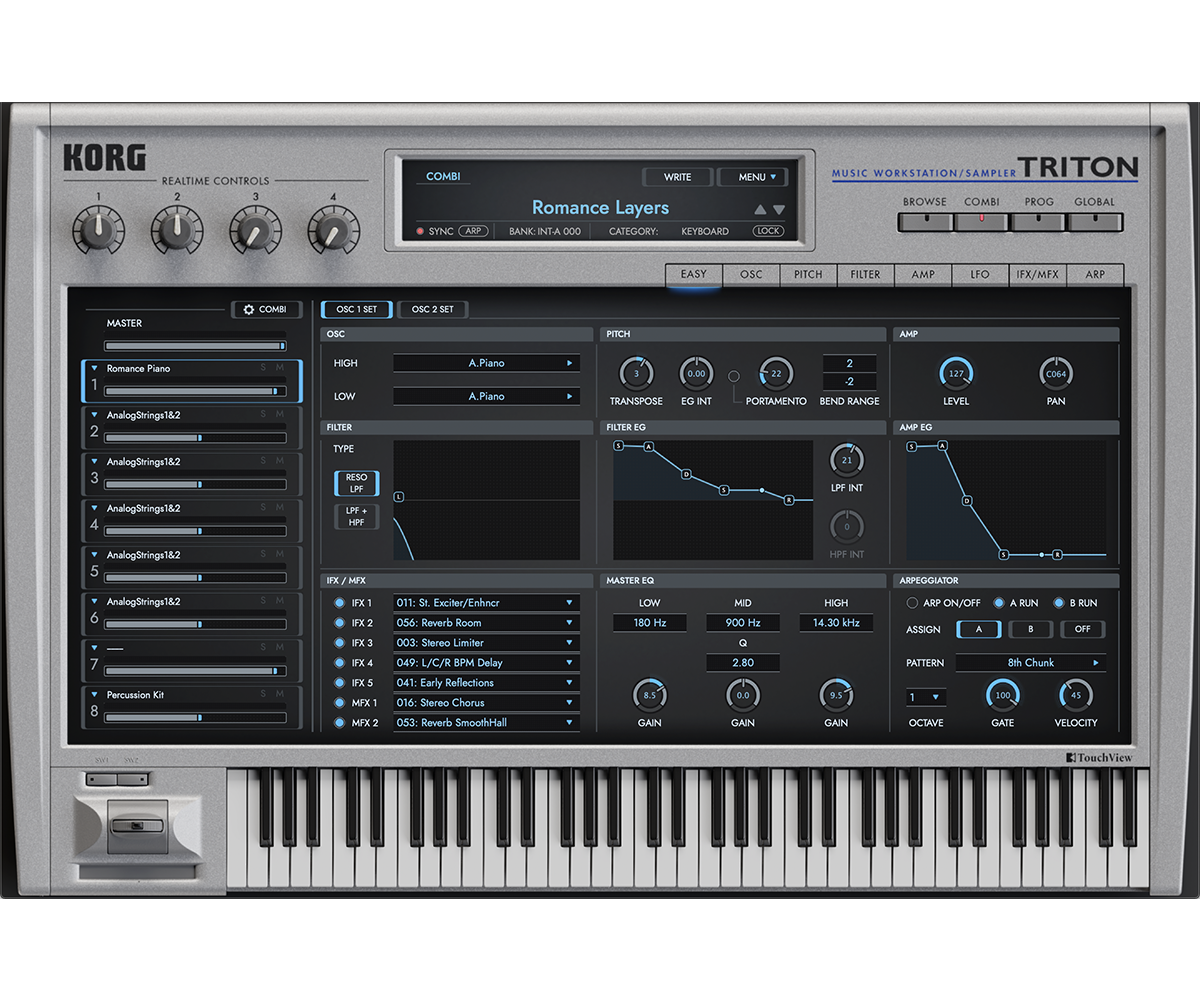
More broadly, many of the suite’s virtual analogue and wavetable synths really come into their own in plug‑in format. Historically less ergonomic instruments, due to deep menus or busy interfaces, such as Prophecy, TRINITY or KAOSS PAD, become far more comfortable to use on a computer. Sound design work becomes quicker, and you spend less time digging through sound banks and more time working the sweet spots of each sound engine.
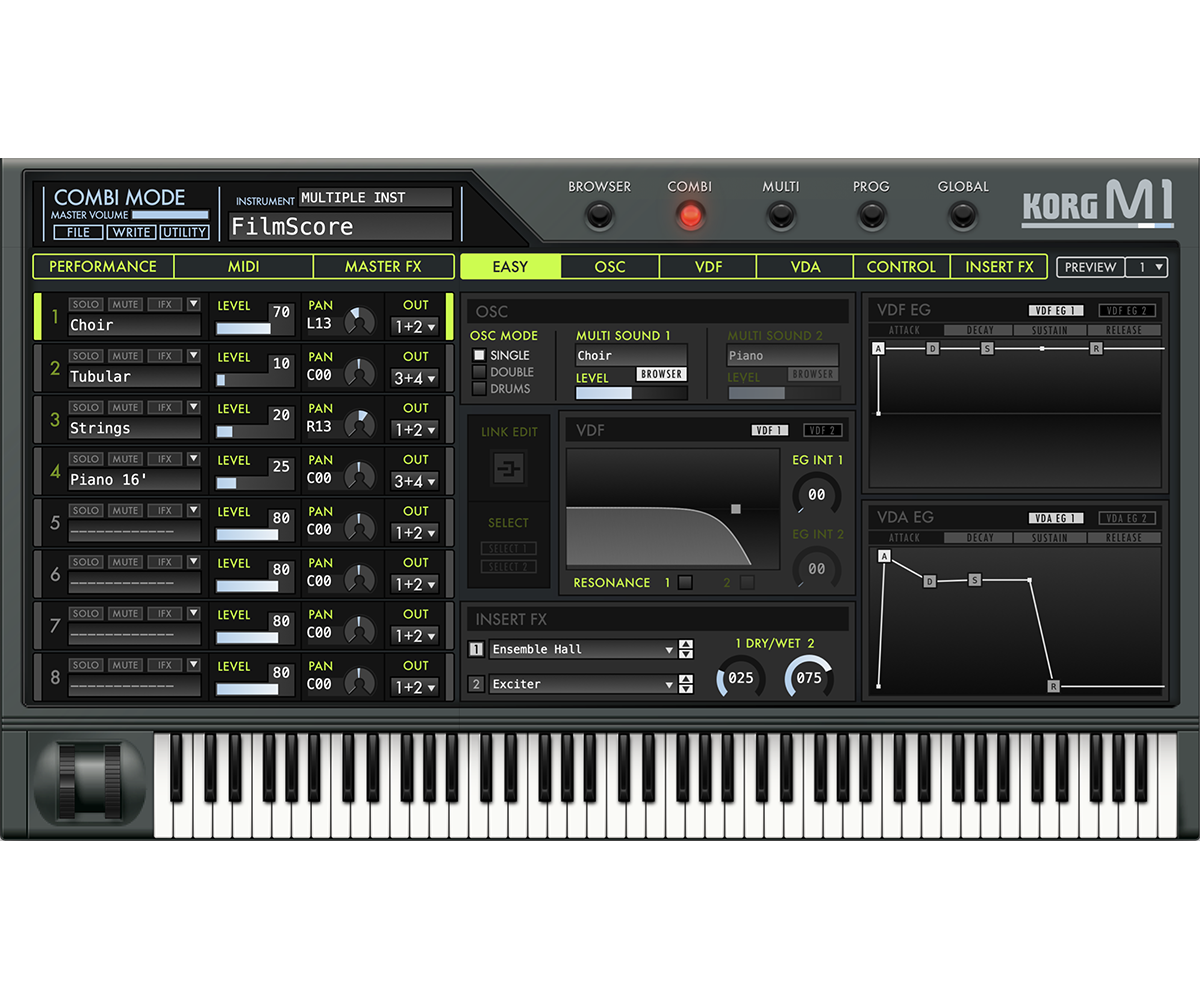
For hardcore Korg fans, ELECTRIBE‑R is also a little gem. Its interface is miles away from today’s ultra‑sophisticated tools, but that’s precisely what makes it interesting: it acts like a time machine, instantly dropping you back into a production aesthetic from around twenty years ago. In the same spirit, instruments such as the M1 or WAVESTATION offer highly distinctive tones that are hard to find elsewhere, ideal both for deliberately chasing retro flavours and for simply scratching a nostalgic itch.
A suite split in two: modernity vs legacy
When you jump from one instrument to another, a clear divide appears between the more recent creations and some of the collection’s historical classics. Sonically, the overall level remains very high, but the gap is obvious in visual design and ergonomics.
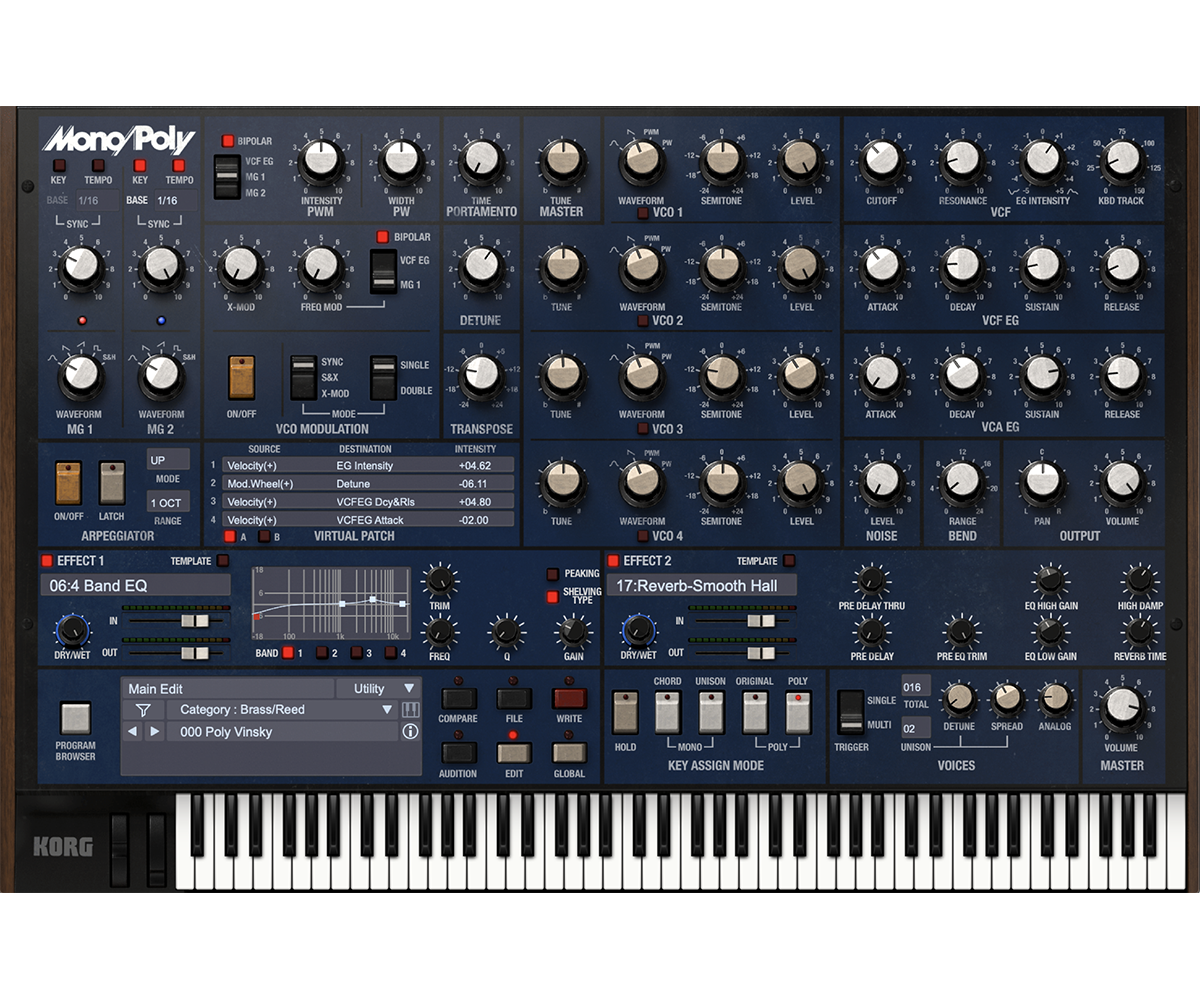
Iconic references such as the MS20, Mono/Poly or Polysix are starting to show their age compared with more modern recreations like the miniKORG 700S, microKORG or ARP Odyssey. The latter benefit from a much more contemporary design, both in terms of look and day‑to‑day feel.
The issue becomes blatant with the semi‑modular synths that have extremely dense interfaces, especially the new PS-3300, the ARP 2600 and the MS20. All of their parameters are laid out on a single page which, impressive as that may be technically, doesn’t make for a very musical experience. You’re left staring at a wall of controls that works against spontaneity.
There’s nothing stopping Korg from preserving sonic authenticity while rethinking these interfaces for modern software use, just as it has done with other instruments in the Collection. A more segmented approach, with better‑organised views, could turn these exceptional synths into far more inviting tools.
Conversely, the plug-ins that are less focused on complex synthesis clearly shine. Instruments like EP-1, VOX Super Continental or the new SGX-2 make sound shaping and dynamic control feel very immediate. You’ll catch yourself sculpting tones quickly, without having to fight the interface.
Why consider Korg Collection 6 today?
Despite its exclusive focus on a single manufacturer’s universe, Korg Collection 6 covers a surprisingly broad musical spectrum. With just a few clicks, you can travel from 1970s and 1980s tones to 1990s sounds and beyond, as long as you know which instruments to reach for.
The analogue and digital synthesis engines are clearly among the suite’s main strengths. That said, it’s a fiercely competitive playing field, with plenty of rival developers specialising in recreating synth icons. Faced with this competition, Korg needs to go the extra mile to fully showcase the musical heritage of its instruments within its own Collection.
With a few graphical overhauls for its most dated classics and the addition of further references from its historic catalogue, the brand would have more than enough to bring its flagship back on course. The potential is there: what’s missing is a modernisation of certain modules to make the whole package truly coherent.
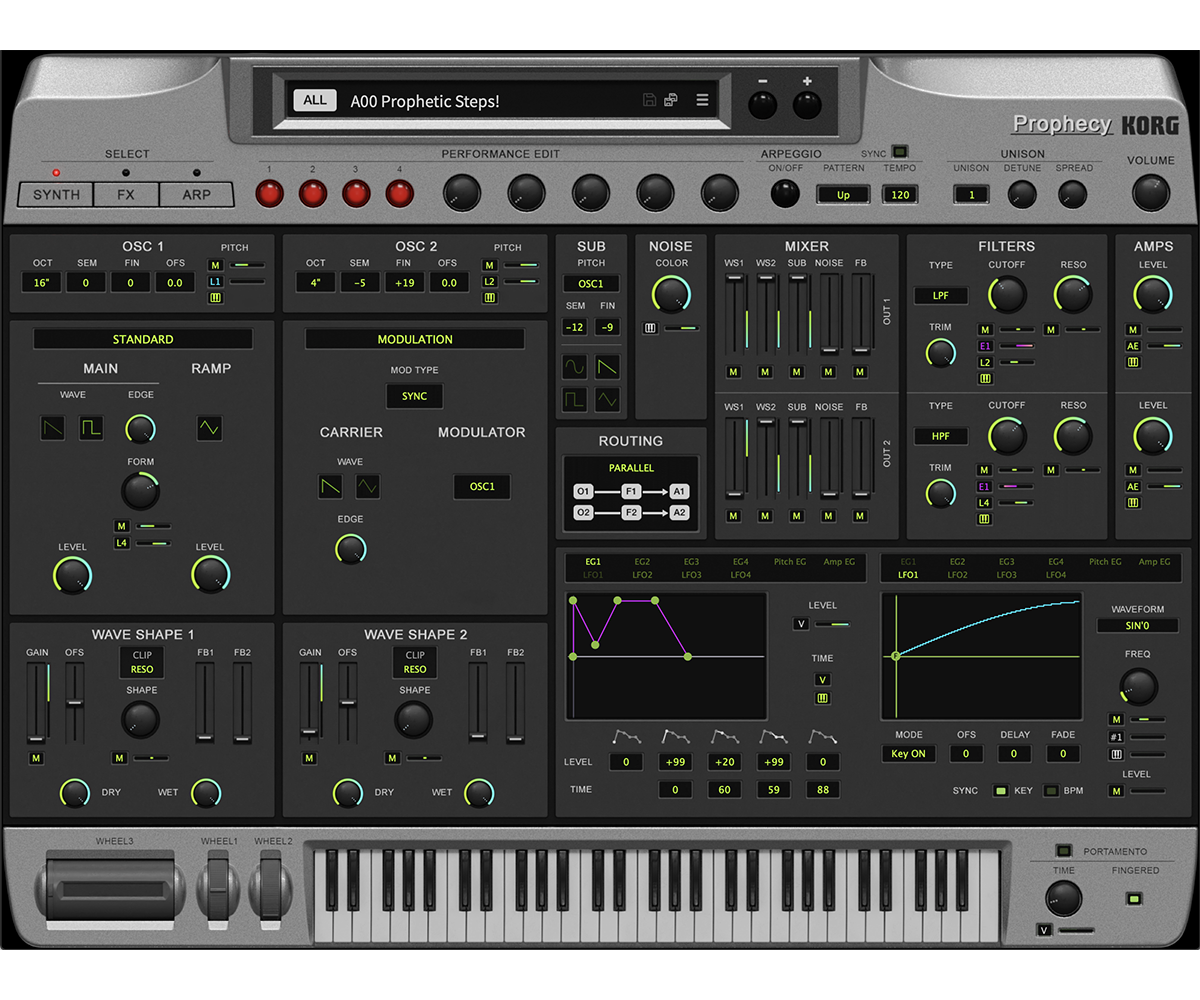
Main features of Korg Collection 6
- Suite of 20 instruments and effects in AU, VST3 and AAX formats
- PS-3300, ARP 2600 and MS-20 modelled using Component Modeling Technology (CMT)
- Sound libraries sourced from the original hardware
- Three new additions in this version: PS-3300, SGX-2, TRINITY
FAQ
Which new instruments were added in Korg Collection 6?
Korg Collection 6 introduces three new instruments: a plug-in version of the semi‑modular PS-3300, TRINITY as a multitimbral workstation synth, and the SGX-2 piano software.
How many instruments and effects are included in total?
The suite brings together 20 instruments and effects in AU, VST3 and AAX formats, covering both analogue and digital synths, as well as virtual keyboards and pianos.
What are the main weaknesses of Collection 6?
Criticism mainly focuses on interface inconsistency. Some synths, especially the semi‑modular ones like PS-3300, ARP 2600 and MS20, show all their parameters on a single page, which makes for a clunky experience and can be off‑putting on a laptop screen.
Who is Korg Collection 6 primarily aimed at?
Collection 6 is aimed both at fans of the brand looking for its emblematic instruments in software form, and at producers or composers who want quick access to sounds spanning several decades, from the 1970s through the 1990s and beyond.