Officially launched in mid-October 2025 and now listed with major European retailers, the Beyerdynamic DT 270 PRO arrives in a strategic segment: that of the closed-back, compact and affordable pro studio headphones, designed as much for the home studio as for mobile monitoring on computer and smartphone.
Offered at around €99 inc. VAT in Europe (around 159 USD in the United States), these home studio monitoring headphones sit below the iconic DT 770/880/990 range, while retaining the German brand’s DNA: studio-centric sound, repairable construction and supplied accessories. The goal is not to launch a simple budget version, but to answer a specific question: how do you adapt the acoustic demands of professional studio headphones to the realities of a home studio, a laptop or a smartphone in 2025?

Pro studio headphones in 2025: home studio and mobile production needs
In 2025, a large proportion of audio creators are working with hybrid setups: a compact audio interface, a laptop, sometimes a tablet or smartphone, and a small recording space (bedroom, office, small studio). In this context, the spec sheet for a 2025 mixing monitor headset looks quite different.
- Moderate impedance means the headphones can be used both with an audio interface and with the headphone output of a laptop or smartphone.
- A closed-back circumaural design helps reduce spill into microphones during vocal recording, podcasts or voice-over sessions.
- Low weight helps you get through long editing, production and pre-mix sessions without excessive fatigue.
- Rugged construction with replaceable parts improves longevity in daily use, going from rucksack to desk to vocal booth.
This is exactly the crossover point between fixed studio and mobile production that the DT 270 PRO targets, designed as an affordable home studio headset for a 2025 setup upgrade.
Technical specifications of the Beyerdynamic DT 270 PRO
The DT 270 PRO is a closed-back circumaural, dynamic, wired headset. It borrows several key features from the DT series while adopting a more compact form factor.
- Type: closed-back circumaural studio headphones, dynamic
- Use: studio monitoring, home studio, production on computer or mobile device
- Nominal impedance: 45 ohms
- Frequency response: 5 Hz to 24,000 Hz
- Sound pressure level:
- 96 dB SPL for 1 mW at 500 Hz
- 109 dB SPL for 1 V at 500 Hz
- Power handling capacity: 100 mW
- Transducers: 42 mm drivers
- Weight: 194 g without cable
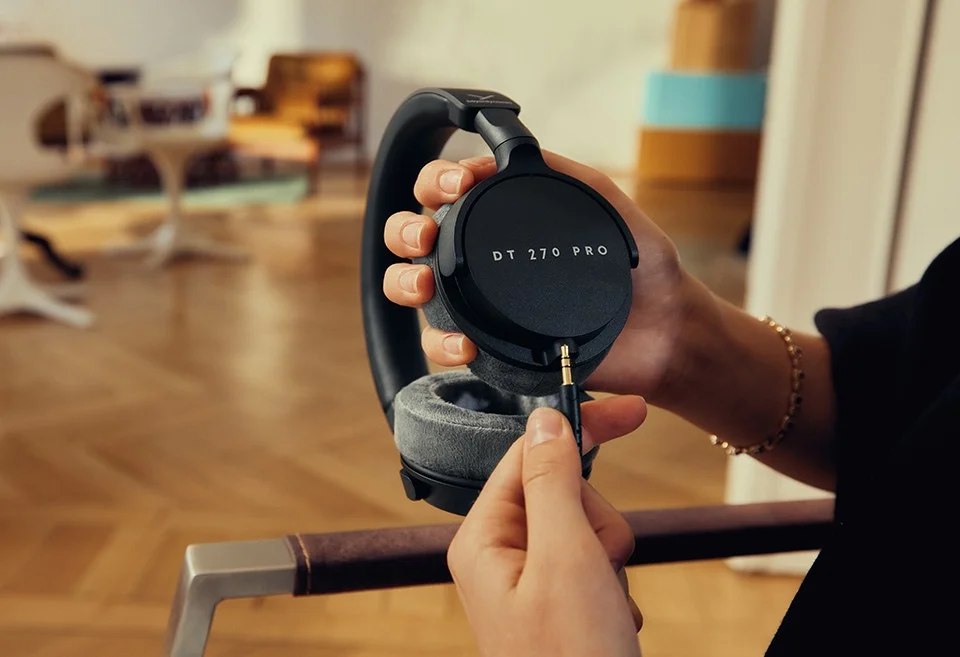
- Earpads: grey velour, internal diameter approximately 50 mm
- Cable: detachable, bilateral coiled cable (1.3 to 3 m), pluggable into either the left or right earcup
- Connectivity:
- Stereo mini-jack 3.5 mm (gold-plated plug)
- 6.35 mm (1/4″) jack adapter
- 3.5 mm mini-jack to USB-C adapter for mobile devices
- Accessories: carry pouch included
- Market availability: listed since October 2025 with European retailers, with a 30-day “satisfaction or your money back” retailer guarantee and a 3-year warranty.
Ergonomics, isolation and comfort in a home studio
At 194 g without the cable, the DT 270 PRO is noticeably lighter than some of the brand’s other pro studio headphones. One reviewer compares it to a DT 770 PRO X, which is roughly 110 g heavier. This reduction in mass is an important factor for long headphone sessions, whether you are editing, doing sound design or composing.
The circumaural velour earpads surround the ear and offer a comfortable feel. Their internal diameter is slightly smaller than on the DT 770/880/990 models. For users with larger ears this dimension may raise questions over very long sessions, but early feedback suggests the headphones remain genuinely circumaural for many head and ear shapes, while still providing a secure fit.
The closed-back design naturally limits sound leakage to the outside. This makes the headphones suitable for use during vocal takes, podcasts or voice-over sessions in smaller spaces. Isolation is nevertheless that of a compact headset: the aim is not to provide complete noise cut-off like some live sound models, but to strike a balance between comfort, sufficient isolation and low weight for a personal studio.
The detachable coiled cable, pluggable on either the left or right, makes it easier to integrate the DT 270 PRO into your working environment. It allows you to adapt the cable routing to your setup (audio interface on one side, patchbay on the other) with minimal fuss. The supplied accessories, especially the 6.35 mm jack adapter and the USB-C adapter, cover most current use cases: audio interface, console, laptop, tablet and smartphone.
Sound signature: headphones designed first and foremost for monitoring
Early reviews describe a fairly neutral, controlled sound signature. Users highlight:
- tight, controlled and precise bass rather than showy low end;
- a balanced low range that extends deep without exaggeration;
- a clear, detailed and relatively neutral sound, with no excessive treble or bass lift.
This approach can sometimes surprise ears used to consumer headphones, which are often more boosted in the lows. One reviewer notes that the DT 270 PRO goes deeper and in a more controlled way than the Sony MDR-7506, a historic monitoring reference, while avoiding the more “nasal” character that some people criticise in the latter.
Published measurements and tests underline an important point: the DT 270 PRO is positioned as a set of monitoring headphones. It is designed to provide a reliable listening tool during recording and production, rather than to replace a pair of studio monitors for critical mixing or mastering. A tester who spent a long time comparing it with a DT 1770 PRO points out that the apparently restrained bass, initially perceived as lacking character, ultimately reveals good transient definition and detail in the low end.

45-ohm impedance: a strategic choice for interfaces and mobile devices
Beyerdynamic has opted for a single 45-ohm impedance on the DT 270 PRO. Whereas the DT 770 series exists in several variants (32, 80 and 250 ohms), this model is designed to be universal.
- The headphones are quite easy to drive with a laptop, tablet or smartphone via the USB-C adapter.
- They remain compatible with the headphone outputs of typical audio interfaces and mixing consoles.
- They do not generally require a dedicated headphone amplifier in most setups.
The maximum level of 96 dB SPL (1 mW) is modest compared with some very sensitive headphones, but it sits in a sensible range for everyday monitoring use, where clarity and intelligibility matter more than extreme sound pressure. For tracking, editing and pre-mixing over long periods, this choice can help reduce listening fatigue.
DT 270 PRO versus its home studio competitors
Priced at around €99, the Beyerdynamic DT 270 PRO goes head-to-head with several key home studio monitoring headphones in the £80–£100 / €90–€110 price band.
- Austrian Audio Hi-X15 (around €99): often praised for their price/performance ratio, these headphones are said by some users to have a sound signature closer to the DT 770, with more pronounced low end. The DT 270 PRO comes across as a more compact, lighter alternative, with a slightly different take on tonal balance.
- Sony MDR-7506 (around €99): a long-standing broadcast and studio reference, valued for its precision, but sometimes considered more aggressive in the upper mids and less robust over time (headband deformation and faster wear). Feedback suggests the DT 270 PRO is sturdier and offers a perceived wider soundstage.
- Beyerdynamic DT 770 PRO (around €149 depending on impedance): a bulkier model available in several impedances. It remains a go-to choice for mixing on headphones. The DT 270 PRO carries over part of the brand’s signature sound in a lighter, more universal format, with a primary focus on the home studio and mobile use.
- Other options in a similar price range: Shure SRH440A, Sennheiser HD-280 PRO, AKG K-240 Studio / MKII, and OneOdio Monitor 80, all targeting the affordable workhorse headphone segment for personal studios.
In this landscape, the DT 270 PRO plays the following card: no-nonsense studio tuning, light weight, broad compatibility, replaceable parts and up-to-date accessories (USB-C), while staying under the symbolic €100 mark with some retailers. For anyone looking for affordable home studio headphones as part of a 2025 mixing upgrade, it definitely deserves a place in the comparison.
Durability, repairability and spare parts
True to Beyerdynamic’s philosophy, the DT 270 PRO follows a modular construction approach.
- Replaceable velour earpads extend the life of the part that suffers the most wear.
- The detachable cable can easily be swapped out in case of faults or physical damage.
- The headband with spring steel reinforcement provides both stability and day-to-day mechanical strength.
This philosophy extends the lifespan of the headphones by focusing on repair and part replacement, in contrast to Bluetooth headsets with built-in batteries and electronics, whose service life is often limited by internal component wear. For a home studio built as a long-term investment, this type of product helps to stabilise your monitoring setup without getting stuck in a rapid replacement cycle.
Verdict: who is the Beyerdynamic DT 270 PRO for?
Based on the specifications and early feedback, the Beyerdynamic DT 270 PRO positions itself as a reliable monitoring headset for home studios and mobile production, rather than as a one-stop solution for critical mixing or mastering.
It is particularly well suited to:
- home studio creators working with a laptop, compact interface and sometimes a smartphone or tablet;
- podcasters and vocal content creators who need closed-back, lightweight, comfortable and repairable headphones;
- musicians and electronic producers looking for low end that is controlled, precise and free from heavy coloration;
- users who want to stay within the Beyerdynamic sound signature while choosing a lighter and more affordable model than a DT 770 or DT 1770.
The limits become apparent for very demanding mixing and mastering, where investing in a good pair of studio monitors or higher-end studio headphones is still recommended. The less bulky build and the slightly smaller earpads compared with the brand’s flagship models clearly define the target audience: emerging creators, serious home studio users, travelling musicians and mobile sound engineers who need headphones that are reliable, comfortable and compatible with all their devices in 2025.
FAQ: Beyerdynamic DT 270 PRO for home studio use
Is the Beyerdynamic DT 270 PRO suitable for mixing and mastering?
The DT 270 PRO is first and foremost presented as a pair of monitoring headphones. Its neutral, controlled tuning is well suited to tracking, laptop-based work and editing. For highly critical mixing or mastering, higher-end studio options such as quality nearfield monitors or reference headphones like the DT 1770 PRO remain more appropriate.
Can you use the DT 270 PRO directly with a laptop or smartphone?
Yes. Its 45-ohm impedance and the specified sound pressure level make it straightforward to use with most laptops, tablets and smartphones. Beyerdynamic includes a mini-jack to USB-C adapter, in addition to the 3.5 mm mini-jack and 6.35 mm adapter for interfaces and consoles.
What is the main difference between the DT 270 PRO and the DT 770 PRO?
The DT 770 PRO is a bulkier closed-back studio headset, available in several impedances (32, 80 and 250 ohms) and often used for mixing on headphones. The DT 270 PRO is aimed at a more compact and versatile use case, with a single 45-ohm impedance, lower weight and a lower price point. It keeps the Beyerdynamic spirit, but with a clear priority on home studio work and mobile production.
How does the DT 270 PRO compare with the Sony MDR-7506?
Users who have compared the two report that the DT 270 PRO delivers a sound that is perceived as less nasal, with a wider stereo image and more robust construction over time. The MDR-7506 remains a very widespread reference, but the Beyerdynamic offers an interesting alternative for those who want a slightly different tuning and a build more focused on longevity.
Is the DT 270 PRO built to last?
Yes. It follows Beyerdynamic’s established approach: replaceable velour earpads, detachable cable, steel-reinforced headband and the availability of spare parts. This modular construction is designed to extend the product’s lifespan, unlike some Bluetooth models whose obsolescence is tied to the integrated electronics and batteries.